Marine industry
3 stories filed under Marine industry on World Data Ocean. The newest of them: “New Vessel Honors Legacy, Bolsters Great Lakes Data Collection”, “Decommissioning Giant: Heavy-Lift Vessel Transfers Platform for North Sea Recycling”, and “Modeling China’s Coastal Growth: Integrating Economy, Innovation, and Ecology”. The *Judy LaMarsh* joins the Great Lakes fleet as a working testament to progress, not just a tribute. A heavy-lift vessel has transferred a North Sea platform for onshore recycling, a project expected to span roughly 18 months with 12 to 14 months dedicated to demolition. A Global Hub for Ocean Intelligence 4 World Data Ocean is a centralized digital platform where researchers, scientists, and ocean enthusiasts converge to… The list below is every Marine industry story on World Data Ocean, newest first.
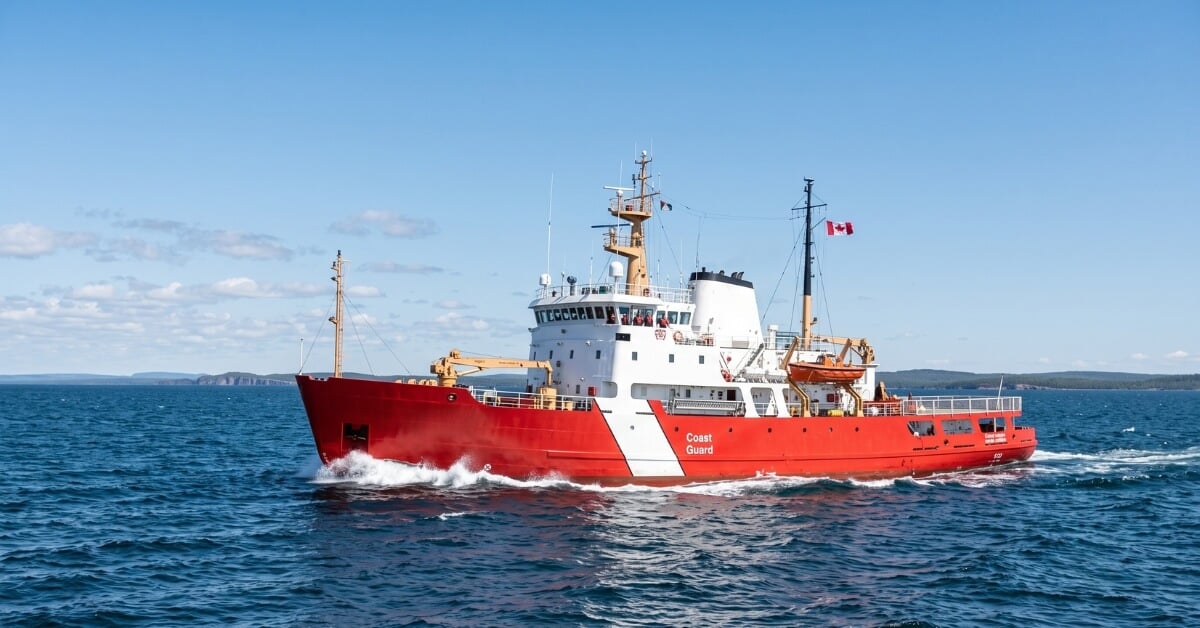
New Vessel Honors Legacy, Bolsters Great Lakes Data Collection
The *Judy LaMarsh* joins the Great Lakes fleet as a working testament to progress, not just a tribute. Named for one of Canada's first female federal Cabinet ministers, this vessel carries a legacy of breaking barriers into the practical realm of data collection. Understanding drives protection; here, that means stronger, more consistent monitoring of freshwater systems. It is a measured step, but a meaningful one.

Decommissioning Giant: Heavy-Lift Vessel Transfers Platform for North Sea Recycling
A heavy-lift vessel has transferred a North Sea platform for onshore recycling, a project expected to span roughly 18 months with 12 to 14 months dedicated to demolition. This is the kind of measured, industrial precision that defines responsible decommissioning. It is not flashy work, but it is necessary. The scale demands patience and calibration, and the timeline reflects that.

Modeling China’s Coastal Growth: Integrating Economy, Innovation, and Ecology
Zhejiang's marine economy will not grow on scale alone. This study models it as a complex adaptive system, where innovation, port capacity, and ecological protection interact with delayed feedback. Notably, weaker innovation masks itself initially, but by 2030 it trims emerging-industry value added by 16.7%. Port shocks transmit directly to environmental investment, and ecological constraints shift from growth-supportive to limiting. Strong internal innovation buffers external shocks, adding RMB 35 billion to 2030 GOP. This is the integrated, systems-level thinking ocean management needs.