low-carbon
3 stories filed under low-carbon on World Data Ocean. The newest of them: “Ammonia Bunkering Vessel Design Receives Approval, Advancing Sustainable Maritime Fuels”, “Optimizing Port Traffic: AI Navigates Wind for Reduced Emissions”, and “Record-Breaking Green Methanol Bunkering Fuels Sustainable Shipping in Shanghai”. HD Hyundai's shipbuilding arms have secured ABS approval in principle for an ammonia bunkering vessel design, a concrete step toward commercialising a fuel critical to maritime decarbonisation. Wind shapes more than wave height; it steers the very schedule of port arrivals. A Global Hub for Ocean Intelligence 4 World Data Ocean is a centralized digital platform where researchers, scientists, and ocean enthusiasts converge to… The list below is every low-carbon story on World Data Ocean, newest first.
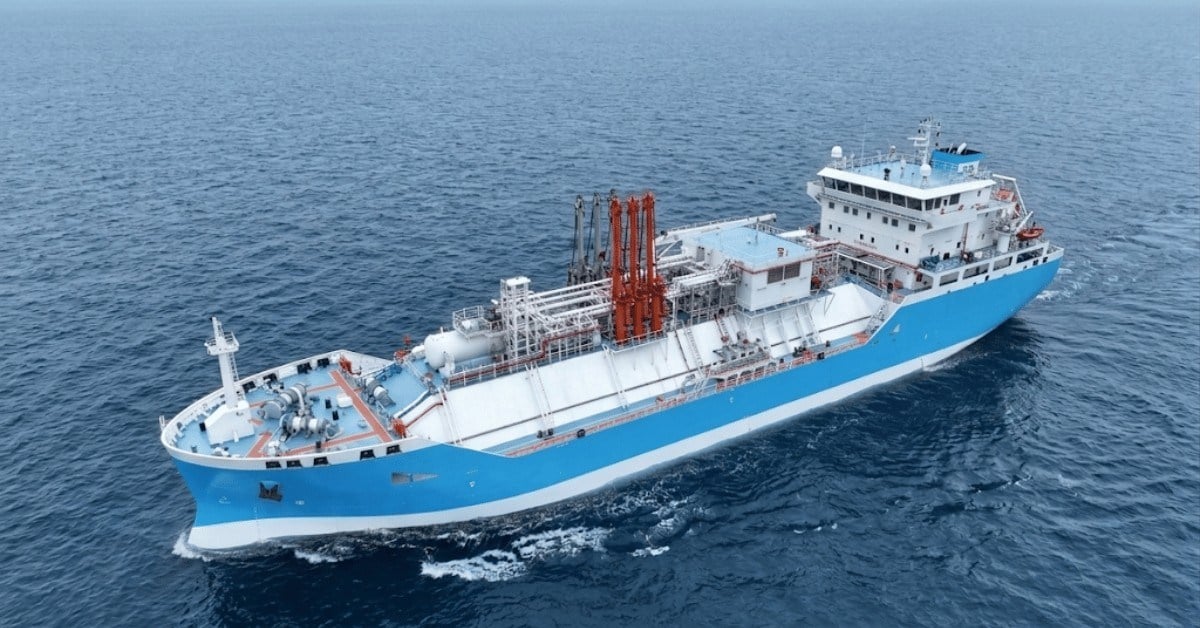
Ammonia Bunkering Vessel Design Receives Approval, Advancing Sustainable Maritime Fuels
HD Hyundai's shipbuilding arms have secured ABS approval in principle for an ammonia bunkering vessel design, a concrete step toward commercialising a fuel critical to maritime decarbonisation. The classification validates the integrated approach behind the design, moving ammonia from theoretical promise toward operational reality. This is how ocean intelligence translates into practical infrastructure. For broader context on the sector's risks, our report on the fatal attack near Oman underscores the security dimension shaping today's shipping routes.

Optimizing Port Traffic: AI Navigates Wind for Reduced Emissions
Wind shapes more than wave height; it steers the very schedule of port arrivals. This study from Caofeidian Port shows that real-time wind, when treated as both an emission driver and a scheduling constraint, can cut CO2 by 11.41% over first-come, first-served methods, even with a modest 7.49% rise in system time. The Pareto MO-PPO framework offers operators explicit trade-offs, not a single fixed answer.

Record-Breaking Green Methanol Bunkering Fuels Sustainable Shipping in Shanghai
A single bunkering operation in Shanghai has set a global record for green methanol supply, marking measurable progress in the shipping sector's shift toward lower-carbon fuels. The scale of this milestone is significant, but the real signal is repeatability: the more ports integrate green methanol into routine logistics, the faster the industry can move beyond pilot projects. For broader context on regional energy flows, our coverage of Gulf of Oman STS transfers offers a useful contrast in how different fuel systems are evolving.