international law
26 stories filed under international law on World Data Ocean. The newest of them: “Enforcement action halts fuel shipment bound for Cuba in Gulf transit”, “Closing the Gap in Transboundary Marine Protection Through Legal Innovation”, and “Eighty Nations Urge Reopening of Vital Strait of Hormuz Shipping Lane”. The M/V Grace was intercepted mid-Gulf, its fuel shipment halted en route to Cuba by a targeted enforcement action. Marine governance cannot succeed within borders when the ocean itself recognizes none. A Global Hub for Ocean Intelligence 4 World Data Ocean is a centralized digital platform where researchers, scientists, and ocean enthusiasts converge to… The list below is every international law story on World Data Ocean, newest first.
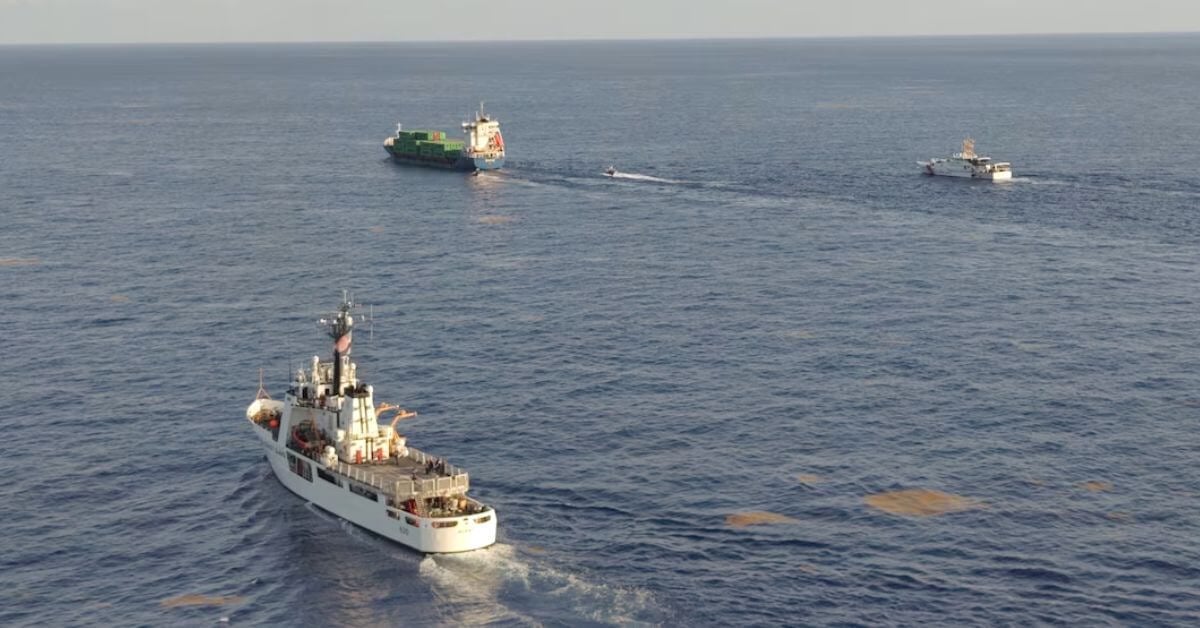
Enforcement action halts fuel shipment bound for Cuba in Gulf transit
The M/V Grace was intercepted mid-Gulf, its fuel shipment halted en route to Cuba by a targeted enforcement action. Coast Guard personnel boarded the vessel between Cuba and Mexico before diverting it to Mexico. This is border enforcement with direct geopolitical stakes, no ambiguity, no delay. For those tracking how legal frameworks meet maritime realities, our piece *Closing the Gap in Transboundary Marine Protection Through Legal Innovation* examines precisely how governance adapts when jurisdiction shifts at sea.

Closing the Gap in Transboundary Marine Protection Through Legal Innovation
Marine governance cannot succeed within borders when the ocean itself recognizes none. Two obstacles persist: international law's limited enforceability and gaps in domestic legislation. China is advancing a viable approach, operationalizing the extraterritorial application of the marine ecological protection compensation system, grounded in international law but requiring a "genuine connection." This institutional development spans normative objectives, rule construction, application principles, and safeguards. For deeper context on systemic challenges, see our related analysis, "Integrated Ocean Governance: Addressing Transboundary Pollution and Climate Risks."
Eighty Nations Urge Reopening of Vital Strait of Hormuz Shipping Lane
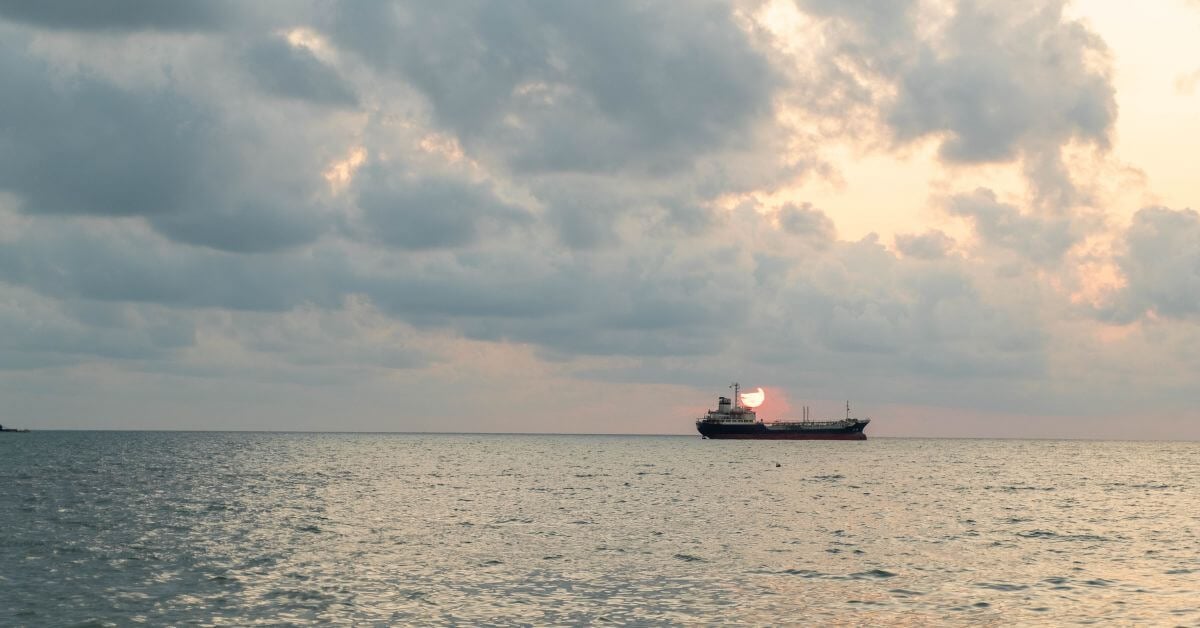
Eighty nations, led by Bahrain's foreign minister, have formally urged the United Nations to reopen the Strait of Hormuz, a waterway that carries nearly a fifth of global oil supply. The collective call is a measured but firm push for maritime stability, grounded in shared economic and security interests. Diplomacy, not disruption, is the clearest path forward here. For those tracking the region's momentum, our related piece on phased negotiations between Washington and Tehran offers useful context on what reopening might actually require.
Navigating Legal Waters: Unmanned Vessels and Maritime Law Enforcement
The legal status of unmanned vessels in maritime law enforcement remains unresolved, and the gaps are becoming harder to ignore. The analysis of the warship, military device, and ship doctrines is a necessary step toward clarity. We find the ship doctrine, grounded in navigation competency, the most defensible under international law. Yet the three challenges it identifies, algorithmic equivalence, black-box opacity, and fragmented accountability, are real obstacles.

Seafarer Safety Paramount Amidst Geopolitical Tensions in U.S.-Iran Conflict
The loss of seafarers in the U.S.-Iran conflict is a tragedy that demands our attention. IBIA's condolences are a sobering reminder: geopolitical tensions carry human costs that validated data cannot measure alone. Protecting those who work our oceans is non-negotiable. This crisis echoes the stakes seen in "Eighty Nations Urge Reopening of Vital Strait of Hormuz Shipping Lane", a channel where safety and security converge. We must integrate maritime intelligence with a commitment to seafarer welfare.
Verifying Blue Carbon: Evidence for Legal Protection and Climate Action
The 2024 and 2025 advisory opinions do more than interpret the law; they redefine its operational core. Our analysis shows that monitoring, reporting, and verification is now the binding substance of UNCLOS duties, not a policy option. This creates an uncomfortable inversion: the States best equipped to afford proof are the ones who benefit most from protection. This is a profound challenge to common but differentiated responsibilities, one that demands we reconsider what legal protection truly requires.
Escalating Tensions: Iran Condemns New Sanctions Amid Strait of Hormuz Discussions
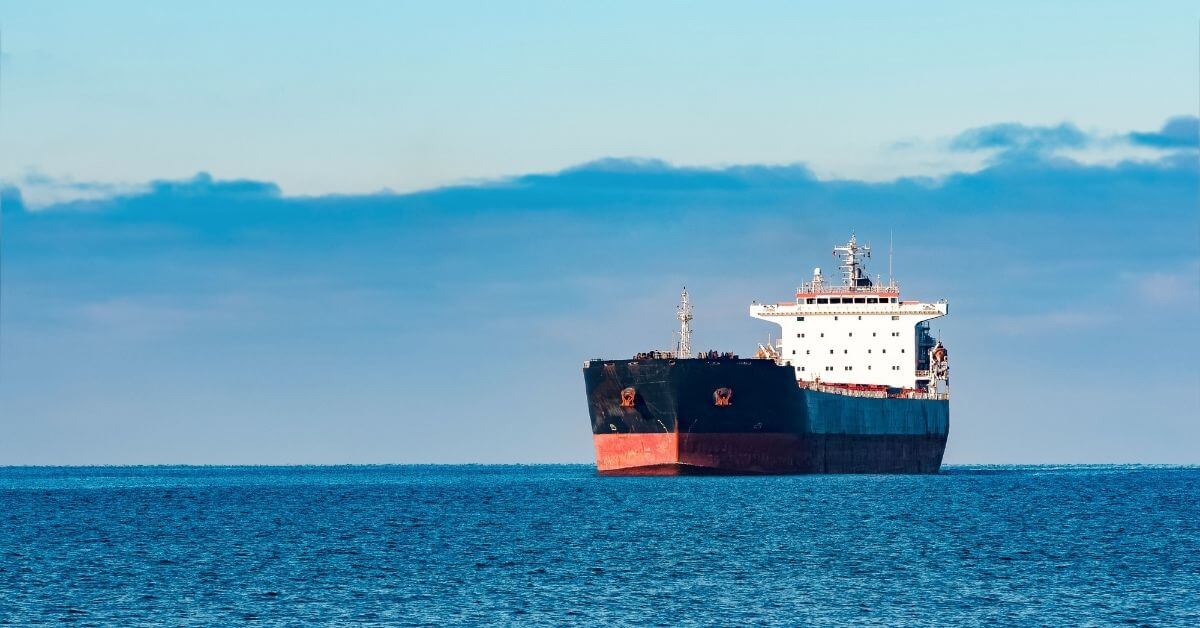
Iran's designation of the new U.S. sanctions as "economic terrorism" sharpens a confrontation with direct consequences for civilian welfare across the region. The measures, as framed by Tehran, place the health and livelihoods of millions in a precarious balance, and that framing demands attention. This is not abstract geopolitics; it is a tangible pressure point with human cost.

Iran Implements Transit Fees for Ships Through Strait of Hormuz
Iran's decision to impose transit fees on ships passing through the Strait of Hormuz introduces a calibrated layer of accountability to one of the world's most vital maritime corridors. Covering navigation, environmental support, fuel supply under specific conditions, and insurance, the measure frames safety as a service with measurable value. It is a pragmatic step, though one that warrants close observation. For broader context on regional shipping pressures, our related coverage of Gulf of Oman STS transfers offers useful perspective.
Toward Global Standards: Regulating Marine Plastic Pollution Legally
Marine plastic pollution is not a distant threat; it is a present failure of international law. Existing frameworks, from UNCLOS to various soft-law instruments, have proven insufficient against the scale of the crisis. This paper cuts through the noise, identifying why the Global Plastics Treaty is stalling and why state compliance remains weak. The argument for a holistic governance approach is sound, and China's potential role is pivotal.

Caspian Sea Vessel Attacked: Iran Seeks Compensation Following Drone Strike
Iran's ambassador to Russia, Kazem Jalali, confirmed that Tehran is seeking compensation after a drone strike targeted the Anna, an Iranian-flagged cargo vessel in the Caspian Sea. The attack raises pointed questions about maritime security in a region already marked by strategic tension. Russia, for its part, has linked such incidents to broader military posturing, as seen in recent strikes on Ukrainian port infrastructure. This incident underscores the fragile line between commercial passage and geopolitical conflict, one that demands calibrated, evidence-based responses, not speculation.

Vessel Attack in Bab El-Mandeb: Egypt Denies Link to Damaged Ship
A Houthi missile strike on a commercial vessel in the Bab El-Mandeb Strait has left six dead and ten injured, with Egypt denying any link to the damaged ship. The attack underscores the fragile calculus of maritime security, where a single launch can ripple across trade routes and diplomatic lines. Egypt's response is measured, but the incident sharpens the question of who truly polices these waters.

Red Sea Attack Highlights Risks to Maritime Trade and Seafarer Safety
The latest attack in the Red Sea and Gulf of Aden is a pointed reminder that maritime trade routes remain dangerously exposed. As Mr. Arsenio Dominguez noted, the location is particularly troubling, and we agree. These waters are not abstract lines on a chart; they are arteries for global commerce, and each incident endangers lives and supply chains. This follows the Gulf of Oman STS transfers maxing out, a clear signal of mounting pressure. The pattern is measurable, and it demands calibrated, not reactive, responses.

South China Sea Collision: Two Chinese Coast Guard Personnel Confirmed Dead
Two Chinese Coast Guard personnel, Yi, 21, and Cheng, 25, were confirmed dead on August 11, 2025, during a "maritime rights protection operation in the South China Sea." Their loss is a sobering reminder that ocean stewardship carries a human cost, one we measure in lives, not just data. Our recent coverage, including the rescue detailed in "Ocean Data Enables Swift Rescue of Injured Seafarer Near Andamans," underscores how vital integrated response is, yet no system can replace the people we send into these waters.

Attack on Unmanned Vessel Highlights Escalating Risks in Black Sea
The attack on an unmanned vessel in the Black Sea, which left the wheelhouse smoking, underscores a stark reality: no asset is off-limits in this escalating conflict. That the ship was empty and crewless only sharpens the question of what target comes next. This incident does not exist in isolation. Our related coverage, including "Strikes Target Ports and Vessels in Confirmed Military Action," shows a deliberate pattern of targeting maritime infrastructure.
Beyond Polluter Pays: Shared Responsibility for Deep-Sea Mining Impacts
The deep seabed's environmental risks demand more than a single-actor liability model. Our analysis of the Environmental Compensation Fund reveals that the Polluter Pays Principle, while foundational, falls short when causation is indivisible among multiple actors. Shared responsibility, drawn from oil, nuclear, and hazardous-substance precedents, offers structural alignment with the common heritage of mankind. We propose integrating it as a complement, not a replacement, to close regulatory gaps. For broader context on international maritime pressures, see our coverage of the Strait of Hormuz reopening.

Caspian Sea Incident: Escalation Risks Amidst Maritime Trade Disruptions
A cargo ship carrying steel from Russia's Astrakhan Port to Iran's Anzali Port has been struck by Ukrainian forces, marking a sharp escalation in a conflict that increasingly reaches beyond the Black Sea's western waters. This is not merely a tactical blow; it is a signal. The Caspian corridor, long treated as a secondary front, now carries real risk for commercial shipping.

South China Sea Incident Highlights Escalating Tensions and Maritime Safety Concerns
A direct physical confrontation between Chinese and Filipino personnel in the South China Sea has sharpened regional fault lines. A Chinese coast guard officer repeatedly struck a Filipino sailor with a wooden baton, an act that moves maritime disputes from policy to personal violence. This is not a drill scenario; it is a volatile reality. Such encounters demand calibrated responses. The region's interconnected stability, from energy lanes to data flows, is at stake.

Chabahar Strike: Iran Accuses U.S. of Committing a War Crime
Iran's assertion that the U.S. deliberately struck a civilian tower in Chabahar carries serious weight, and Esmaeil Baqaei's accusation of a war crime demands scrutiny. Such a targeted action, if confirmed, would mark a dangerous escalation, not just in rhetoric but in legal and humanitarian terms. The claim fits a troubling pattern of aggression that complicates any path to de-escalation. For broader context on the strained U.S.-Iran dynamic, our piece on "Phased Negotiations Aim to Ease Restrictions on Strait of Hormuz" offers a necessary counterpoint.

Chinese Research Vessel Transits U.S. Waters, Signals Arctic Expansion.
The Chinese research icebreaker Xue Long has transited U.S. waters, crossing the extended continental shelf in the Bering Sea. This is not a routine passage; it signals a deliberate expansion into Arctic waters. The move carries weight for ocean intelligence, where measured, transparent activity shapes regional understanding. We track these movements because they are empirical markers of shifting marine access. For context on how maritime routes are being recalibrated elsewhere, see our related coverage in "Russia Calibrates Export Revenue for Northern Sea Route Icebreaker Fleet."
China's Law Extends Environmental Protection Beyond Its Borders.
China's new Ecological and Environmental Code marks a defining step in ocean governance. For the first time, a fundamental environmental law asserts extraterritorial jurisdiction over transboundary marine harm, using the possibility of damage as a trigger. It is a bold translation of the precautionary principle into legal practice. Yet the gap between legislative ambition and judicial or enforcement reality remains wide. Turning this provision into action will require calibrated standards, cross-border cooperation, and a realistic path for judgment enforcement.

Strait of Hormuz Attack Impacts Maritime Traffic, Claims One Life.
Missile strikes against the Mombasa and Al Bahiyah have set fires ablaze in the Strait of Hormuz, claiming one life and disrupting the flow of maritime traffic through a waterway that carries a fifth of global oil. The UAE Ministry of Defence confirmed the attacks, underscoring how fragile this strategic chokepoint has become. This incident adds to the pressure on shipping lanes already strained by regional tensions.

U.S. Assertions in Hormuz Strait Escalate Tensions Amid Ongoing Conflict.
For the third consecutive night, U.S. forces struck Iranian targets, even as President Trump insisted a deal remains possible if Tehran cooperates. The dual track is not a contradiction; it is pressure and an open door, measured in calibrated increments. Escalation, however, tends to develop its own momentum. As this cycle continues, the risks to regional shipping are compounding.

Regional Tensions Rise as Iran and UAE Trade Accusations of Attacks
Iran's response to the UAE's accusation arrived within hours, a pointed rebuttal to claims that Tehran launched cruise missiles at two national tankers. The exchange sharpens a familiar volatility, and the speed of the denial suggests more than diplomatic reflex. It signals how fragile maritime trust has become. For those tracking the region's pressure points, this is not an isolated flare-up. Our related coverage on Gulf of Oman STS transfers maxing out shows the commercial stakes already running high.

Maritime Security Imperative: IMO Condemns Attacks on Shipping Lanes
The IMO's condemnation of attacks on shipping lanes is a measured, necessary response to a crisis that threatens the very framework of global trade. The Secretary-General's call for an end to unwarranted strikes is not just diplomatic language; it is a demand for the rules that keep our integrated data ecosystem moving to hold firm. Geopolitical friction cannot be allowed to destabilize the maritime routes we all depend on.