biodiversity
46 stories filed under biodiversity on World Data Ocean. The newest of them: “Quantum-Enhanced AI Improves Marine Debris Detection for Ocean Health”, “Long-Term Shifts in Plankton Communities Signal Warming’s Impact on Oslofjord”, and “Unidentified Marine Specimen Discovered in Croatian Waters – Seeking Expert ID.”. A precision of 93.7% in detecting marine debris under real-world conditions is a measurable step forward. The Oslofjord's plankton community is rewriting the expected script of climate change. A Global Hub for Ocean Intelligence 4 World Data Ocean is a centralized digital platform where researchers, scientists, and ocean enthusiasts converge to… The list below is every biodiversity story on World Data Ocean, newest first.

Quantum-Enhanced AI Improves Marine Debris Detection for Ocean Health
A precision of 93.7% in detecting marine debris under real-world conditions is a measurable step forward. This hybrid quantum-inspired framework doesn't just improve recall, it proves that integrating angle encoding with YOLOv8 can cut through low visibility and underwater haze. We see this as empirical validation that quantum-enhanced feature transformations strengthen environmental monitoring. For deeper context on cross-boundary ocean governance, readers may consult our related piece, "Harmonizing Marine Governance: A Framework for the Greater Bay Area."
Long-Term Shifts in Plankton Communities Signal Warming’s Impact on Oslofjord
The Oslofjord's plankton community is rewriting the expected script of climate change. Comparing 2009-2011 to 2023-2024, we found a 5.6-fold drop in the dinoflagellate-to-diatom ratio, driven largely by a decline in the heterotrophic genus *Gyrodinium*. This challenges the assumption that warming consistently favors heterotrophic taxa in temperate waters. The data is empirical, measured, and clear. For broader context on shifting marine baselines, our coverage of Mediterranean Phytoplankton Diversity Shifts Observed Over 25 Years offers a valuable comparison.

Unidentified Marine Specimen Discovered in Croatian Waters – Seeking Expert ID.
A single specimen has surfaced in Croatian waters with no clear match in existing records, and the community is asking for help. This is the kind of observation that matters, not because it is dramatic, but because it is measurable. A submitted photo and location data give us a starting point, but identification requires the right eyes. For those tracking similar patterns, the recent report of an unexpected chiton discovery in Puerto Rico challenges species distribution models. Every verified sighting sharpens the picture.

Identifying Tropical Sea Stars: A Guide for Aquariums and Beyond
Identifying tropical sea stars by sight alone is a familiar frustration, and the gap between "easy" Chocolate Chips and a generic "Cushion" label is wider than most guides admit. You are right to question the Caribbean assumption; many Indo-Pacific species masquerade under that common name. Validated identification requires looking past color to plate arrangement and pore patterns. For a broader maritime context, our piece on China's new nuclear carrier shows how ocean intelligence extends beyond biology into strategic operations.
Red Sea Macroalgae: Essential Ecosystem Builders and Food Web Support
Red Sea macroalgae are far more than background structure; they are the benthic engines driving primary production and food web stability across this extreme basin. Their role as ecosystem engineers, providing shelter and nursery grounds, is as critical as their trophic contributions through herbivory and detrital pathways. What stands out is how these organisms thrive where high temperatures and salinity would challenge most marine life. This review rightly identifies a significant knowledge gap, particularly in long-term monitoring and physiological data.

Rare Magnipinna Squid Sighting Highlights Thriving Deep-Sea Ecosystem
A rare Magnipinna squid sighting two days ago by the crew of Nautilus Live offers a compelling glimpse into a thriving deep-sea ecosystem. The dive revealed vibrant corals teeming with life, alongside a chimera and isopods, underscoring the value of sustained ocean observation. Such moments remind us why integrated data systems matter. For further context on how connectivity supports marine research, see our piece on integrated subsea cables enhancing data transmission across the Indian Ocean.

Philippine Shell Mystery: Identifying a Unique Ocean Treasure
A single shell, carried from Philippine shores to an unknown origin, has sparked a familiar confusion. The distinction between a volute and a conch is more than a label; it is a matter of structural nuance. For this gift, the answer lies in the shell's spire and aperture. Such identification challenges are common, and our related piece on unexpected discoveries, "Unexpected Chiton Discovery in Puerto Rico Challenges Species Distribution Models," highlights how easily marine specimens defy our assumptions. The ocean's taxonomy rewards patience.
Ocean Stewardship: A Foundation for Long-Term Human Survival
The deep ocean has already passed the multi-hundred-million-year test, and that is where our focus belongs. Land and space remain fragile, unproven options, while the ocean's stability has quietly outlasted every extinction event. The argument here is not about escape, but about learning to live within a system that has proven its resilience. We should treat the ocean as our primary environment, not a backup plan.

Eleuthera's Depths: Fieldwork Imagery from the Bahamas
Fieldwork imagery from Eleuthera's depths brings the Bahamas into sharper focus. The Olympus Tough TG-6 captures what survey work often misses: the quiet structure of reef systems and the play of light through clear water. These pictures remind us that visual documentation is its own form of measurement, complementing the data streams we rely on elsewhere. For readers tracking how coastal observations connect to broader ocean intelligence, our related piece on integrated subsea cables offers a wider lens on marine infrastructure.

Differentiating Dorids: Oregon Coast Sea Slug Identification Challenge
A 2- to 3-inch Heath's or Monterey dorid is a fair identification puzzle, and the confusion is understandable given how closely these species mirror one another. The range of smaller sizes observed that day adds useful context, though it doesn't settle the matter on its own. For those chasing ocean intelligence, such field distinctions matter.

Hidden Worlds: Discover the Microscopic Life of Ocean Plankton
A single drop of seawater holds a universe in motion, and this reel captures that hidden vibrancy with genuine curiosity. The original poster's enthusiasm for the aquarium's plankton microscope is contagious, and their call to identify the swirling zooplankton turns observation into a shared puzzle. It is a simple, honest invitation to look closer. For those inspired to explore how such microscopic life connects to broader systems, our related article on integrated subsea cables offers a glimpse into the vast network above these tiny creatures.

Croatia Shell Mystery: Identifying a Coastal Find and Its Potential.
A shell found in Croatia raises a familiar question: is it a common edible species or something rarer? The request is straightforward, yet the answer requires careful observation. We appreciate this kind of curiosity because identifying a coastal find is the first step toward understanding its role in the ecosystem.

Measuring Ocean Health: Introducing Integrated Ocean Accounts.
Ocean accounts turn scattered marine data into a single, coherent ledger. They track what the ocean provides, how we use it, and what we put back, giving policymakers a practical way to weigh economic gains against ecological health. This framework makes trade-offs visible and decisions more defensible. It is a measurable step toward stewardship, not a slogan.
Integrated Models Enhance Ross Sea Marine Protected Area Conservation.
End-to-end models are no longer optional for marine conservation; they are the clearest path we have to understanding how physical forces, food webs, and predator behavior intersect. The paper's focus on the Ross Sea MPA is timely, particularly its call for modular structures that let scientists refine components without stalling the whole system. The emphasis on linking fine-scale predator foraging to broader ecosystem dynamics is especially sharp.

K Line Employees Contribute to Global Ocean Plastic Cleanup Effort
On World Oceans Day, 630 K Line employees and their families traded their usual routines for shoreline cleanup efforts, turning corporate responsibility into measurable action. This is the kind of initiative that moves the needle, not with grand promises, but with coordinated, hands-on participation. It's a practical reminder that ocean health depends on collective effort, whether that's picking up debris or pushing for stronger governance. For those tracking the broader picture, our piece on MPA Networks highlights how such grassroots action complements larger conservation frameworks.
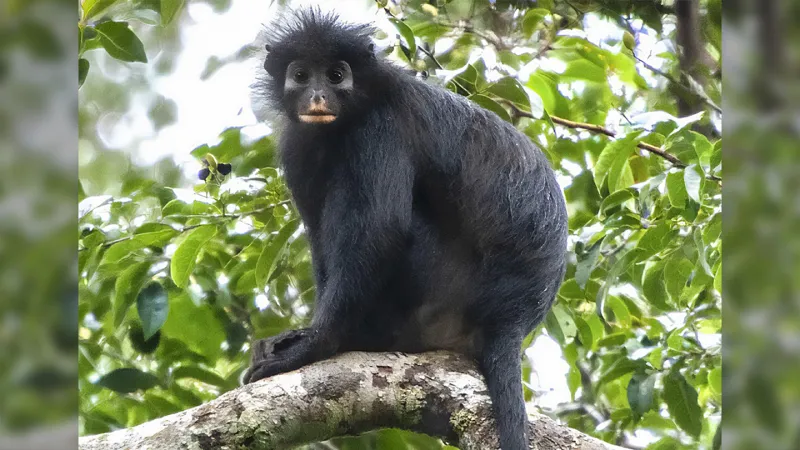
New Primate Species Discovered in Congo, Facing Potential Extinction.
A single canopy call and a partial photo were enough to signal something unknown in the Congolese treetops. DNA confirmed it: a new primate species, already facing potential extinction. Discovery at this stage is a race against time, not just a moment of celebration. The finding underscores how much remains unmapped in our natural world. For those tracking biodiversity loss, this is a sobering reminder of what is at stake.
Sponges as Habitat Engineers: Restoring Life to Polluted Harbors
A single sponge species endured where its peers could not. In a 455-day transplant experiment across a recreational harbor, *Chondrosia reniformis* posted 91.7% survival while four other Mediterranean species perished during preparation or shortly after deployment. This resilience warrants attention. The survivors did more than persist: they crawled up to 12.7 centimeters, recovered from disease, and fissioned during warm months, nearly doubling their experimental population. Such clonal proliferation and morphological plasticity position this species as a credible habitat engineer for degraded coastal infrastructure.
Climate Change Accelerates Invasive Species Threat to Ocean Ecosystems
Rising ocean temperatures are rewriting the rules of marine life, and not in ways we can afford to ignore. As climate change shifts habitable zones, invasive species are finding new footholds in ecosystems already stressed by warming waters. This is not a distant problem; it is an accelerating, measurable threat to biodiversity and coastal economies alike. The data is clear: we must integrate these patterns into our ocean intelligence now.
MPA Governance: Balancing Conservation and Blue Economies in Island Nations
Marine protected areas in island nations often promise more than they deliver. Fiji, Palau, and Taiwan's marine governance system each show that designating ocean space is not the same as governing it effectively. The real variable is institutional coherence: whether fisheries, maritime industries, and conservation speak to each other across agencies and levels. Coverage alone falls short. Governance alignment, not area size, determines whether MPAs support climate-resilient blue economies. For those tracking enforcement and monitoring gaps, the lessons here are practical.
Charting a Course: Women's Progress in Indian Marine Science
Women now earn 63.3% of postgraduate and 60.5% of doctoral degrees in Indian oceanography, yet they hold just 21.4% of faculty positions. That gap is not abstract. Ten years of national data reveal a pipeline that welcomes women at entry and thins them out at every step after. The pattern mirrors what researchers document globally, and it points to structural barriers, not capability. Progress at the top of the funnel is real, but it stops short of the lab. That is not parity.

Microcosms of the Pacific: Exploring Oregon's Tide Pool Ecosystems.
At Cape Blanco, Oregon, the tide pools reveal a world that feels almost alien up close. This July, photographer /u/JamTrackAdventures captures that otherness, showing how these microcosms shift perspective entirely. Each pool is a calibrated snapshot of life, measurable and immediate. The image reminds us that ocean intelligence starts at the shoreline, where small observations build larger understanding. For those exploring similar pathways, our related article, "Navigating a Marine Studies BA: Pathways to a Marine Biology Career," offers practical direction.

A Tiny Ghost Pipefish: New Species Echoes Sesame Street's Snuffleupagus
A tiny new species of ghost pipefish has surfaced, and its resemblance to Sesame Street's Snuffleupagus is as charming as it is scientifically intriguing. The discovery reminds us that ocean intelligence still holds countless surprises, even in well-trodden waters. While this find is a delight, it also underscores the need for validated, peer-reviewed cataloging of marine life.