Atlantic Ocean
Atlantic Ocean at World Data Ocean is a file of 17 stories. The newest of them: “Deep-sea survey confirms 200,000 leaking barrels of Cold War radioactive waste”, “An Atlantic water mass reveals its global circulation pathway”, and “Decades of Atlantic circulation data reveal measurable climate indicators”. Two hundred thousand barrels of Cold War-era radioactive waste are now visibly leaking on the Atlantic seafloor. A single Atlantic water mass now reveals its global circulation pathway, the "Grand Tour" it takes around the world. A Global Hub for Ocean Intelligence 4 World Data Ocean is a centralized digital platform where researchers, scientists, and ocean enthusiasts converge to… The list below is every Atlantic Ocean story on World Data Ocean, newest first.
Deep-sea survey confirms 200,000 leaking barrels of Cold War radioactive waste
Two hundred thousand barrels of Cold War-era radioactive waste are now visibly leaking on the Atlantic seafloor. A new deep-sea survey confirms what many feared: this historical dumping was never truly contained. The measured data are sobering, but they also empower action. This is not an alarm, it is empirical evidence demanding a calibrated, global response. Understanding drives protection. For more on how we track ocean pollutants, see our coverage of "Seafloor sediment confirmed as a vast plastic pollution reservoir."

An Atlantic water mass reveals its global circulation pathway
A single Atlantic water mass now reveals its global circulation pathway, the "Grand Tour" it takes around the world. Scripps Institution of Oceanography maps this journey with empirical precision, showing how a current that begins near the Azores becomes a measurable, real-time climate indicator across hemispheres. Understanding drives protection. For deeper context on how we validate such ocean intelligence, see our coverage of the calibrated global salinity dataset.

Decades of Atlantic circulation data reveal measurable climate indicators
Decades of Atlantic circulation data now offer something the field has long needed: measurable, validated climate indicators. This isn't anecdotal observation, it's empirical, longitudinal evidence of change. Understanding drives protection, and this dataset from NOAA gives researchers and policymakers a calibrated baseline to measure what comes next. For deeper context on the ocean's thermohaline structure, our related work on a validated global atlas from WOA18 connects the dots between surface signals and the deep currents that drive them.
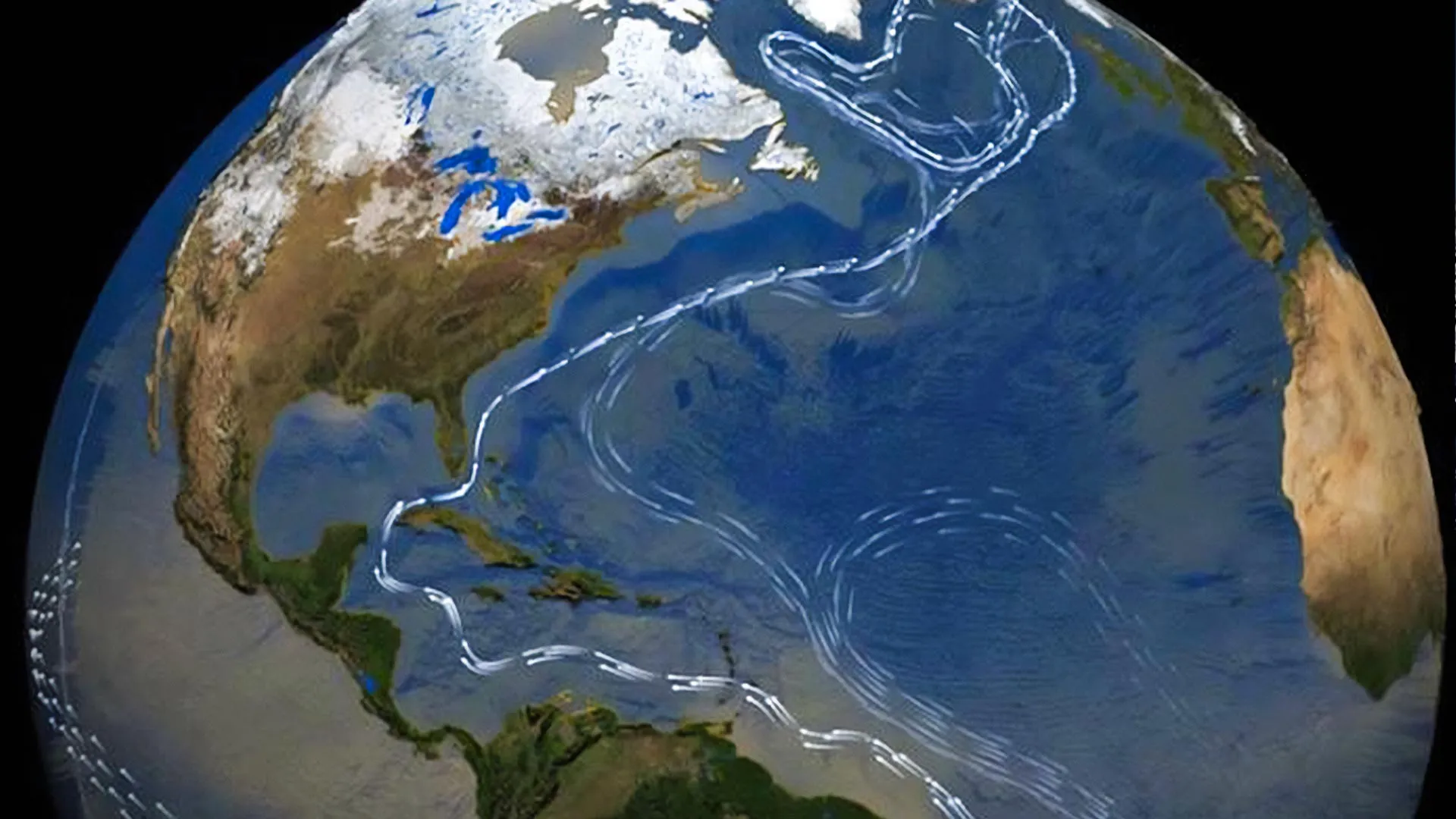
Atlantic Circulation Weakens: Global Climate Reshaping Predicted
For nearly two decades, the Atlantic Meridional Overturning Circulation has been weakening across a broad expanse of ocean, and the evidence is now firmly observational. This isn't a distant model projection; it's a measured slowdown with the potential to redraw weather patterns, storm tracks, and coastal sea levels around the basin. We treat this as a calibrated warning, not speculation. The data demands attention.

Unexpected Chiton Discovery in Puerto Rico Challenges Species Distribution Models
A chiton thought to be a snakeskin species has surfaced in Puerto Rico, yet that species was never documented in Caribbean or Atlantic waters. The discovery challenges the reliability of species distribution models that underpin much of our ocean intelligence. This is not a minor range extension, it is a signal that empirical data must catch up with predictive frameworks. Understanding drives protection, and this finding reminds us that validated, real-world observation remains the anchor of credible marine science.
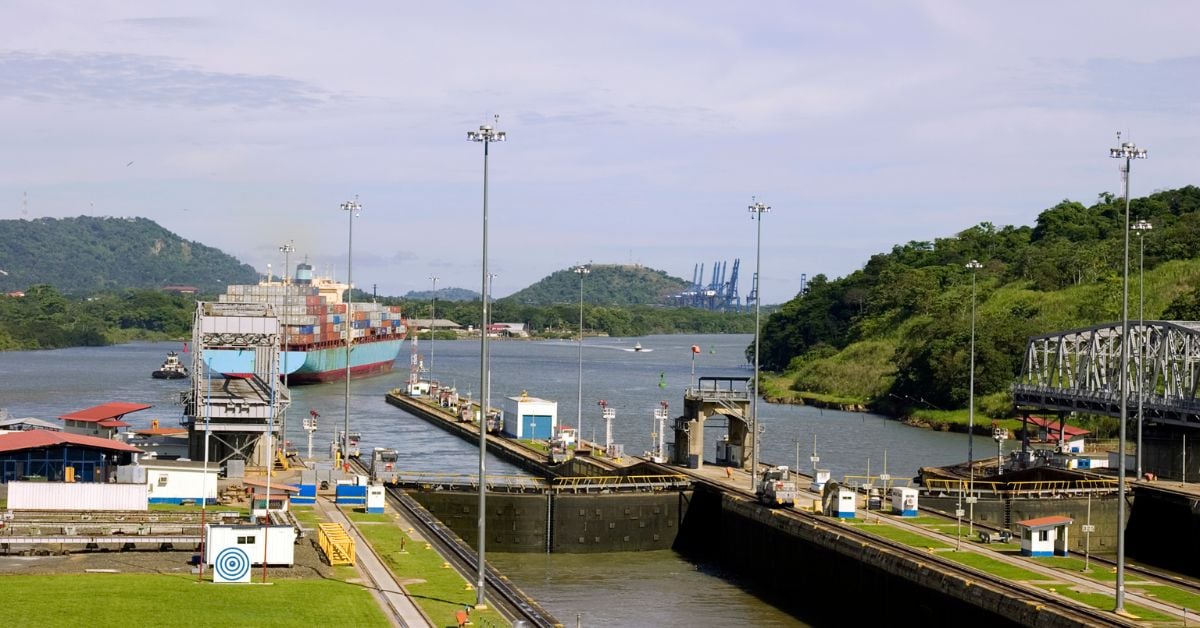
Reduced Canal Crossings: Climate Impacts Threaten Global Trade Flows
Reduced canal crossings now stand at just 29 per day. Drought and low rainfall are tightening the Panama Canal's capacity, a measurable strain on global trade flows that demands empirical attention. This is not an isolated pressure point. Our coverage of "Russia Calibrates Export Revenue for Northern Sea Route Icebreaker Fleet" shows how nations are already recalibrating infrastructure in response. Climate indicators are reshaping maritime logistics. Understanding these integrated disruptions is the first step toward protecting the systems we depend on.
Southeast Florida Waters Yield Unexpected Fish Species Observations.
Routine surveys off Southeast Florida were expected to confirm known species, yet these waters delivered observations that defy existing distribution models. The findings suggest our understanding of regional marine life remains incomplete, and that is precisely why sustained monitoring matters. Observations like these are not anomalies to dismiss but empirical signals to investigate. They remind us that ocean intelligence grows through calibrated, real-time data collection, not assumption.

Unusual Cartilage Discovery on Block Island Sparks Scientific Inquiry
A beachcomber's discovery inside Block Island's Great Salt Pond has turned up something unexpected: an object composed entirely of cartilage. The find, submitted to our community, raises more questions than answers. It is a reminder that even familiar shorelines can yield puzzles worth examining. We are not alarmed; we are intrigued. Such anomalies invite careful observation. For context on how marine environments shift over time, readers may find our piece on Atlantic Circulation Weakens valuable.

Atlantic Current Weakening: Empirical Data Reveals Accelerated Change.
The Atlantic Meridional Overturning Circulation is losing its grip, and the empirical record is unambiguous. New studies confirm this vital current system is weakening faster than projected, edging closer to a threshold that would redraw global climate patterns. This is not speculation; it is calibrated, peer-reviewed observation. We treat the data with the gravity it demands, because the measured shift is a direct signal of our collective impact.

Panama Canal: A Century of Trade Navigates Evolving Climate Risks.
The Panama Canal recorded 10,623 deep-draft vessel transits in the first ten months of fiscal year 2026, according to the Panama Canal Authority. That volume underscores a century of trade resilience, yet the waterway now navigates a more volatile climate. We see this as a measure of both engineering endurance and growing environmental pressure. For context, our coverage of El Niño's unprecedented ocean warming offers a stark reminder of what drives such risks. The canal's operations remain a critical climate indicator.

Rapid Warming Threatens Atlantic Circulation’s Stability
The pace of warming may be the deciding factor for the Atlantic Meridional Overturning Circulation. New research indicates that rapid temperature rise, similar to today's trajectory, can push this massive system past a tipping point far earlier than gradual change would allow. The finding reframes our understanding of climate thresholds. For a broader perspective on how we track these shifts, our related piece, "Atlantic Circulation Weakens: Global Climate Reshaping Predicted," offers additional context.

Captain Sentenced for Evading Coast Guard in Extensive Pursuit.
On June 12, 2026, Kalandadze, a 47-year-old Georgian national, pleaded guilty to failing to stop for a Coast Guard cutter after an extensive pursuit. Evading law enforcement at sea is not a victimless maneuver; it undermines the very rules that keep our ocean commons secure. Such actions demand accountability. For readers tracking maritime security and governance, our coverage of the "Integrated Subsea Cables Enhance Data Transmission Across the Indian Ocean" offers a broader view of how critical ocean infrastructure intersects with enforcement challenges.
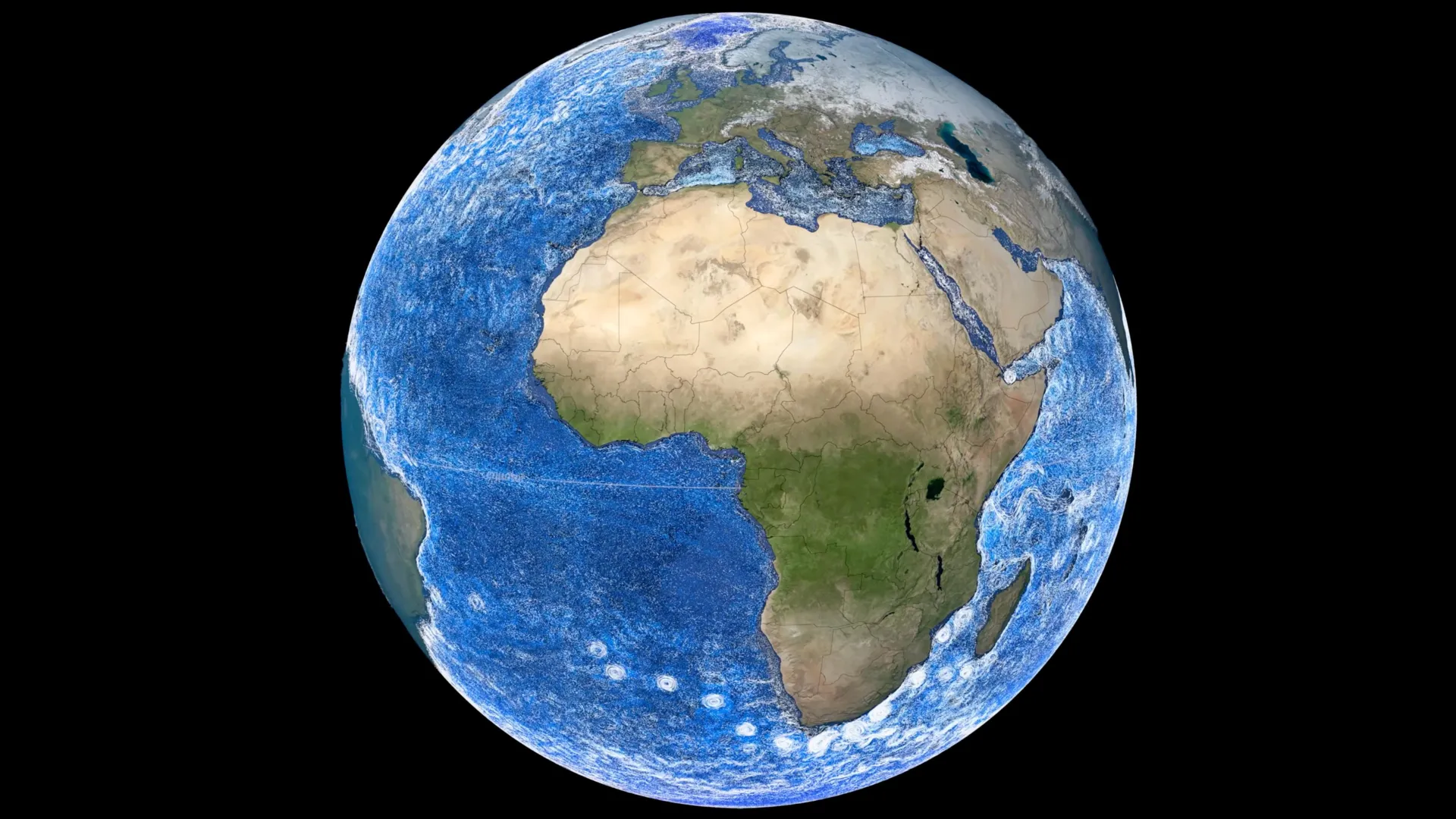
Ancient Sediments Reveal AMOC’s Resilience Amid Ocean Circulation Shift
Ancient seafloor sediments show that 3.4 million years ago, as the Indian Ocean's warm, salty inflow into the Atlantic nearly ceased, the AMOC held its own, parts of the overturning circulation even strengthened. That resilience challenges assumptions about how abruptly this system can shift. It is a reminder that ocean circulation responds in ways we are still mapping. For more on how we track such changes, see "Calibrated ocean intelligence, now within reach through integrated data discovery."

Atlantic Interdiction: Significant Cocaine Shipment Seized, Four Arrested
A coordinated maritime interdiction has led to the seizure of a significant cocaine shipment and the arrest of four crew members, including two Spanish nationals, a Gibraltar resident, and an Albanian citizen living in Italy. The operation underscores the persistent pressure on illicit trafficking routes across the Atlantic. While each interdiction stands on its own, it connects to broader patterns of ocean security. Our related coverage, including "Maritime Interdictions Yield 25,000 Pounds of Cocaine, Supporting Ocean Security," offers further context on these enforcement efforts.

Mediterranean Sea Sees First Russian Warship Absence Since 2013.
For the first time since 2013, the Mediterranean Sea holds no Russian naval presence, a quiet but telling absence. This is not a headline built on alarm; it is a measurable shift in regional posture, one that invites scrutiny of logistics, priorities, and pressure points. The signal is clear: operational reach has limits, and those limits are now visible. For deeper context on how Russia is recalibrating its maritime strategy, our piece on the Northern Sea Route icebreaker fleet offers a useful counterpoint.

Microplastic Pollution Assessed Across Key International Shipping Routes
Aboard the research vessel *Jaywun*, 100 surface-water samples now trace a microplastic story across the Atlantic, Mediterranean, Red Sea, and Arabian Gulf. Concentrations swung from 4 to 290 particles per liter, with polyester and PET dominating the mix. The Arabian Sea carried the heaviest load, while the Strait of Gibraltar surprised with a localized peak.
Atlantic Great White Population Significantly Higher Than Previously Estimated
New survey data indicate the Atlantic's great white population is significantly larger than prior estimates, a finding that recalibrates what we thought we knew about this apex predator. The numbers matter, but so does the method: validated, peer-reviewed counting that sharpens our ocean intelligence. This is encouraging for the species, yet it also raises pressing questions about ecosystem balance. For those tracking the broader picture, our coverage of Atlantic Circulation Weakens: Global Climate Reshaping Predicted offers useful context on the shifting forces at play.