Arabian Gulf
World Data Ocean keeps Arabian Gulf in one place: 10 stories so far. The section currently leads with “Mesenchymal tumors in fish help calibrate ecosystem stress baselines”, “Drone and fire attacks target three tankers near Strait of Hormuz”, and “Drone strike targets Panama-flagged tanker with 22 Indian crew at Sharjah anchorage”. A 0.54% observed frequency of mesenchymal tumors in commercially important fish from the Arabian Gulf demands attention, not alarm, but calibrated investigation. Three tankers near the Strait of Hormuz were struck by coordinated drone and fire attacks, one drone strike off Oman, two more in the strait, and a separate blaze aboard an oil tanker in the Arabian Gulf. A Global Hub for Ocean Intelligence 4 World Data Ocean is a centralized digital platform where researchers, scientists, and ocean enthusiasts converge to… The list below is every Arabian Gulf story on World Data Ocean, newest first.

Mesenchymal tumors in fish help calibrate ecosystem stress baselines
A 0.54% observed frequency of mesenchymal tumors in commercially important fish from the Arabian Gulf demands attention, not alarm, but calibrated investigation. These ten neoplastic growths, from benign lipomas to malignant rhabdomyosarcoma displacing visceral organs, provide empirical baselines for measuring ecosystem stress. Tumorigenesis in aquatic organisms is a validated climate indicator, yet interpreting these findings requires peer-reviewed caution. Understanding drives protection. For deeper context on regional environmental pressures, see our coverage of "Shamal Winds Reveal the Physical Drivers of Arabian Gulf Mixing."
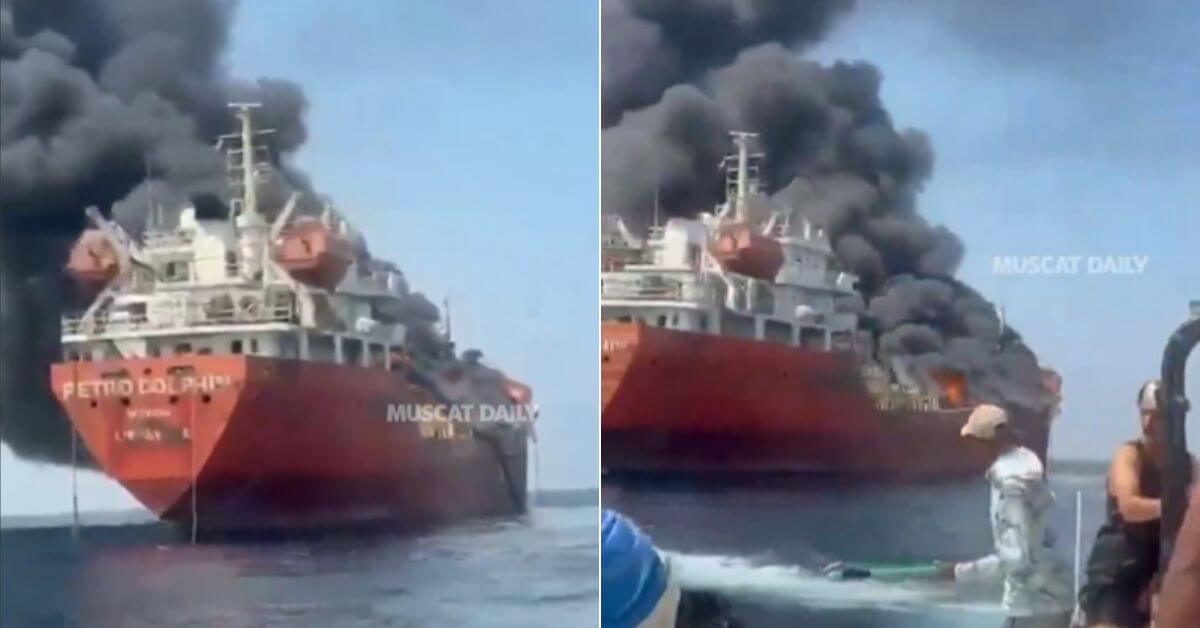
Drone and fire attacks target three tankers near Strait of Hormuz
Three tankers near the Strait of Hormuz were struck by coordinated drone and fire attacks, one drone strike off Oman, two more in the strait, and a separate blaze aboard an oil tanker in the Arabian Gulf. These incidents, in one of the world's most critical maritime chokepoints, are a measurable reminder that ocean security is inseparable from global stability. Our related coverage of stranded Iranian vessels off Sri Lanka further underscores how regional disruptions test supply chains and sanctions.
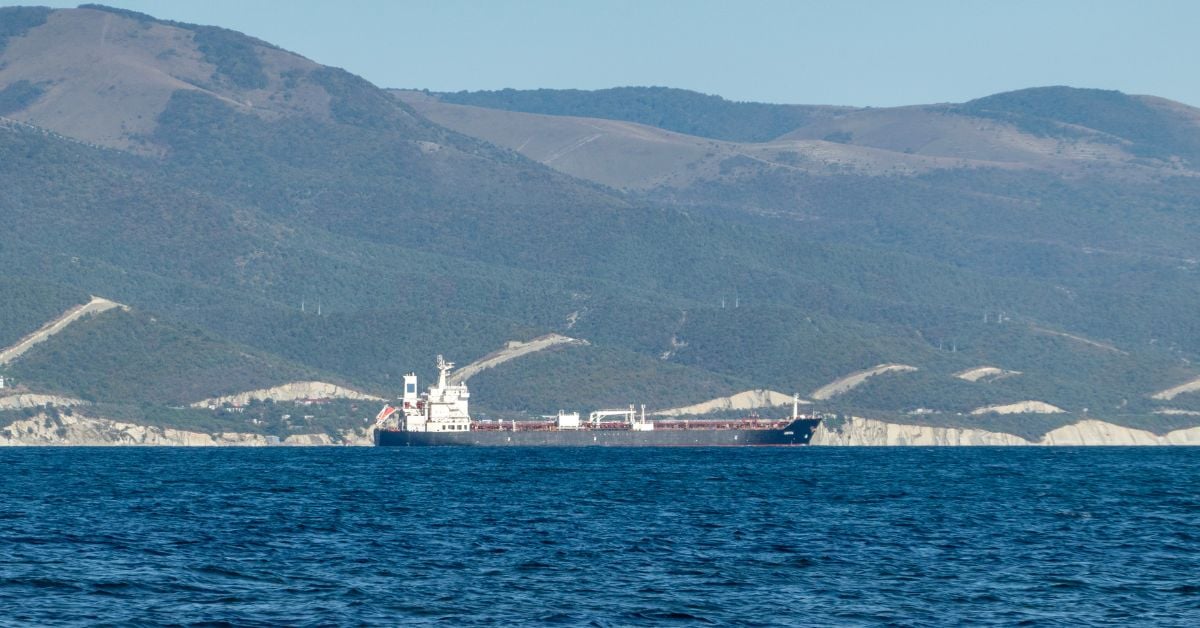
Drone strike targets Panama-flagged tanker with 22 Indian crew at Sharjah anchorage
A Panama-flagged crude oil tanker with 22 Indian crew members was struck by a drone at the Sharjah Anchorage. This incident underscores a troubling pattern: commercial vessels increasingly find themselves in harm's way. Our coverage of the abandoned cargo ship drifting through the Black Sea after a Russian drone strike reinforces that no maritime region is insulated from these threats. Measurable stability at sea remains a climate and food security indicator we cannot afford to ignore.
Shamal Winds Reveal the Physical Drivers of Arabian Gulf Mixing
Cold, dry Shamal winds do more than chill the air; they reach down and stir the entire water column. New research from the northwestern Arabian Gulf shows that these winter events drive convective mixing all the way to the seabed, fundamentally reshaping turbulence in this shallow basin. The study's model, observation comparisons reveal a critical insight: tidal shear dominates under calm conditions, but Shamal peaks override that mechanism, homogenizing the water column and suppressing shear-driven mixing.

Shipping Caution Advised: Incident Near Strait of Hormuz Impacts Transit
The UKMTO's warning on September 10 is a measured but necessary response to an incident near the Strait of Hormuz. Vessels in that corridor now face heightened risk, and the call for cautious transit and reporting of suspicious activity reflects a reality we cannot ignore. This is not alarmism, it is empirical caution. For deeper context on the pressures shaping this waterway, our article "Phased Negotiations Aim to Ease Restrictions on Strait of Hormuz" examines the diplomatic efforts underway. Understanding drives protection.
Safi Fish Tissue Reveals Adaptations to Extreme Arabian Gulf Conditions
Safi, or *Siganus canaliculatus*, thrives where many species cannot, its tissue structure revealing a precise physiological balance with the Arabian Gulf's hyper-saline waters. This first histological baseline of the species is a practical step forward, offering measurable data on gill, liver, and kidney adaptations that underpin its resilience. The findings are a solid reference point for aquaculture and conservation, and they echo the kind of empirical tracking seen in our coverage of climate indicators like the 2025 temperature anomalies.

Iran Plans Exclusion Zone in Strategic Strait of Hormuz.
Iran's decision to establish an exclusion zone around the Strait of Hormuz signals a deliberate move to control one of the world's most vital maritime passages. Requiring permission to transit is not a technicality; it is a statement of leverage. The move carries measurable implications for global shipping and energy routes, and it demands calibrated attention from the international community.
Concurrent Heatwaves Threaten Arabian Sea Coral and Productivity
The Arabian Sea's coral reefs are not just facing warmer waters; they are facing a compounding threat. Our new research shows that when marine and atmospheric heatwaves strike together, the thermal stress on ecosystems intensifies dramatically. These concurrent events now drive 70-80% of severe coral bleaching in the region, and they cut chlorophyll-a levels by over 20%. This is not a distant risk; it is a measurable shift.
Microplastic Pollution Assessed Across Key International Shipping Routes
Aboard the research vessel *Jaywun*, 100 surface-water samples now trace a microplastic story across the Atlantic, Mediterranean, Red Sea, and Arabian Gulf. Concentrations swung from 4 to 290 particles per liter, with polyester and PET dominating the mix. The Arabian Sea carried the heaviest load, while the Strait of Gibraltar surprised with a localized peak.

Naval Action: US Disables Tanker in Arabian Gulf, Escalating Tensions.
The U.S. Navy's disablement of a tanker in the Arabian Gulf marks the first publicly confirmed case of a merchant vessel being taken out of action since Washington reinstated its naval blockade on Iran. It is a deliberate, calibrated escalation, not an accident. The move signals that economic pressure has crossed into active maritime enforcement. For readers tracking the diplomatic path forward, our related piece on phased negotiations toward easing Strait of Hormuz restrictions provides essential context.