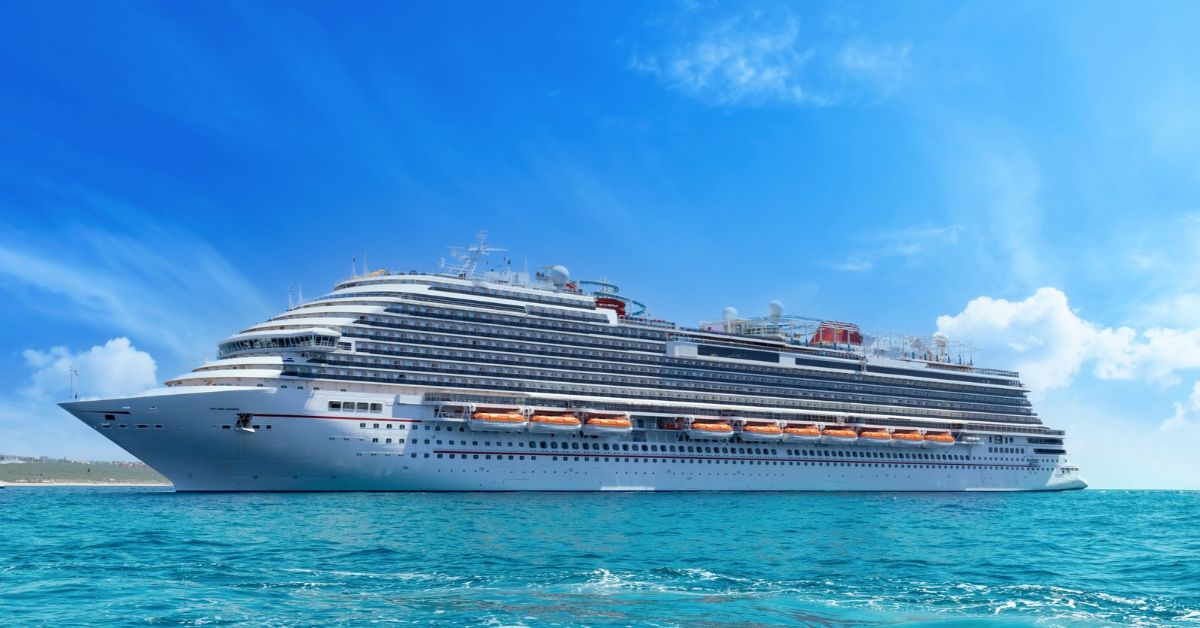
The sudden stranding of over 200 passengers in Cambodia by the residential cruise ship Villa Vie Odyssey is not a freak accident of the sea; it is a predictable failure of a business model that mistook a dream for a viable enterprise. When a company cannot afford fuel for its own vessel, the promise of a permanent life at sea becomes an expensive illusion. For our readers, who understand that real ocean intelligence requires calibrated, empirical data, this episode offers a stark lesson: sustainability at sea is not a marketing slogan but a measurable condition.
The Villa Vie Odyssey, a 1993-built vessel with a flat hull designed for river ports, had sailed for 762 days across 147 countries. Yet its operator, Villa Vie Residences, suspended operations citing rising fuel costs and the U.S.-Iran war, while admitting the ship was running at less than a third of its 650-passenger capacity. Passengers like Lanette Canen and Johan Bodin, who sold their business and paid $100,000 for a cabin plus $3,500 monthly fees, were told to disembark with little notice. This contrasts sharply with the ambition we see in other maritime sectors: Cruising India's coastlines toward a measurable global maritime impact by 2032 shows a cruise industry planning for growth with clear targets and infrastructure, not speculative residence schemes. Similarly, Measuring Coastal Resilience Through Community Input in Northeast Florida reminds us that long-term maritime projects require integrated community data, not just a YouTube channel and a monthly fee.
The core failure here is not the war or rising costs, those are external factors that any integrated data ecosystem should have anticipated. The failure is occupancy. With only 200 residents on a 650-person vessel, the arithmetic was never in the passengers' favor. The company's business model depended on a critical mass of residents that never materialized. Passengers were left to learn of the crisis from Cambodian officials, not from the owners, who offered no clarity. Mary Ann Demsar, a retired teacher from Canada, summed it up: the only information came from the government. This is the opposite of the transparent, peer-reviewed approach that ocean stewardship demands.
One concrete takeaway: residential cruising, as currently structured, is not a housing solution but a high-risk lease on borrowed time. Passengers who sold businesses and moved their lives aboard were betting on a company that could not keep its own lights on. The Villa Vie Odyssey has since departed Sihanoukville with only 50 crew members, its final destination unconfirmed but rumored to be Singapore. For those considering similar arrangements, the question is not whether the ship can visit historic ports, but whether the ledger behind it can stay afloat.