Japan Plans Submarine-Launched Mach 5 Hypersonic Missile To Strengthen Long-Range Strike Capability
Our take
Japan's announcement of plans to develop a submarine-launched Mach 5 hypersonic missile represents a significant shift in regional power dynamics and underscores the escalating technological arms race in the Indo-Pacific. The inclusion of this development in the FY2027 budget request signals a concrete commitment to bolstering Japan’s long-range strike capabilities, moving beyond its traditionally defensive posture. This decision arrives against a backdrop of increased geopolitical tensions, particularly concerning China and North Korea, and highlights a reassessment of Japan’s security strategy. The context is further illuminated by recent events such as the escort of oil tankers through the Strait of Hormuz by the U.S. Navy [40 Oil Tankers Loaded With 18 Million Barrels Of Oil For Asia Cross Hormuz Under U.S Naval Escort], demonstrating the ongoing need for maritime security and the complexities of regional trade routes. Furthermore, Japan’s selection of a cruise ship to host athletes for the 2026 Asian Games [Japan Selects Cruise Ship To Host 4000 Atheletes For 2026 Asian Games Opening In Nagoya] illustrates the nation’s capacity to manage large-scale logistical and security operations, a skill likely to be applied to its military modernization efforts.
The development of hypersonic missiles presents a formidable challenge to existing defense systems due to their extreme speed and maneuverability. A Mach 5 velocity implies travel at over 3,800 miles per hour, significantly reducing reaction time for potential adversaries. Coupled with submarine launch capability, this creates a highly survivable and difficult-to-detect strike platform, increasing Japan’s strategic reach and deterrence potential. While the technical hurdles to developing and deploying such a system are considerable – including thermal management, guidance accuracy at hypersonic speeds, and ensuring reliable submarine integration – Japan’s known technological prowess suggests a serious and well-funded undertaking. The move is also noteworthy given the ongoing discussions around international maritime law and trade practices, as evidenced by analyses of institutional divergence in bills of lading [Institutional divergence in bills of lading: reconciling China’s predominantly real-right approach with prevailing global practice], which highlights the intricacies of navigating international legal frameworks within a shifting geopolitical landscape. Japan's actions will undoubtedly be scrutinized through this lens, particularly concerning potential implications for freedom of navigation and regional stability.
The broader significance of this development extends beyond Japan’s immediate security concerns. It’s a clear indication that regional powers are proactively seeking to counter perceived threats and maintain strategic autonomy, potentially accelerating an arms race among nations in the Indo-Pacific. Other countries in the region, observing Japan's actions, may feel compelled to invest in similar advanced weaponry, leading to a more complex and potentially volatile security environment. The decision also signals a closer alignment between Japan and the United States, as the acquisition and deployment of such advanced missile systems typically requires significant technological collaboration and security assurances. It’s reasonable to anticipate increased joint military exercises and intelligence sharing between the two nations as a consequence. Furthermore, the development raises broader questions about the future of arms control and the potential for escalation in a region already characterized by heightened tensions.
Looking ahead, the key question is how other regional actors, particularly China, will respond to Japan’s acquisition of this hypersonic missile capability. Will it trigger a reciprocal arms buildup, or will it incentivize diplomatic efforts to de-escalate tensions? The integration of this new system into Japan's existing defense infrastructure, including its submarine fleet and command-and-control systems, will also be a critical factor to watch. The successful demonstration of operational capability and the calibration of the missile’s accuracy and reliability will determine its true strategic value. Ultimately, the long-term implications of this development will depend on the broader geopolitical context and the willingness of all parties to engage in constructive dialogue and pursue peaceful resolutions to regional disputes.
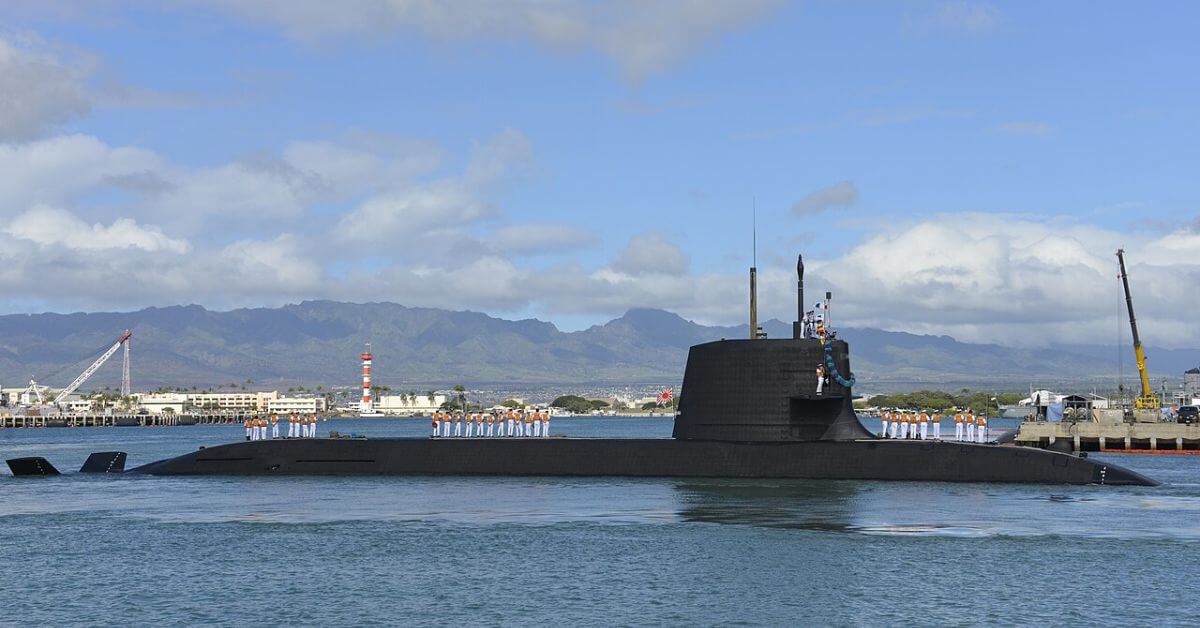
Japan plans to develop a hypersonic missile that can be launched from a submarine and travel at more than Mach 5.
The project is part of Japan’s FY2027 defence budget request. The aim is to give Japan another way to launch long-range missiles from submarines that are hard to detect.
Japan’s Ministry of Defense included the plan in its FY2027 budget request released at the end of August 2026.
The request also includes about ¥48 billion ($325 million) to study an underwater vertical launch system, or VLS, for larger long-range missiles on Japan Maritime Self-Defense Force (JMSDF) submarines.
Japan is also studying a missile launch system for unmanned underwater vehicles, or UUVs.
Why Japan wants submarine-launched missiles
China has improved its satellites, surveillance systems, missiles and air forces. These systems can threaten Japanese air bases, naval facilities and known missile sites.
Land-based missile units can move. Warships can also change position. But both can still be tracked by satellites and other surveillance systems.
Submarines are harder to find when they are underwater. Their exact location can remain unknown while they move toward a launch area.
This could help Japan keep some long-range weapons available even after an enemy attack on its military bases.
Finding a submarine after it launches a missile would also be difficult. An enemy could have to search a large area of sea using submarines, anti-submarine aircraft, warships and underwater sensors.
Japan has not said how far the new missile will travel. It has also not given details about its size, propulsion system or warhead.
Japan wants larger missiles on submarines
The ¥48 billion VLS research could allow future JMSDF submarines to carry larger long-range missiles.
Japan’s current submarines use torpedo tubes to launch weapons. The Taigei-class submarines have six 533 mm torpedo tubes and can launch weapons such as the Harpoon UGM-84.
Torpedo tubes limit the size of a missile.
A VLS could provide larger launch cells. It could also give missiles more room for propulsion and possibly allow them to travel farther.
At the same time, the torpedo tubes could remain available for anti-submarine and anti-surface warfare.
Japan will need to study how the VLS can work safely underwater. This includes the structure of the launch system, how the missile leaves the submarine and how the launch affects the submarine’s stability.
Hypersonic missiles would add more problems. They need enough propulsion, heat protection and advanced guidance systems to travel at very high speeds.
UUVs could provide another launch option
Japan also wants to study a missile launch module for UUVs.
Tokyo has not said how large these UUVs would be, what missiles they would carry or how the launch system would work.
There is also no indication that the planned hypersonic missile itself would be carried by a UUV.
In the future, UUVs carrying missiles could give Japan more launch positions without putting submarine crews at risk.
They could also make it harder for an enemy to find all of Japan’s underwater weapons.
Japan is building more long-range weapons
The submarine missile plan is part of Japan’s effort to build stand-off weapons.
Japan is improving its Type 12 surface-to-ship missile family. It is also working on hypersonic and other high-speed weapons.
Japan is acquiring U.S.-made Tomahawk cruise missiles and other air-launched stand-off weapons.
It is also looking at a cheaper stand-off weapon to work alongside more expensive systems.
Hypersonic missiles are likely to cost more and be available in smaller numbers. They could be used against important targets where speed is important.
Cheaper missiles could be used in larger numbers and for longer operations.
Japan will need better targeting information
The submarine will also need accurate information about its targets.
Japan is investing in space-based surveillance, sensor networks, AI-based satellite data processing and communications systems for stand-off weapons.
This is important because targets such as warships can move.
A submarine could be hundreds of kilometres from its target and remain hidden. It cannot track every target from that distance on its own.
Japan could use information from satellites, maritime patrol aircraft, surface ships, unmanned aircraft and other systems.
This would allow the submarine to stay hidden while receiving information from other platforms.
The same system could help Japan and the United States keep using long-range weapons if some air bases, ships or land-based launchers are damaged.
Future JMSDF submarines could carry more strike weapons
If the VLS program moves ahead, future JMSDF submarines could have more long-range strike missions.
They could still be used for anti-submarine warfare, intelligence gathering and attacks on surface ships.
They could also carry long-range missiles for targets such as command centres, missile batteries, air-defence systems and naval facilities.
The Taigei class is Japan’s latest attack submarine class. Japan has commissioned up to five submarines in the class.
The latest boat, JS Chōgei (SS-517), was launched in March 2026.
The Taigei class was also designed to test new technologies, with later boats receiving improvements.
Adding a VLS to the existing design would not be simple. A larger launch system could affect the submarine’s size, weight, internal space and noise levels.
Kawasaki Heavy Industries has been working on a new diesel-electric attack submarine design since December 2023.
Japanese Defence Minister Shinjirō Koizumi has also discussed the need for nuclear-powered submarines.
References: Army Recognition
Read on the original site
Open the publisher's page for the full experience