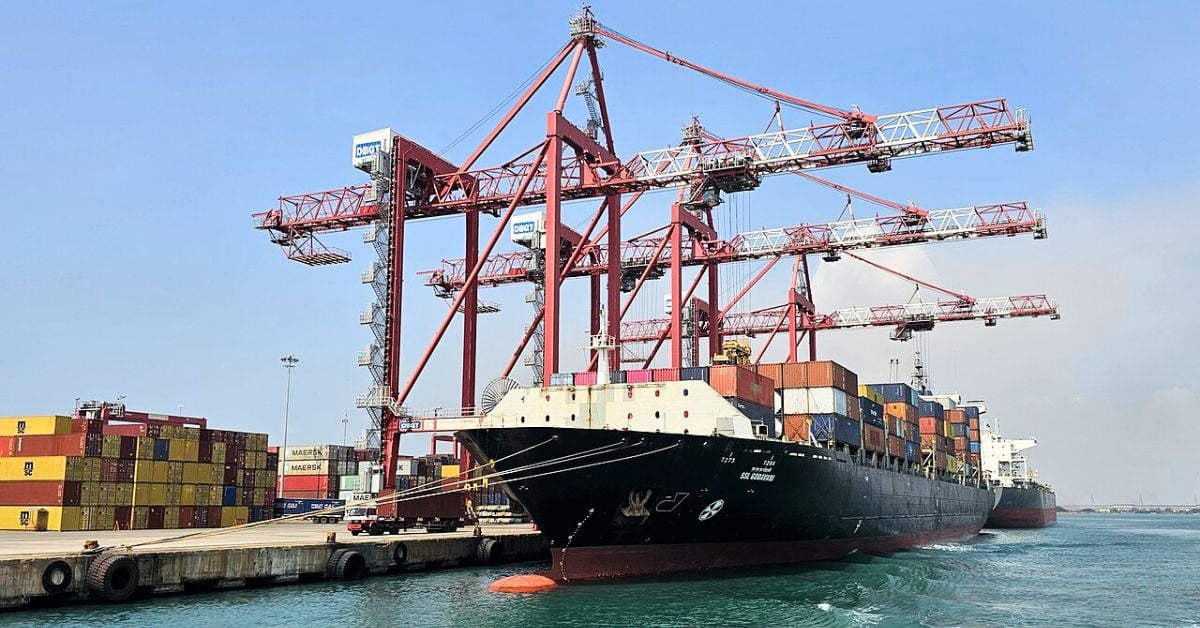
A container terminal that once ran on diesel now runs on electrons. VOC Port's international container terminal in Tuticorin has earned its green terminal designation by electrifying 100% of its operational equipment and deploying 13 electric internal transfer vehicles. This is not a pilot or a pledge; it is a validated, measurable milestone in a sector where emissions have long been accepted as collateral damage. We see this as a practical proof point that port electrification can scale, and that India's maritime infrastructure is beginning to treat carbon reduction as an operational requirement, not a marketing tagline.
The achievement matters most for what it enables next. VOC Port is simultaneously developing a methanol bunkering pilot, a green hydrogen project, and wind energy facilities, with green maritime infrastructure valued at over ₹18,400 crore. These are not abstract ambitions. They are integrated, calibrated investments that position the port to supply alternative fuels to the vessels that will call there. This kind of forward integration, electrifying the shore side while building the fuel supply chain, is exactly the kind of coordinated approach that makes decarbonisation tangible. For researchers and policymakers tracking Decomposed Carcass on Gulf of Mannar Coast Challenges Cetacean Identification, the proximity of heavy industrial port expansion to the ecologically sensitive Gulf of Mannar raises empirical questions about cumulative environmental pressure. For those following Maersk Vessel Arrives at L&T's Kattupalli Yard to Advance Indian Ship Repair, this port's ambition to become a major transhipment hub connects directly to the larger story of Indian maritime infrastructure catching up with global standards.
The scale of the outer harbour project, more than ₹15,000 crore for an additional 4 million tonnes per annum of capacity, makes one thing clear: green credentials are not slowing expansion. VOC Port aims to position Tamil Nadu as a southern transhipment hub, and it is doing so while electrifying its terminal equipment. That dual track, growing capacity and reducing per-tonne emissions, is the only credible path for ports in a carbon-constrained world. What remains an open question is the timeline for the methanol and hydrogen facilities, which the source did not provide. A port that handles 82 million tonnes of cargo annually cannot afford long gaps between announcing a green fuel project and breaking ground on it. The next concrete point to watch is whether VOC Port publishes a completion schedule for those facilities. If it does, and if it meets those dates, this green terminal certification will look less like a headline and more like a leading indicator.