An ancient moonpocalypse may explain Neptune’s odd moon Nereid
Our take
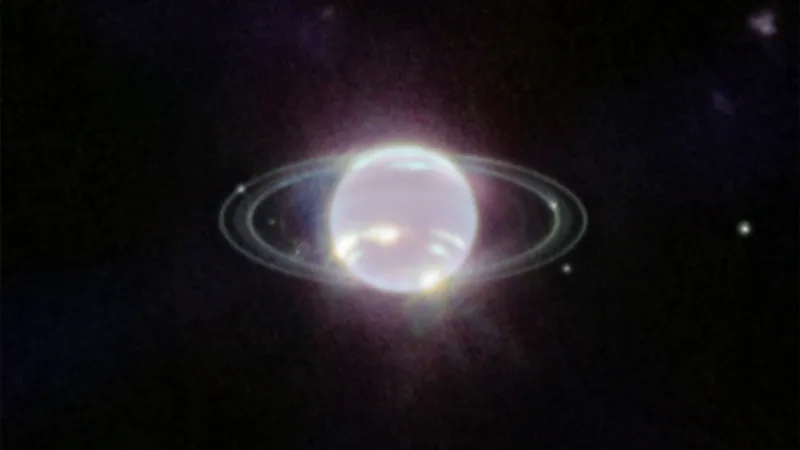
The recent insights into Neptune’s moon Nereid, suggesting it may be a remnant of an earlier system formed near the planet, offer a fascinating glimpse into the complexities of planetary formation and the historical dynamics of our solar system. This revelation challenges the conventional understanding that many moons, including Nereid, are often captured objects from the Kuiper Belt or other regions. Instead, Nereid’s unique characteristics and its potential origins may reveal a more intricate evolutionary tale of Neptune and its surroundings, one that could reshape our approach to understanding celestial mechanics and moon formation.
The implications of this finding extend beyond the realm of planetary science. Understanding the origins of Nereid can provide context for our knowledge of other celestial bodies, particularly those in similar orbits around gas giants. As we delve deeper into the complexities of our solar system, this could also enhance our understanding of how planets interact with their moons over geological timescales. The recent discoveries about how CO2 cools part of Earth’s atmosphere remind us that planetary systems are dynamic and influenced by various factors, including atmospheric conditions and gravitational interactions.
Furthermore, the study of Nereid could inspire renewed interest in the exploration of Neptune and its moons. As planetary scientists advocate for missions to study these distant worlds, the potential for discovering more about their formation and history grows. The importance of capturing imagery, as highlighted by planetary scientist Candice Hansen-Koharcheck, echoes in this context. High-resolution imaging and data collection could provide critical insights into the physical characteristics of Nereid and its geological processes, further informing our understanding of Neptune’s past and its evolution.
Ultimately, the notion of Nereid as a remnant of an ancient moon system emphasizes the necessity for a collaborative approach to planetary science. The more we learn about the formation of moons like Nereid, the better equipped we will be to address broader questions about the history of our solar system and the potential for life elsewhere. As we observe the recent events, such as NASA capturing wild swirling clouds and a rare Arctic storm over Alaska, we are reminded of the interconnectedness of planetary processes, whether on Earth or at the far reaches of our solar system.
Looking forward, the implications of understanding Nereid’s origins may prompt us to reconsider our strategies for planetary exploration and the importance of preserving the integrity of both our own planet and those beyond. What other hidden histories might celestial bodies reveal, and how can this knowledge inform our stewardship of the cosmos? As we venture into this new era of planetary discovery, one can only wonder what other secrets lie in the depths of our solar system, waiting to be unveiled.
Read on the original site
Open the publisher's page for the full experience