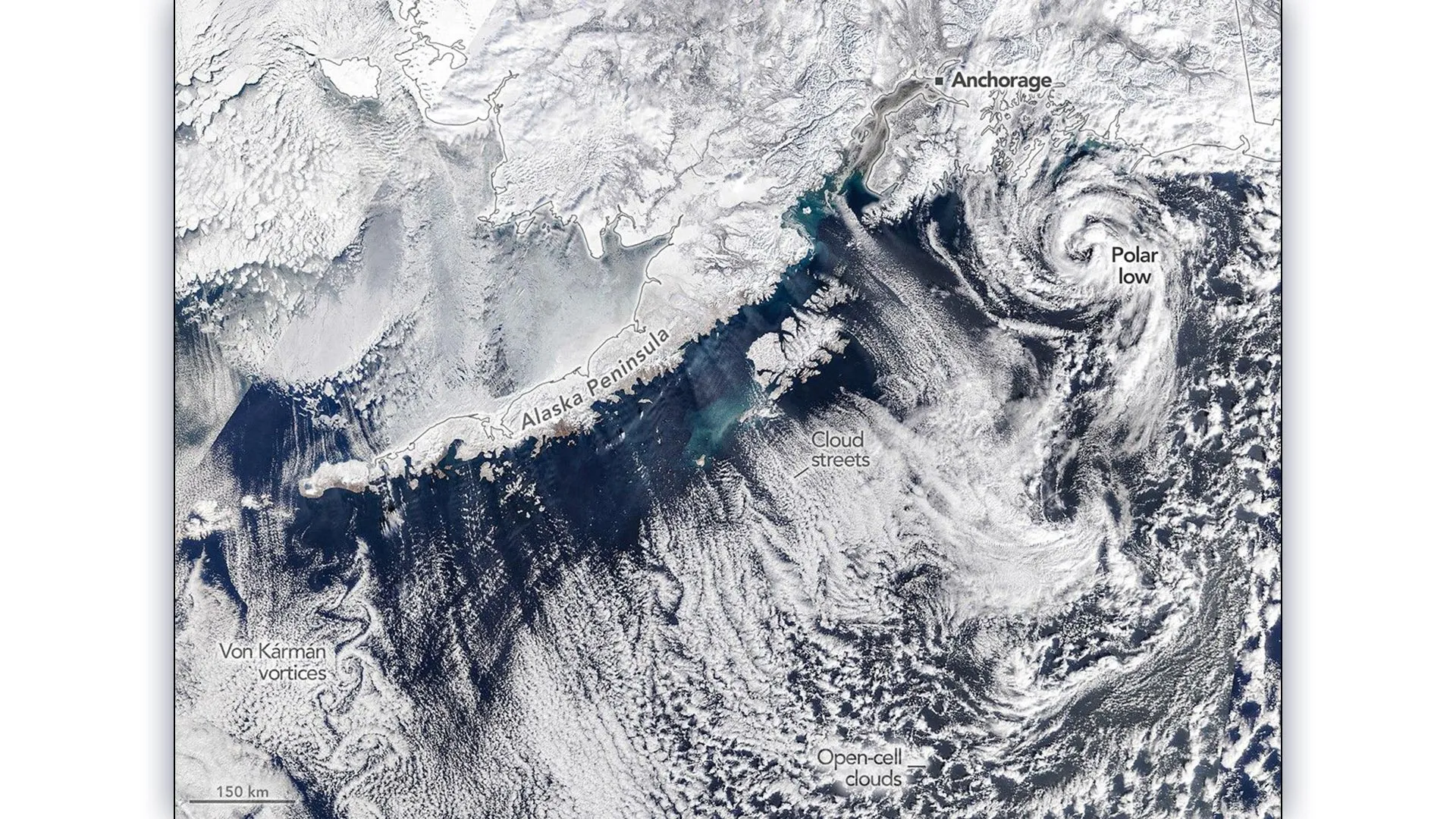
The recent awe-inspiring visuals captured by NASA of the dynamic atmospheric display over Alaska serve as a powerful reminder of the intricate dance between Earth's climate systems. This spectacular winter finale, marked by swirling clouds and a rare compact polar storm, is not just a visual treat but a testament to the complex interplay of environmental forces at work. Such phenomena, captured from the vantage point of space, underscore the importance of continued observation and research into our changing climate. As we witness these dramatic cloud patterns, it's not merely an observation but a call to action, highlighting the need for comprehensive marine climate data governance in an era dominated by artificial intelligence. The integration of AI models into marine climate monitoring and prediction processes, as discussed in our article on Navigating the frontier of data openness: the obligation to cooperate in marine climate data governance under the AI Era, is crucial for understanding and mitigating the effects of climate change on our planet's oceans.
The atmospheric spectacle over Alaska also prompts us to consider the broader implications of oceanic and atmospheric interactions. As the cold Arctic air meets the warmer ocean waters, it not only creates a visually stunning display but also contributes to the overall energy dynamics of our climate system. This interaction is a microcosm of the global climate challenges we face, including the co-occurrence of ocean acidification and warming, which, as detailed in our piece on Impacts of coinciding ocean acidification and warming on the fatty acid profile of the pteropod Limacina helicina within the Northeast Pacific coastal region, poses a significant threat to marine life and, by extension, the health of our oceans and the ecosystems they support. The ongoing research into these phenomena is essential for developing strategies to protect marine biodiversity and ensure the resilience of our oceans against the adverse effects of climate change.
Moreover, the increasing input of freshwater into the western Arctic Ocean, as explored in our article on Effects of different freshwater sources on microplankton in the Western Arctic Ocean, is another critical factor influencing marine ecosystems and climate dynamics. This freshwater influx alters the physical and biological properties of the ocean, affecting everything from microplankton populations to the larger marine food web. Understanding these changes is paramount for assessing the impact of climate change on marine life and for developing effective conservation strategies.
As we continue to observe and study these natural phenomena, it becomes increasingly clear that the health of our oceans and the stability of our climate are deeply interconnected. The challenges we face are complex, but so are the solutions. By fostering global collaboration, leveraging technological innovation, and embracing a commitment to data openness and accuracy, we can work towards a future where the ocean's wonders are not just preserved for posterity but actively safeguarded for generations to come. The question we must now ponder is: How can we harness the power of collective knowledge and international cooperation to address the pressing challenges of climate change and ocean stewardship in the 21st century?