AI is not ready to fly solo in space
Our take
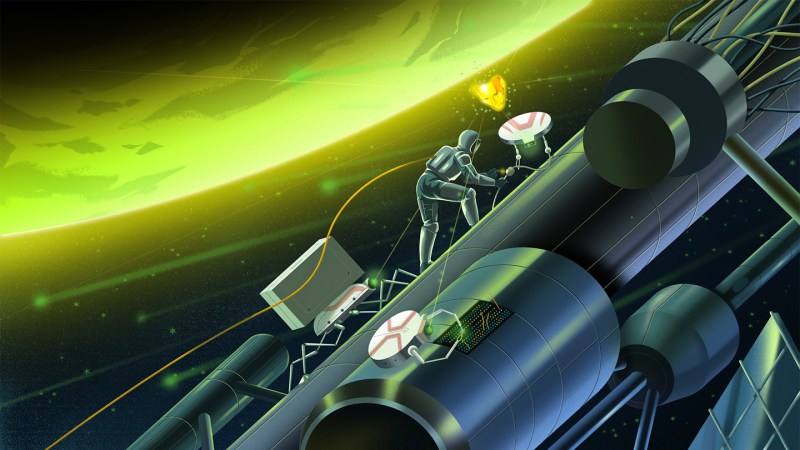
The recent article highlighting the limitations of AI in autonomous space navigation underscores a critical juncture in our exploration of the cosmos. While science fiction routinely portrays sophisticated AI systems flawlessly guiding spacecraft and safeguarding human crews, the reality remains significantly more nuanced. The current state of artificial intelligence, while rapidly advancing, lacks the adaptability and robust reasoning capabilities necessary to reliably handle the unpredictable challenges inherent in space travel. This isn't to diminish the progress made – AI is already playing a vital role in data analysis and automated systems – but rather to emphasize that true autonomy, particularly in high-stakes environments like deep space missions, requires a level of intelligence that hasn’t yet been achieved. We’ve seen glimpses of this tension play out in terrestrial applications, such as the recent deployment of armed robotic systems in Ukraine, where Ukraine Deploys Armed Robot From Drone Boat Into Russian-Occupied Territory In First Known Robotic Amphibious Assault, demonstrating the complex integration of AI and robotics in contested environments, albeit in a far more controlled setting than the vacuum of space. The ability of such systems to accurately identify and engage targets, even with sophisticated ballistic computers, highlights the current reliance on pre-programmed parameters and limited real-time adaptation.
The concept of "intelligence" itself is the core of the issue. Current AI excels at pattern recognition and executing pre-defined algorithms, but struggles with genuine problem-solving and improvisation when confronted with unforeseen circumstances. Space, by its very nature, is replete with the unforeseen – from micrometeoroid impacts to unexpected radiation flares to equipment malfunctions far removed from Earth-based support. The IMO Council Reaffirms Commitment To Freedom Of Navigation And Seafarer Safety, while focused on maritime concerns, highlights the ongoing need for robust navigational safeguards and human oversight, even with advanced technologies. Translating these principles to space exploration demands a cautious approach to AI integration, recognizing that the stakes – human life and mission success – are exceptionally high. We are in an era of rapid technological advancement, and while AI’s predictive capabilities are increasing, its ability to reason abstractly and respond creatively to novel situations lags behind what is required for truly autonomous spaceflight. The current reliance on human-in-the-loop systems, where human operators can intervene and override AI decisions, is a necessary safeguard, but it also introduces limitations in terms of response time and the potential for human error.
The limitations discussed in the article aren't a reason to abandon AI development for space exploration, but rather a call for a more realistic and targeted approach. Focusing on specific, well-defined tasks where AI can reliably outperform humans, such as routine data processing and automated system maintenance, is a more prudent strategy than striving for complete autonomy prematurely. Furthermore, research should prioritize developing AI systems that can better explain their reasoning processes—"explainable AI"—allowing human operators to understand and validate AI decisions. This transparency is crucial for building trust and ensuring that humans remain in control when faced with critical situations. The integration of AI into space exploration should be viewed as a collaborative partnership, where AI augments human capabilities rather than replacing them entirely. This perspective necessitates a shift away from the science fiction ideal of the all-knowing, self-sufficient AI and toward a more practical model of intelligent assistance.
Looking ahead, the challenge lies in bridging the gap between current AI capabilities and the requirements of truly autonomous space exploration. Advances in areas like reinforcement learning and neural networks hold promise, but significant breakthroughs are still needed. A key area of focus will be developing AI systems that can learn and adapt from limited data—a critical requirement given the constraints of space missions. A further question to consider is how we can build in ethical considerations into the very architecture of space-faring AI, ensuring that decisions made by these systems align with human values and priorities, particularly as we move toward longer-duration missions further from Earth. What safeguards are necessary to ensure that AI, entrusted with the safety of human explorers, remains accountable and aligned with our broader goals of peaceful exploration and scientific discovery?
Read on the original site
Open the publisher's page for the full experience