A ‘jar’ jammed with human bones may solve Laos’ ‘Plain of Jars’ mystery
Our take
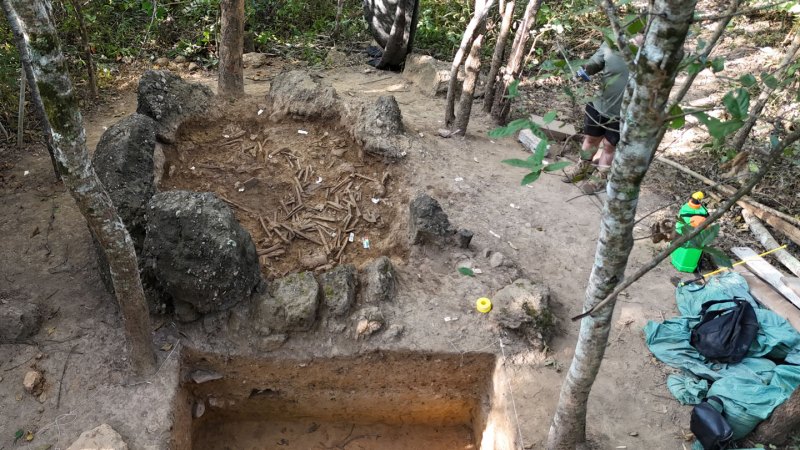
The recent discovery of human remains within an ancient stone 'jar' in northeastern Laos offers a fascinating glimpse into the burial practices of a civilization long past. With the remains of at least 37 individuals found in this single jar, the evidence suggests that thousands of similar jars may have been used throughout the region for burial purposes. Such findings provide not only a window into the cultural and ritualistic practices of ancient societies but also pose new questions about how these communities understood death and the afterlife. This discovery parallels other significant archaeological insights, such as the findings of First evidence of Neandertal dentistry found in ancient molar, which highlight the intricate behaviors of early humans, and the recent exploration of how climate change interacts with atmospheric conditions in Scientists discover the strange way CO2 cools part of Earth’s atmosphere.
The Plain of Jars, a UNESCO World Heritage site, has long intrigued researchers and historians alike. This latest discovery adds a significant layer to our understanding of the site, suggesting that these ancient jars served not merely as artifacts of daily life but as sacred vessels for honoring the dead. The implications extend beyond local cultural practices; they resonate within the global narrative of how human societies have historically engaged with mortality and memory. The prevalence of similar jars across the region hints at a complex network of beliefs and social structures that may have existed in ancient Laos, reflecting broader human themes of community, legacy, and the connection to the land.
Moreover, this find raises critical questions about the archaeological methodology employed in such excavations. It serves as a reminder of the importance of meticulous research and the need to approach ancient sites with a commitment to understanding their historical context. The use of innovative technologies and interdisciplinary collaboration can enhance the preservation and interpretation of such sites, ensuring that voices from the past are not only heard but also understood in their full complexity. As we have seen in recent studies exploring ancient practices, like the Antique seaweed pressings? Or watercolors. From Europe Europe I'm in usa, the integration of various fields can lead to a more nuanced comprehension of our shared heritage.
As we contemplate the significance of the jars and the remains they contain, we must also consider the broader implications for cultural preservation in the face of modern challenges. Climate change, ongoing conflicts, and urban development threaten many archaeological sites worldwide, including the Plain of Jars. This discovery not only enriches our understanding of the past but also underscores the urgency of protecting such sites for future generations. The narrative of human history is still being written, and every archaeological find contributes to this ongoing story.
Looking ahead, it will be crucial to monitor how this discovery influences future archaeological strategies and conservation efforts. Will it inspire more rigorous protection of burial sites in Laos and beyond? How might it reshape our understanding of human interaction with the environment and each other in ancient times? As we seek answers to these questions, the findings from the Plain of Jars will undoubtedly serve as a focal point for researchers and enthusiasts alike, fostering a deeper appreciation for the complexities of our shared human experience.
Read on the original site
Open the publisher's page for the full experience