warming
World Data Ocean keeps warming in one place: 8 stories so far. The section currently leads with “Stratification in the Tyrrhenian Sea signals shifting ocean stability”, “August ocean heat readings reach highest validated level on record”, and “Unexpected Snowfall Drives Record Ice Gain in East Antarctica”. Ten years of bimonthly CTD profiles along the Cilento coast now confirm what reanalysis fields have long suggested: the southern Tyrrhenian Sea is warming, lightening, and stratifying at an accelerating pace. August ocean heat readings have reached their highest validated level on record, a measured signal that demands attention, not alarm. A Global Hub for Ocean Intelligence 4 World Data Ocean is a centralized digital platform where researchers, scientists, and ocean enthusiasts converge to… The list below is every warming story on World Data Ocean, newest first.

Stratification in the Tyrrhenian Sea signals shifting ocean stability
Ten years of bimonthly CTD profiles along the Cilento coast now confirm what reanalysis fields have long suggested: the southern Tyrrhenian Sea is warming, lightening, and stratifying at an accelerating pace. Mixed layer shoaling, especially in winter, points to reduced wind-driven ventilation. These aren't isolated local dynamics; they align with a broader Mediterranean transition toward warmer, more stratified conditions. Understanding drives protection. For related coverage on ocean governance, see our piece on Blue Shark Data.

August ocean heat readings reach highest validated level on record
August ocean heat readings have reached their highest validated level on record, a measured signal that demands attention, not alarm. This empirical data point is another climate indicator in our integrated understanding of planetary change. For deeper context on how we track these systems, explore our coverage of the calibrated OceanRAIN shipboard dataset, which measures the full ocean water cycle. Understanding drives protection, and these numbers sharpen our focus.
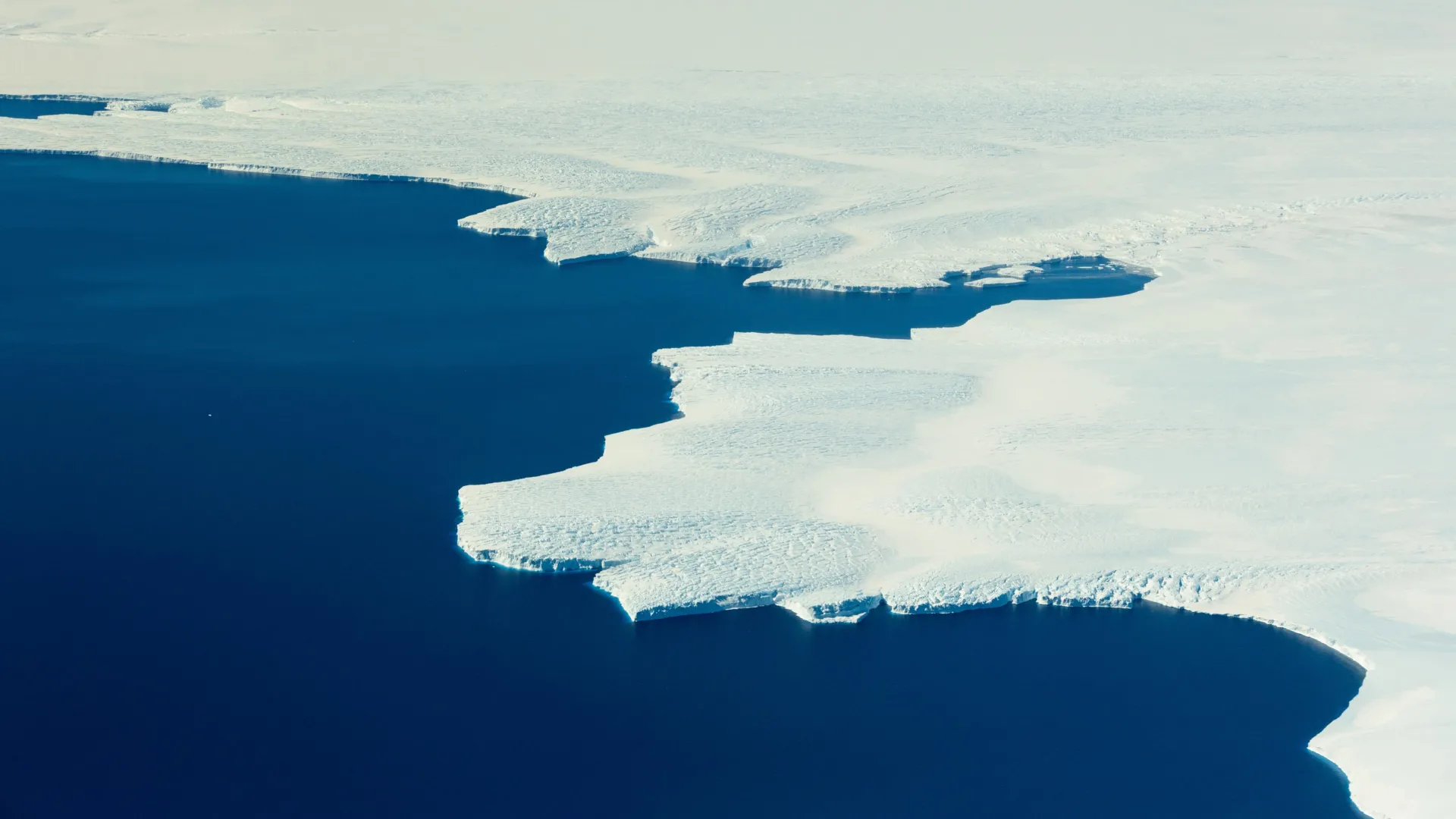
Unexpected Snowfall Drives Record Ice Gain in East Antarctica
Between 2021 and 2023, East Antarctica gained 695 billion tons of ice, a measurable, empirical anomaly driven by tropical ocean warming thousands of miles away. This record snowfall temporarily slowed Antarctica's long-term decline, but it does not reverse the larger trend. Understanding these atmospheric feedback loops is essential for calibrating our climate models. For deeper context on how warming reshapes global systems, see our coverage of "Atlantic Circulation Weakens: Global Climate Reshaping Predicted."
Warming East Sea Disrupts Squid Spawning and Recruitment Patterns
The East Sea is warming two to four times faster than the global ocean, and the squid fishery built on *Todarodes pacificus* has collapsed by over 90 percent. Yet, as this study makes clear, the catch record alone cannot explain why. By shifting focus to a 26-year reconstruction of spawning habitat and a fishery-independent larval survey, the authors deliver a baseline that is both rigorous and honest.

Rapid Warming Threatens Atlantic Circulation’s Stability
The pace of warming may be the deciding factor for the Atlantic Meridional Overturning Circulation. New research indicates that rapid temperature rise, similar to today's trajectory, can push this massive system past a tipping point far earlier than gradual change would allow. The finding reframes our understanding of climate thresholds. For a broader perspective on how we track these shifts, our related piece, "Atlantic Circulation Weakens: Global Climate Reshaping Predicted," offers additional context.
Mediterranean Sea Temperature and Salinity Trends: A Longitudinal Data Assessment
The Mediterranean Sea is warming, not uniformly, but measurably. This longitudinal assessment of temperature and salinity trends from 2012 to 2025, based on Argo float profiles and reanalysis products, reveals surface warming of 0.8 to 0.9 °C per decade in the Western Mediterranean and Ionian basins. The signal is consistent, yet it is not singular. Freshening in the upper 100 meters contrasts with salinification in Levantine Intermediate Water, underscoring a complex thermohaline shift that demands continued, spatially dense monitoring.

Ocean Deoxygenation Accelerates, Threatening Life and Climate Stability
Oxygen is vanishing from the ocean, and from lakes, rivers, and coastal waters, at a rate that should sharpen our focus. This deoxygenation does not merely stress marine life; it erodes the natural systems that help stabilize Earth's climate. Scientists link this decline directly to warming, pollution, and ocean acidification, making it a compounding planetary threat. We treat this as a measured alarm: the evidence is empirical, and the need for integrated observation has never been clearer.
Mediterranean Sandy Shores Face Growing Climate Change Impacts
The Mediterranean's sandy shores are not static edges; they are active zones where surf, beach, and foredune function as one interconnected system. This review wisely shifts focus from single stressors to the cumulative reality of warming, acidification, and storminess. We find the evidence that seagrasses respond differently than dune plants to be a critical call for integrated research. For a broader perspective on these systemic challenges, our coverage in "Integrated Ocean Governance" complements this analysis well.