strait of hormuz
World Data Ocean keeps strait of hormuz in one place: 222 stories so far. The section currently leads with “Missile Strike Impacts LPG Tanker in Strait of Hormuz Waters”, “Seafarers Await Rescue: UN Urges Action in Critical Strait.”, and “Measured Response: U.S. Calibrates Asset Use for Strait of Hormuz Ship Damages”. A missile strike has struck an LPG tanker near the Strait of Hormuz, according to the Forward Seamen's Union of India, as the vessel made its way toward the Persian Gulf. A Global Hub for Ocean Intelligence 4 World Data Ocean is a centralized digital platform where researchers, scientists, and ocean enthusiasts converge to… The list below is every strait of hormuz story on World Data Ocean, newest first.

Missile Strike Impacts LPG Tanker in Strait of Hormuz Waters
A missile strike has struck an LPG tanker near the Strait of Hormuz, according to the Forward Seamen's Union of India, as the vessel made its way toward the Persian Gulf. The incident underscores the fragile security calculus in a waterway that carries a third of global liquefied gas trade. For seafarers, the risk is not abstract; it is measured in steel, fire, and the open sea. This is why infrastructure like the Seafarers' Welfare Centre at Goa's Mormugao Port matters more than ever.

Seafarers Await Rescue: UN Urges Action in Critical Strait.
The Strait of Hormuz is not a headline; it is a holding pattern for thousands of lives. The International Maritime Organization reports that roughly 6,000 seafarers remain stranded aboard hundreds of ships, waiting for a resolution that cannot come soon enough. This is not an abstract geopolitical impasse; it is a human logjam with real consequences. The urgency is measurable, and the call for action is clear.

Measured Response: U.S. Calibrates Asset Use for Strait of Hormuz Ship Damages
Sanctions have frozen billions in Iranian assets, with estimates ranging from $24 billion to $100 billion, yet the precise figure remains deliberately imprecise. That ambiguity matters now, as Washington calibrates its use of these holdings to address ship damages near the Strait of Hormuz. The move is measured, not reactionary, and that restraint reflects sound strategy. For readers tracking regional maritime pressure, our related coverage on Gulf of Oman STS transfers maxing out offers useful context.

Strait of Hormuz Ship Lay-up Risks Major Marine Bioinvasion Event
Idle ships are not neutral ships. A recent study warns that the mass lay-up of vessels in the Strait of Hormuz could trigger a marine bioinvasion "super-spreader" event once maritime trade resumes. The risk is measurable, and the window for calibrated action is now. This is the kind of integrated risk that demands empirical attention before the ballast water moves. For broader context on regional marine traffic pressures, our coverage of Gulf of Oman STS transfers maxing out offers a relevant parallel.

Hijacked Vessel Crew Receives Aid as Situation Develops Off Somalia
Aid is reaching the crew of the hijacked vessel off Somalia, with reports confirming that food supplies have been delivered aboard. The situation remains fluid, and the safety of those onboard is the immediate priority. This incident is a stark reminder of the persistent risks in the region's waters. For broader context on maritime security pressures, our related coverage on Puntland forces intercepting a hijacked tanker offers a relevant comparison. We will continue to monitor this operation.
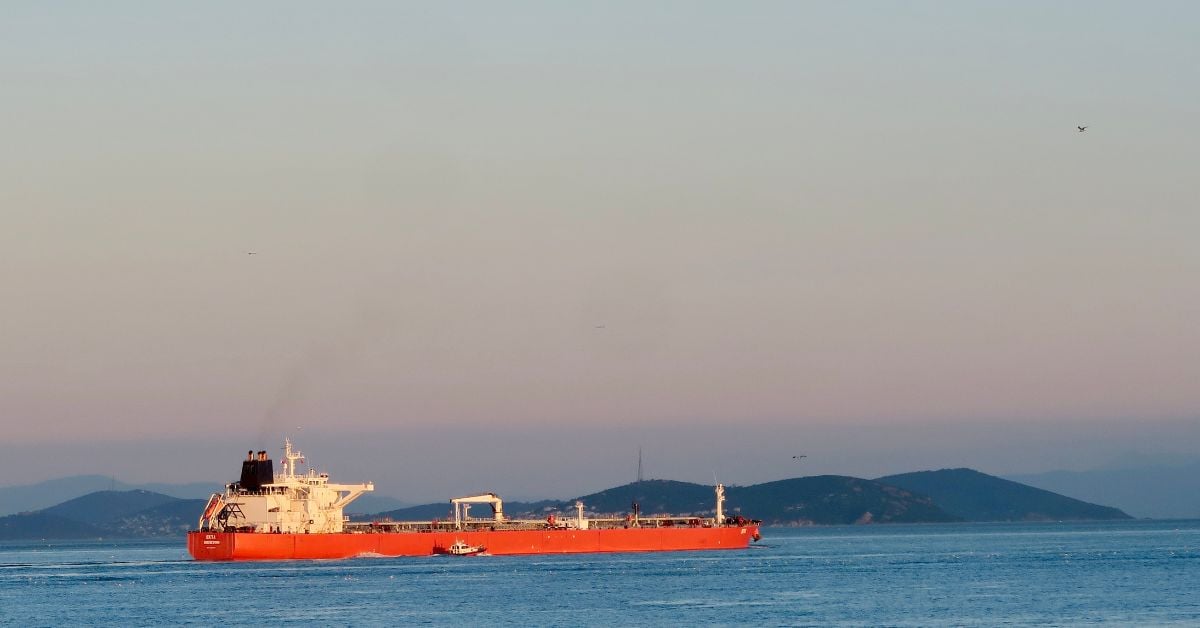
Tensions Rise: Tanker Seized Near Strait of Hormuz Impacts Shipping.
The towing of a seized products tanker to the northern side of the Strait of Hormuz signals a deliberate escalation in a volatile maritime corridor. This isn't a random act; it's a calculated move with direct consequences for shipping traffic. The incident underscores how fragile the region's sea lanes remain. For context on the broader logistical pressures at play, our related coverage on Gulf of Oman STS transfers maxing out highlights the strain on regional oil movements.

Asian Refiners Adjust Crude Supply Routes Amid Suez Canal Disruption
South Korea's refiners are rerouting crude supply chains as Suez Canal disruptions force a pragmatic pivot. One major refiner is now seeking a Very Large Crude Carrier to load at Yanbu, with the option of transiting the Suez Canal still on the table. It's a measured response to a volatile corridor, reflecting how quickly logistics adapt when geopolitical friction meets energy demand. The calculus is straightforward: secure throughput, manage cost, keep refineries running.

Escalation in Hormuz: Iran Attacks Tanker Amid U.S. Strikes
The 11th consecutive evening of U.S. strikes against Iran concluded at 8:15 p.m. ET on July 21, as CENTCOM confirmed its ongoing campaign. The escalation in Hormuz now includes a direct tanker attack, sharpening a volatile maritime corridor. This is not abstract geopolitics; it is measured, repeated force meeting retaliation. For context on regional pressure points, our coverage of Gulf of Oman STS transfers maxing out shows how commercial chokepoints strain under such tension.

Strait of Hormuz Traffic Declines Amid Increased Security Measures.
Commercial traffic through the Strait of Hormuz has dropped sharply following recent missile, drone, and shipping attacks, a measurable shift in one of the world's most vital maritime corridors. The decline underscores how immediate security threats now override the steady flow of energy that typically defines this waterway. This is not an abstract disruption; it is a calibrated response to real-time risk, and one that demands integrated monitoring.

Vessel Struck in Strait of Hormuz; Crew Rescued, No Environmental Impact.
A fire burned aboard a vessel in the Strait of Hormuz, yet the crew was rescued by a tugboat after safely abandoning ship. UKMTO confirmed no environmental impact, a detail that matters in a waterway this critical. The strait's fragility is well-documented, and this incident underscores the stakes. For deeper context on regional pressures, our piece on "Phased Negotiations Aim to Ease Restrictions on Strait of Hormuz" offers a broader view. Measured outcomes like this one are the ones that count.

Navigational Risk Spurs Incentives: Seafarers Rewarded for Hormuz Passage
Sinokor Group, the world's largest supertanker owner, is now offering seafarers an additional six months' salary to transit the Strait of Hormuz. That is a direct, measurable acknowledgment of elevated risk, and it reflects a sobering reality for those who keep energy moving through one of the globe's most contested chokepoints. The incentive is practical, not sentimental. It underscores how commercial resilience now depends on human retention as much as fleet capacity.

Persian Gulf: Iran Targets U.S. AI-Driven Maritime Surveillance.
The Persian Gulf has become a testing ground for AI-driven maritime surveillance, with Iran targeting U.S. unmanned vessels and sensor networks in the region. The unit's reliance on autonomous systems and real-time data marks a calibrated shift in how naval operations are monitored. It is a precise, measurable response to a complex environment, though one that raises the stakes for transparency. For broader context on regional shipping pressures, our coverage of phased negotiations on the Strait of Hormuz offers a useful parallel.

Red Sea Shipping Disrupted: Houthi Actions Impact Global Trade Routes
The Bab el-Mandeb strait, a critical artery for global shipping, is now a flashpoint. Houthi actions have injected a new level of risk into this vital corridor, threatening the steady flow of goods and energy. This disruption demands a measured response, as the implications for trade routes are significant. We must monitor these developments with clear eyes, as the security of our shared ocean economy hangs in the balance.

Microplastic Pollution Assessed Across Key International Shipping Routes
Aboard the research vessel *Jaywun*, 100 surface-water samples now trace a microplastic story across the Atlantic, Mediterranean, Red Sea, and Arabian Gulf. Concentrations swung from 4 to 290 particles per liter, with polyester and PET dominating the mix. The Arabian Sea carried the heaviest load, while the Strait of Gibraltar surprised with a localized peak.

Strait of Hormuz Incident Highlights Navigation Risks and Geopolitical Tensions
The Islamic Revolutionary Guard Corps' warning is blunt: vessels heeding American influence and charting unsafe routes will face accidents. The Strait of Hormuz remains a flashpoint where navigation risk and geopolitical posturing converge. This is not hyperbole; it is a calibrated assertion of control over a critical maritime artery. For shippers, the calculus is stark. While diplomatic efforts like the phased negotiations may offer a path forward, the immediate reality demands vigilance. Understanding drives protection, and here, the data must guide every transit decision.

Shipping Activity in Strait of Hormuz Declines Amid Rising Tensions
Shipping activity in the Strait of Hormuz has slowed markedly as regional tensions rise, with liquefied natural gas traffic particularly hard hit. No LNG carriers have transited the strait since Thursday, a telling sign of how quickly commercial risk reshapes movement through a critical maritime corridor. The data is measurable, and the trend is clear. For those tracking broader patterns, our coverage of Gulf of Oman STS transfers maxing out amid rising Saudi oil exports offers useful context.

Tensions Rise as Vessel Fire Reported Near Strait of Hormuz
A fire aboard a vessel near the Strait of Hormuz has escalated tensions as the U.S.-Iran conflict enters its second week, with fresh attacks rippling across the region. The incident underscores how quickly maritime risks compound geopolitical instability. For context, recent reports of Gulf of Oman STS transfers maxing out highlight the strategic pressure on these waters. Reliable, real-time data remains essential for navigating such volatile conditions. Understanding these patterns is not optional; it is the foundation for measured response and resilient decision-making.

Escalation in Jordan, Strait of Hormuz Closure Threatens Global Shipping.
Two US troops killed, one missing, and the Strait of Hormuz transits down to eight vessels a day: the escalation in Jordan signals a sharp turn in an already volatile maritime corridor. These are not abstract metrics. They are calibrated warnings of how quickly regional conflict rewrites global shipping routes. The pressure on tanker movement is measurable, and it demands attention. For deeper context on how such constraints reshape oil flows, our piece on Gulf of Oman STS transfers offers a relevant thread.

Hijacking of MT Asana Highlights Escalating Maritime Risks Off Yemen
Armed men boarded the MT Asana roughly 65 nautical miles south of Yemen's Al Mukalla port, a stark reminder that maritime corridors remain dangerously exposed. This hijacking is not an isolated incident; it signals a troubling pattern along critical shipping lanes. The risks are compounding, much like the pressures seen in regional logistics. For readers tracking these threats, our coverage of the Gulf of Oman STS transfers illustrates how commercial activity and security vulnerabilities increasingly intersect. Understanding these dynamics is essential for safeguarding global trade.

Red Sea Disruption Looms: Iran Signals Houthi Action Over Potential US Strikes
Iran has signaled Houthi forces to prepare closing the Bab el-Mandeb Strait if US strikes target Iranian power plants, raising the specter of a second Red Sea oil route crisis. The move compounds existing strain on maritime trade, already tested by capacity-level STS transfers in the Gulf of Oman. This is not speculation; it is calibrated pressure with global consequences. We are watching a strategic chokepoint being weaponized, and the margin for miscalculation is narrowing.

Strait Closure Strands Seafarers: Global Ocean Data Impacts Highlighted
The closure of the Strait of Hormuz has stranded seafarers mid-voyage, and the human cost of this disruption is coming into focus. DMW seafarers remain caught in the Gulf as Hans Leo Cacdac and others grapple with a situation that is as much about logistics as it is about people. This is not abstract geopolitics; it is a tangible reminder that global stability begins with those who move across it.

Strait of Hormuz Incident Disrupts Key Energy Route; Data Needed.
The Strait of Hormuz, carrying roughly one-fifth of global oil and gas shipments, has become a flashpoint. The disruption here is not just a regional concern; it is a measurable shock to the world's energy calculus. We need validated, real-time data to calibrate the response effectively. Without empirical clarity, we are navigating blind. This incident underscores why integrated ocean intelligence is essential, not optional, for maintaining stability. For broader context on regional pressures, our coverage of Gulf of Oman STS transfers provides a useful baseline.

Strait of Hormuz: IRGC Navy Detains Vessels for Passage Violations
The Strait of Hormuz is a chokepoint where passage rules are not optional, and Iran's Islamic Revolutionary Guard Corps has made that clear by detaining four vessels for violations. The move is a calibrated reminder of the waterway's fragility, though it raises questions about escalation. Enforcement here is precise, but the stakes are global. For context on how pressure is building in the region, our piece on phased negotiations aimed at easing Hormuz restrictions offers a measured counterpoint worth reading.

Diversifying Gulf Oil Routes: U.S. and Iraq Forge New Shipping Pathways
New shipping agreements between U.S. firms and Iraq signal a calculated response to an uncertain Strait of Hormuz. Diversifying Gulf oil routes is no longer theoretical; it is underway. This move reflects measured foresight, not panic, and strengthens the argument that maritime resilience depends on integrated planning. For readers tracking the region's pressure points, our related coverage on Gulf of Oman STS transfers maxing out offers useful context. Strategic adaptation, validated by real-time logistics, remains the clearest path forward.