Shanghai Port
World Data Ocean keeps Shanghai Port in one place: 5 stories so far. The section currently leads with “Heightened Threat: Iran’s IRGC Targets Key East Asian Shipping Routes.”, “Port Delays Surge: Global Congestion Impacts Freight Rates and Operations”, and “Record-Breaking Green Methanol Bunkering Fuels Sustainable Shipping in Shanghai”. Iran's Islamic Revolutionary Guard Corps has set its sights on some of Asia's busiest maritime arteries, including China's Ningbo-Zhoushan and Shanghai ports and Indonesia's Tanjung Priok. Port congestion is no longer a logistical footnote; it is a primary lever on global freight rates. A Global Hub for Ocean Intelligence 4 World Data Ocean is a centralized digital platform where researchers, scientists, and ocean enthusiasts converge to… The list below is every Shanghai Port story on World Data Ocean, newest first.
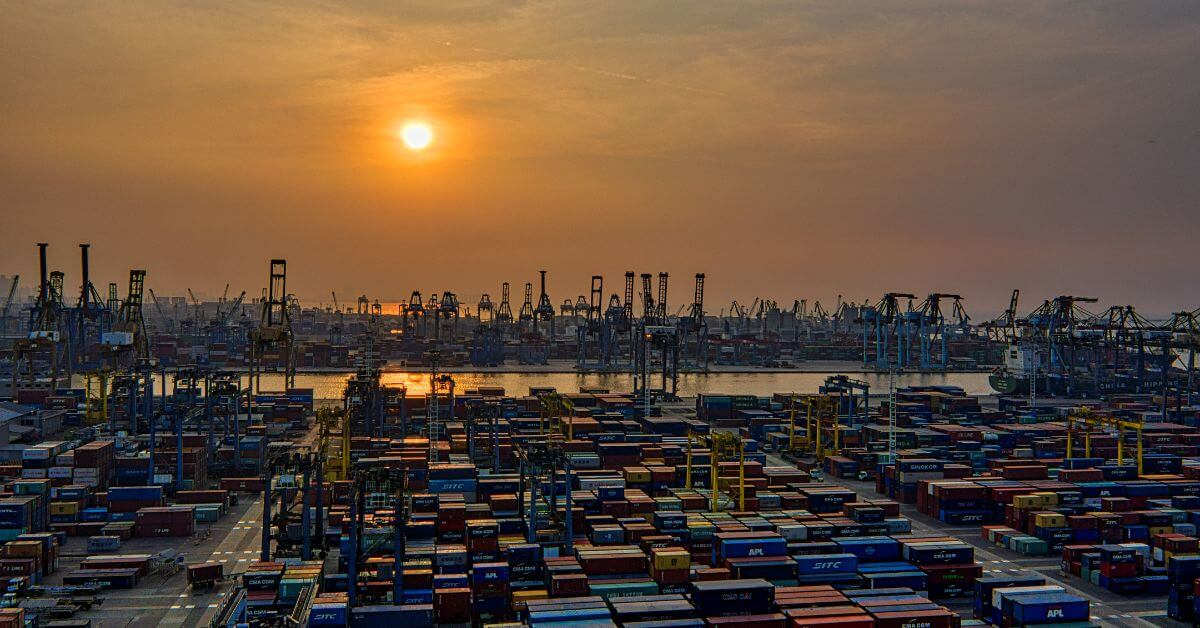
Heightened Threat: Iran’s IRGC Targets Key East Asian Shipping Routes.
Iran's Islamic Revolutionary Guard Corps has set its sights on some of Asia's busiest maritime arteries, including China's Ningbo-Zhoushan and Shanghai ports and Indonesia's Tanjung Priok. That is not posturing; it is a calibrated escalation with measurable consequences for global trade. The threat is specific, and it demands precise, empirical attention. Vessels and port operators should treat this as a real-time risk, not a hypothetical.

Port Delays Surge: Global Congestion Impacts Freight Rates and Operations
Port congestion is no longer a logistical footnote; it is a primary lever on global freight rates. Longer waiting times at anchor translate directly into longer turnaround times for vessels, and that idling carries a measurable cost. The result is an escalation in freight rates and operational expenses that ripples through every supply chain. This is the friction of a system operating at its limits. While record port activity reflects surging Chinese exports amid trade uncertainty, the operational strain is undeniable.

Record-Breaking Green Methanol Bunkering Fuels Sustainable Shipping in Shanghai
A single bunkering operation in Shanghai has set a global record for green methanol supply, marking measurable progress in the shipping sector's shift toward lower-carbon fuels. The scale of this milestone is significant, but the real signal is repeatability: the more ports integrate green methanol into routine logistics, the faster the industry can move beyond pilot projects. For broader context on regional energy flows, our coverage of Gulf of Oman STS transfers offers a useful contrast in how different fuel systems are evolving.

Methanol Bunkering Powers New Car Carrier, Advancing Ocean Decarbonization.
The M/V Arctic Tern has taken on 2,800 metric tonnes of green methanol in China's largest simultaneous car-handling and bunkering operation, marking a practical step forward for ocean decarbonization. This 9,300-CEU carrier shows how alternative fuels move from concept to routine application. We see momentum building across vessel types, from LNG bunkering designs to ore carriers. For a closer look at how dual-fuel capability is being validated elsewhere, see our coverage of Hanwha Power's recent ABS approval.

Shanghai Port Sets New Record: Over 200,000 Containers Moved Daily
Shanghai's port has cleared a new threshold: more than 200,000 TEUs moved in a single day for the first time, just three weeks after Typhoon Bavi forced a full shutdown. That rebound is not luck; it is calibrated logistics under pressure. The pace reflects a port system built for resilience, even as trade uncertainty persists. For context on how such activity fits broader maritime trends, our related coverage on record Chinese exports offers useful grounding. Measured, yes, but this is what operational recovery looks like.