Satellite
World Data Ocean keeps Satellite in one place: 4 stories so far. The section currently leads with “Record Sea Surface Temperatures Highlight Urgent Ocean Monitoring Needs”, “Bridging Antarctica: New Fiber Link Promises Real-Time Ocean Data Access”, and “Coral Bleaching Predictions: Regional Accuracy Hinges on Rising Sea Temperatures”. A new daily global sea surface temperature record, as reported by Copernicus Climate Change Service, signals that 2024's heat has carried into the present. A feasibility study from Chile's Subtel confirms that a fiber-optic link to Antarctica is technically possible, a step toward real-time ocean data from the most remote waters on Earth. A Global Hub for Ocean Intelligence 4 World Data Ocean is a centralized digital platform where researchers, scientists, and ocean enthusiasts converge to… The list below is every Satellite story on World Data Ocean, newest first.

Record Sea Surface Temperatures Highlight Urgent Ocean Monitoring Needs
A new daily global sea surface temperature record, as reported by Copernicus Climate Change Service, signals that 2024's heat has carried into the present. This is not a distant anomaly; it is a measurable shift demanding sharper vigilance. We see this as a direct call for robust, real-time ocean intelligence, not passive observation. For those seeking practical pathways in this field, our related piece on "Expanding Oceanography Career Options" offers a grounded look at professional entry points. Monitoring must match the pace of change.

Bridging Antarctica: New Fiber Link Promises Real-Time Ocean Data Access
A feasibility study from Chile's Subtel confirms that a fiber-optic link to Antarctica is technically possible, a step toward real-time ocean data from the most remote waters on Earth. This is the kind of measurable, integrated infrastructure that turns raw observation into actionable climate indicators. For researchers tracking polar change, the promise is not just connectivity, but continuity. For deeper context on how subsea systems expand observation, see our coverage of integrated cables across the Indian Ocean.

Coral Bleaching Predictions: Regional Accuracy Hinges on Rising Sea Temperatures
Degree heating weeks have long been the global standard for predicting coral bleaching, but new analysis from Japan's Monitoring Site 1000 and the Global Coral Bleaching Database reveals a critical flaw: as climatological sea surface temperatures rise above 28.5°C, DHW's anomaly-based architecture compresses, leaving alert thresholds unreachable. The metric itself, not the data source, drives the skill gap, with AUC dropping from 0.705 to 0.568 globally. An absolute-temperature metric bypasses this constraint entirely, achieving 0.884 AUC.
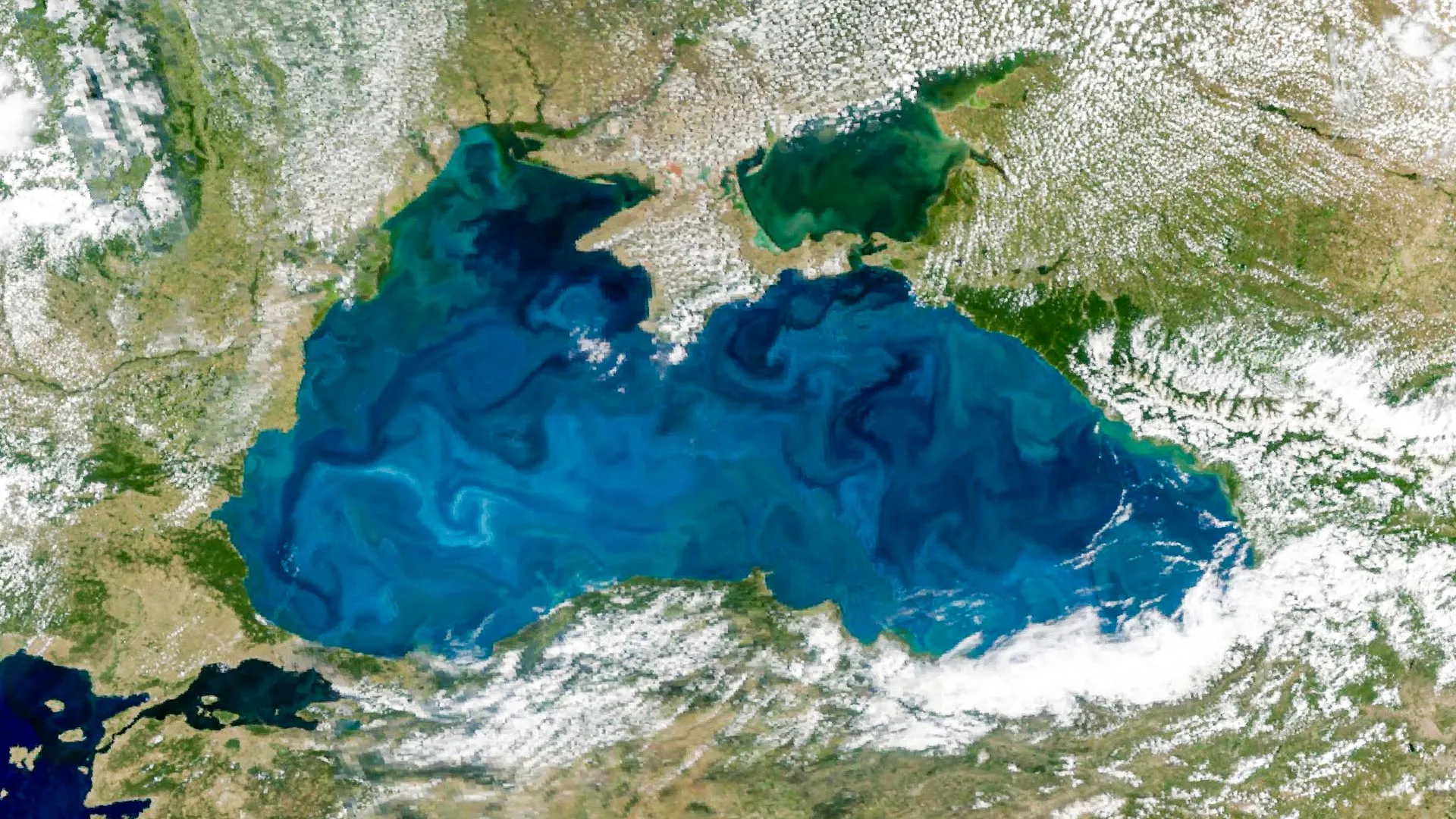
Black Sea Bloom: Satellite Data Reveals Turquoise Waters from Space
From orbit, the Black Sea has turned turquoise. NASA's PACE satellite captured the annual phytoplankton bloom, its reflective coccolithophore shells brightening the water enough to be seen from space. An astronaut on the International Space Station also photographed the bloom threading through the Bosphorus, where swirling currents reveal its reach. It is a striking reminder that ocean intelligence begins with observation, and that such calibrated data is essential for tracking the health of our shared seas.