risk management
risk management at World Data Ocean is a file of 6 stories. The newest of them: “AI and digitalisation anchor new maritime safety and emissions pact”, “Key Bridge Collapse Reveals Critical Gaps in Port Safety Assessments”, and “Financing Ocean Governance: A Pathway for China’s Marine Environment”. A new memorandum of understanding between China Merchants Energy Shipping and RINA anchors maritime safety and emissions management in digitalisation and AI. The final report on the Key Bridge collapse confirms what empirical data has long indicated: waterway risk assessment tools remain underutilized, leaving port infrastructure vulnerable to evolving threats. A Global Hub for Ocean Intelligence 4 World Data Ocean is a centralized digital platform where researchers, scientists, and ocean enthusiasts converge to… The list below is every risk management story on World Data Ocean, newest first.

AI and digitalisation anchor new maritime safety and emissions pact
A new memorandum of understanding between China Merchants Energy Shipping and RINA anchors maritime safety and emissions management in digitalisation and AI. This is not speculative; it is an integrated data ecosystem designed for measurable, real-world impact. As the industry seeks validated pathways to decarbonisation, this collaboration aligns with efforts like the Wallenius Marine WinPrOVeDD project, which aims to harness wind energy more efficiently through empirical design validation.
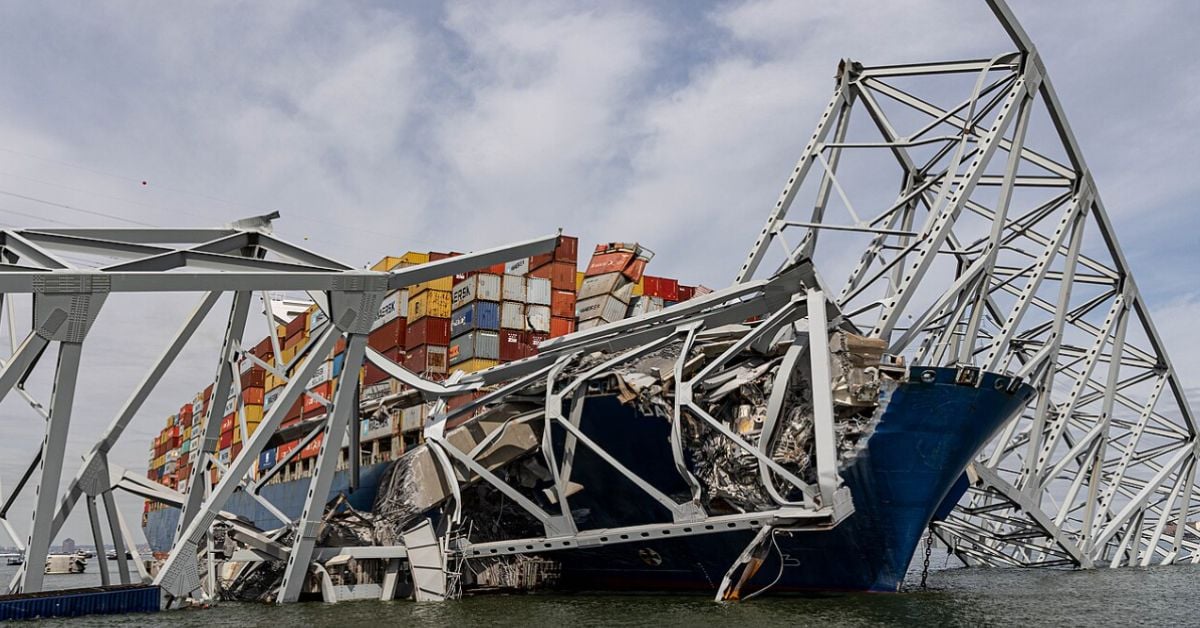
Key Bridge Collapse Reveals Critical Gaps in Port Safety Assessments
The final report on the Key Bridge collapse confirms what empirical data has long indicated: waterway risk assessment tools remain underutilized, leaving port infrastructure vulnerable to evolving threats. This is a measurable failure, not an abstract one. Validated, real-time ocean intelligence must be integrated into safety protocols, understanding drives protection. For deeper context on maritime infrastructure development, see our coverage of Paradip Port's designation as a Mega Port, anchoring Eastern India's growth.

Financing Ocean Governance: A Pathway for China’s Marine Environment
Marine environmental governance projects carry long horizons, modest returns, and real difficulty in verifying ecological performance. That is why conventional financing often falls short. This study builds a mechanism-oriented framework to show how blue finance, through resource allocation, risk management, and value discovery, can close that gap. The catch: financing volumes alone prove nothing. Outcomes hinge on taxonomies, data infrastructure, and benefit-sharing. China is moving from product experiments toward national standards. For deeper context, see our related piece on Gulf of Oman STS transfers.

Securing India's Ports: Technology and Trade for National Strength
India's ports are the arteries of its economic resilience, and Union Minister Sonowal's recent assertion frames this plainly: safe ports build strong trade, and strong trade builds a strong nation. It is a pragmatic equation, one that deserves attention as global shipping lanes face mounting strain. Technology is the lever here, not spectacle. For readers tracking maritime digitalization, our related coverage of the IMO's global survey on Maritime Single Windows offers useful context. Measured, empirical progress, that is how national strength is calibrated.

India's Maritime Insurance Pool Bolsters Ocean Risk Management.
India's first sovereign-backed maritime insurance product, launched under the Bharat Maritime Insurance Pool, anchors a practical response to ocean risk. This is not abstract policy; it is calibrated, real-time protection for the vessels and supply lines that depend on stable coverage. The move signals measurable confidence in India's maritime future. For readers tracking port and welfare developments, our coverage of Paradip Port's designation as a Mega Port offers useful context. Understanding drives protection, and this pool gives that principle a tangible foundation.

Shipping Costs Surge as Gulf Attacks Impact Crew Availability.
The loss of seafarers' lives in Gulf attacks is no longer a distant risk; it is a measurable cost. Shipping companies are facing surging recruitment expenses as crew availability tightens, a direct consequence of vessels becoming targets in contested waters. This is not abstract market pressure; it is operational reality. The human toll is reshaping commercial calculations. For deeper context on how regional instability compounds these pressures, our coverage of phased negotiations to ease Strait of Hormuz restrictions offers a relevant parallel.