RIMPAC
RIMPAC at World Data Ocean is a file of 7 stories. The newest of them: “Taiwanian Exercise Validates Supersonic Missile Capability Against Naval Target”, “Saildrone Surveyor Demonstrates Precision Strike Capability in RIMPAC Exercise”, and “On-Demand Repairs: Navy Ships Leverage 3D Printing at Sea”. On September 18, Taiwan sank a decommissioned navy frigate with anti-ship missiles during a three-day exercise in Pingtung, validating supersonic missile capability against naval targets. The 20-metre Saildrone Surveyor, fitted with a JAGM dual launcher and ARES fire-control system, has demonstrated a precision strike capability during the RIMPAC exercise. A Global Hub for Ocean Intelligence 4 World Data Ocean is a centralized digital platform where researchers, scientists, and ocean enthusiasts converge to… The list below is every RIMPAC story on World Data Ocean, newest first.
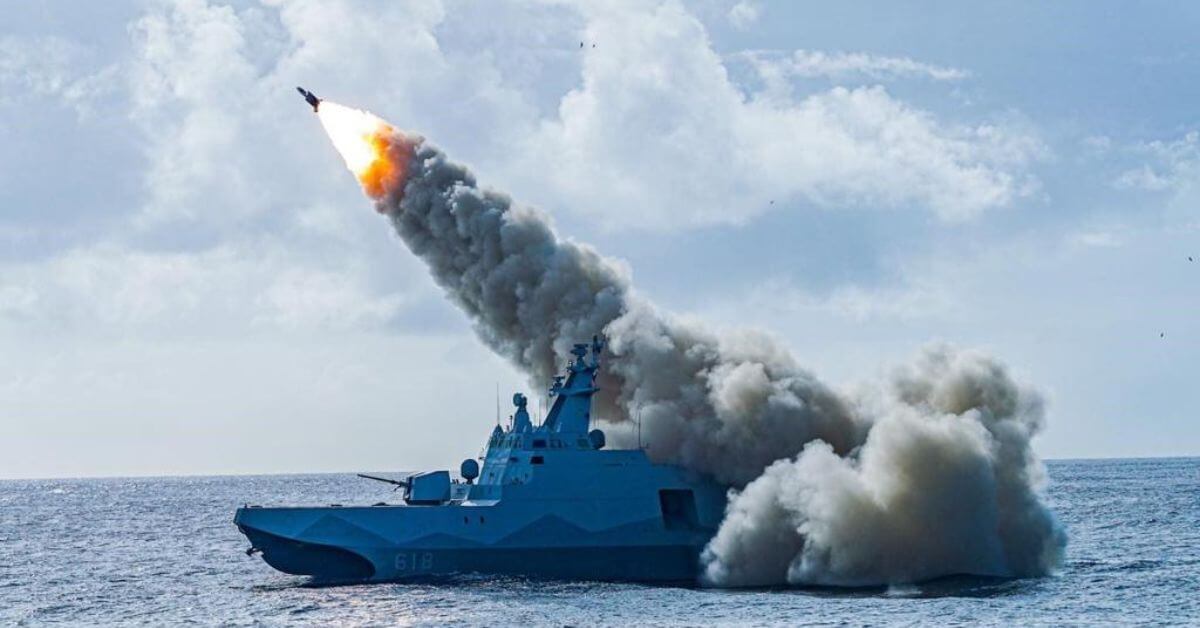
Taiwanian Exercise Validates Supersonic Missile Capability Against Naval Target
On September 18, Taiwan sank a decommissioned navy frigate with anti-ship missiles during a three-day exercise in Pingtung, validating supersonic missile capability against naval targets. The precision speaks to measurable progress in defense readiness, a point worth watching closely. Regional maritime activity remains a live thread, as seen in our coverage of New Zealand vessels transiting the Taiwan Strait en route to a Philippines exercise. These events underscore a shared focus on security, though each story stands on its own facts.

Saildrone Surveyor Demonstrates Precision Strike Capability in RIMPAC Exercise
The 20-metre Saildrone Surveyor, fitted with a JAGM dual launcher and ARES fire-control system, has demonstrated a precision strike capability during the RIMPAC exercise. This is not about aggression; it is about proving that uncrewed platforms can deliver calibrated, effective response in complex maritime environments. The integration of such systems into a validated data ecosystem is a measured step forward. For broader context on how uncrewed and subsea technologies are reshaping ocean intelligence, our piece on integrated subsea cables offers a useful parallel.

On-Demand Repairs: Navy Ships Leverage 3D Printing at Sea
The USS Theodore Roosevelt printed replacement parts at sea on July 3, 2026, using a hybrid-metal 3D printer during Rim of the Pacific exercises. This is maintenance redefined: repairs happen where the ship is, not where the supply chain says it should be. The capability shortens downtime and extends operational reach, a practical answer to a persistent logistical problem. For context on how navies are adapting to broader strategic pressures, India's fleet expansion offers a useful parallel.

Autonomous Resupply Demonstrates Ocean Intelligence for Naval Operations
Splash Industries has completed the world's first fully autonomous underway resupply of a U.S. Navy warship, using an Unmanned Surface Vehicle to transfer supplies without a single human touch on deck. It is a practical proof that autonomy can handle the most demanding naval logistics. This milestone pairs naturally with our coverage of India's expanded fleet plans, a reminder that resupply is the quiet backbone of any blue-water ambition.

Rapid 3D Printing at Sea: Enhancing Naval Operational Independence
Aboard naval vessels, the ability to print a critical component on demand transforms readiness. This trial directly targets the logistical bottleneck of shore-based supply chains, putting manufacturing power into the crew's hands. It is a practical step toward operational independence, reducing wait times for essential parts. The implications for sustained maritime presence are significant. For broader context on how navies are adapting, our related piece, "India Projects Expanded Naval Fleet to Navigate Evolving Maritime Landscape," offers further perspective.

Rapid AI Sonar Retraining Boosts Navy’s Deep-Sea Monitoring Capabilities
Lockheed Martin reports that rapid AI sonar retraining now lets naval helicopter operators monitor twice as many sonar feeds as older systems allowed. That is not incremental improvement; it is a measurable leap in how much underwater intelligence a single crew can process in real time. The capability feels less like a convenience and more like a necessity, given the growing complexity of deep-sea operations.

Integrated Exercise Demonstrates Global Maritime Capabilities and Ocean Data Collection.
Thirty nations. Thirty surface ships. Five submarines. Fifteen national land forces. More than 190 aircraft. And 30,000 personnel operating as one integrated whole. This exercise is not a display of muscle; it is a calibrated demonstration of what shared ocean intelligence makes possible. When so many moving parts align, we validate not just capability but collaboration. The data gathered here will be measured, peer-reviewed, and turned into real-time insight.