Qingdao Port
World Data Ocean keeps Qingdao Port in one place: 3 stories so far. The section currently leads with “Kota Odyssey bunkers certified bio-methane, cutting Qingdao emissions over 70 percent”, “Dynamic Port Governance: Assessing Resilience Through Stakeholder Collaboration”, and “AIS Data and Fuzzy Logic Model Assess Vessel Emissions Impact in Ports”. A single bunkering operation at Qingdao Port has cut projected well-to-wake emissions for the Kota Odyssey by over 70 percent. Port governance rarely gets the resilience analysis it deserves. A Global Hub for Ocean Intelligence 4 World Data Ocean is a centralized digital platform where researchers, scientists, and ocean enthusiasts converge to… The list below is every Qingdao Port story on World Data Ocean, newest first.
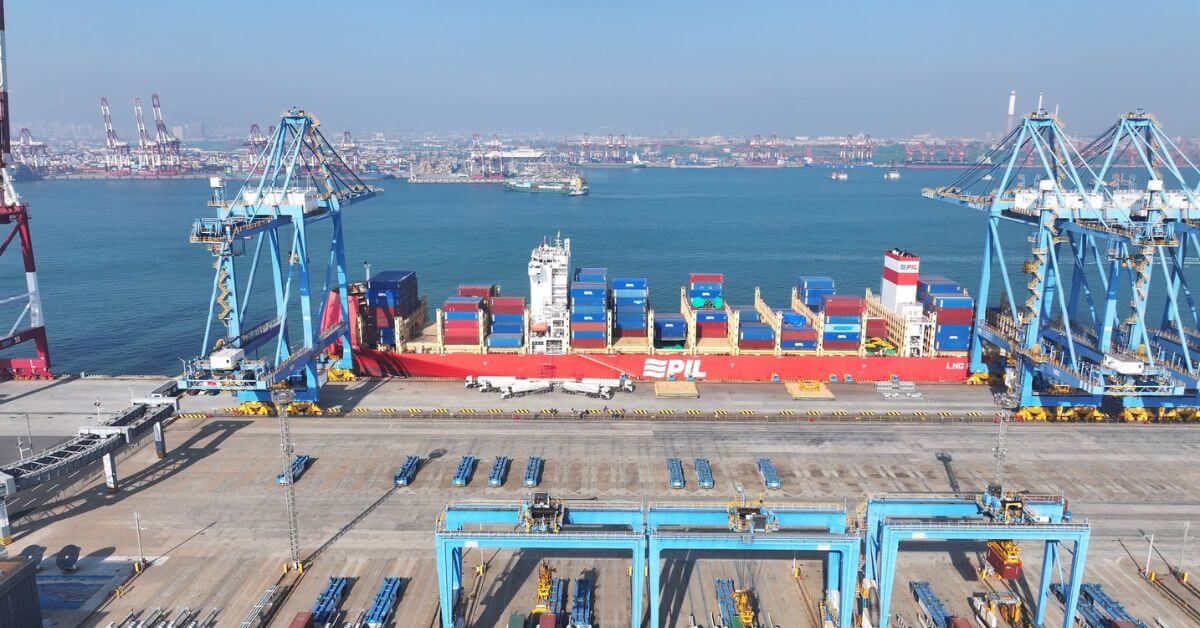
Kota Odyssey bunkers certified bio-methane, cutting Qingdao emissions over 70 percent
A single bunkering operation at Qingdao Port has cut projected well-to-wake emissions for the Kota Odyssey by over 70 percent. The vessel took on ISCC-certified bio-methane, a validated, measurable step toward decarbonizing maritime fuel. This is empirical progress, not rhetoric. For broader context on how ports are building these supply chains, see our coverage of the Hong Kong and Piraeus green shipping corridor. Understanding drives protection, and this is how it looks in practice.

Dynamic Port Governance: Assessing Resilience Through Stakeholder Collaboration
Port governance rarely gets the resilience analysis it deserves. Existing frameworks measure infrastructure and efficiency, but they miss the living relationships that keep a port system healthy. Our Stakeholder Symbiotic Resilience Index addresses that gap, treating the Port Authority, Port Enterprises, and Local Community as co-evolving actors. Applied to Qingdao Port's 2015-2024 data, the model reveals an asymmetric dynamic: authority supports enterprise, enterprise lifts community, and community reinforces authority. The resulting SSRI of 0.8587 outperforms the benchmark.
AIS Data and Fuzzy Logic Model Assess Vessel Emissions Impact in Ports
Vessel carbon emissions in port waters are not evenly distributed, and Qingdao Port's September 2022 AIS and meteorological data reveal where the burden falls. A hierarchical fuzzy logic model, built on that data, weighs direct and indirect factors like offshore distance and ecological sensitivity. The result: harbor districts and wharves bear the highest impacts, led by oil tankers, container vessels, and passenger ships. This approach gives ports a calibrated, measurable way to target supervision.