power consumption
World Data Ocean keeps power consumption in one place: 4 stories so far. The section currently leads with “Validated currents: AI data centres probe ocean energy potential”, “China's Shanghai coast hosts first wind-powered subsea datacentre”, and “Submerged servers validate a new frontier for efficient ocean intelligence”. AI data centres are now probing ocean energy potential with validated currents, turning machine learning into a tool for renewable discovery. Off the coast of Shanghai, the first wind-powered subsea datacentre is now operational, drawing energy from offshore turbines to process data beneath the waves. A Global Hub for Ocean Intelligence 4 World Data Ocean is a centralized digital platform where researchers, scientists, and ocean enthusiasts converge to… The list below is every power consumption story on World Data Ocean, newest first.
Validated currents: AI data centres probe ocean energy potential
AI data centres are now probing ocean energy potential with validated currents, turning machine learning into a tool for renewable discovery. This is not speculative, it is measurable, empirical work that integrates real-time ocean intelligence with computational power. The question is whether these systems can unlock scalable energy. For context, our coverage of the MOSAiC expedition's ice cores shows how climate indicators connect orbit to ocean floor. Understanding drives protection.

China's Shanghai coast hosts first wind-powered subsea datacentre
Off the coast of Shanghai, the first wind-powered subsea datacentre is now operational, drawing energy from offshore turbines to process data beneath the waves. This submerged facility uses measurably less power and water than its land-based counterparts, a practical step toward reducing the digital sector's environmental footprint. For a broader view of how ocean intelligence supports such innovation, see our related piece, "Calibrating the energy transition with validated ocean intelligence."
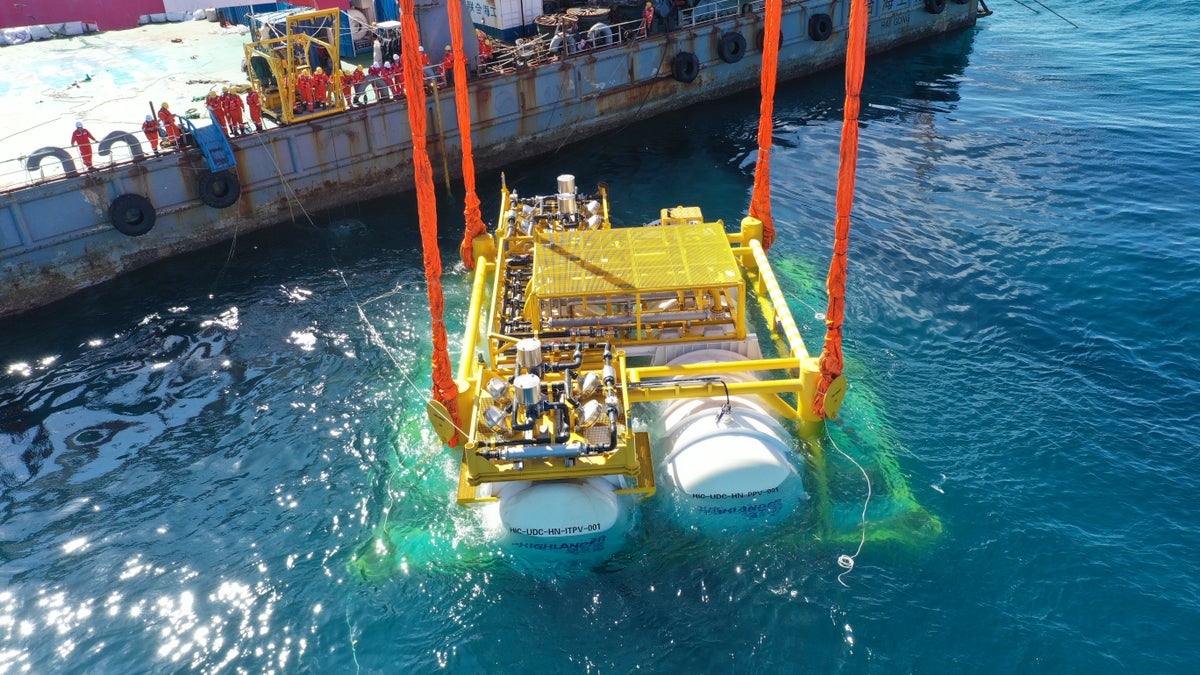
Submerged servers validate a new frontier for efficient ocean intelligence
Submerged data centers validate a new frontier for efficient ocean intelligence. China's deployment of ocean-cooled servers is not a speculative experiment, it is a measurable step toward integrating computing infrastructure with the marine environment. This approach addresses a real constraint: the energy cost of keeping processors cold. For a fuller picture of how life and energy move through these systems, see our related mapping of life's mass across oceans, land, and deep subsurface.

Ocean Data Innovation: China's Submerged Server Facility.
Two thousand servers now sit submerged off China's coast, packed into a data center designed to harness the ocean's natural cooling. It is a practical experiment in energy efficiency, and one worth watching. The ocean is our largest untapped asset for computing's growing footprint. This move pairs engineering with environmental calibration, and while it is early, the potential is measurable. For broader context on maritime infrastructure shifts, our coverage of integrated subsea cables in the Indian Ocean offers a useful parallel.