population genetics
3 stories filed under population genetics on World Data Ocean. The newest of them: “eDNA maps Nile tilapia invasion across West Bengal freshwater habitats”, “Fjord Jellyfish Reveal Unexpected Population Structure Despite Wide Dispersal”, and “Ancient DNA on Cave Walls Reveals Links to Prehistoric Art”. A single water sample can reveal an entire invasion. In a Norwegian fjord, jellyfish are rewriting the rules of marine connectivity. A Global Hub for Ocean Intelligence 4 World Data Ocean is a centralized digital platform where researchers, scientists, and ocean enthusiasts converge to… The list below is every population genetics story on World Data Ocean, newest first.

eDNA maps Nile tilapia invasion across West Bengal freshwater habitats
A single water sample can reveal an entire invasion. Across West Bengal's freshwater habitats, empirical eDNA analysis has now mapped the spread of Nile tilapia with measurable precision. This is not merely a species survey; it is a calibrated early-warning system for ecosystem disruption. The data is validated, peer-reviewed, and actionable. For context on how such environmental intelligence intersects with regional development, see our coverage of the Brahmaputra River cruises. Understanding drives protection.
Fjord Jellyfish Reveal Unexpected Population Structure Despite Wide Dispersal
In a Norwegian fjord, jellyfish are rewriting the rules of marine connectivity. Genetic analysis of *Aurelia aurita* reveals that benthic polyps act as a persistent reservoir of diversity, while their pelagic medusae are transient, environmentally filtered subsets. Drift simulations predicted homogenized mixing, yet field data shows heterogeneous genetic structure. Dispersal potential alone cannot explain this. Life-stage complexity and local demographics matter. For a related look at how subsea infrastructure shapes connectivity, see our coverage of "Integrated Subsea Infrastructure Shifts to Enhance Indian Ocean Connectivity."
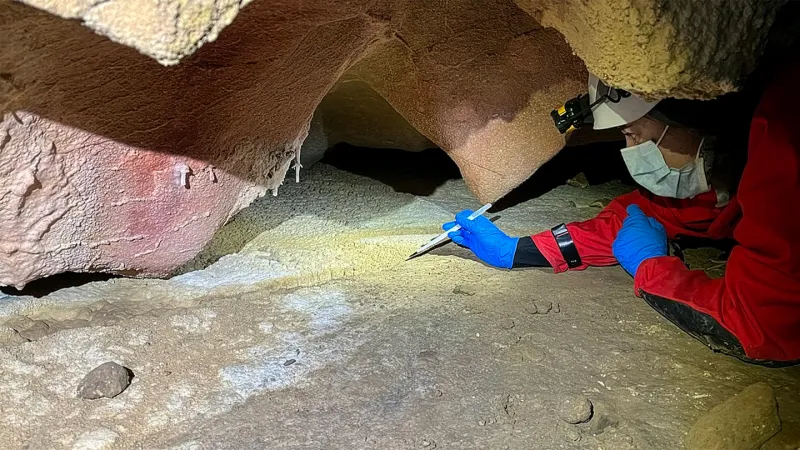
Ancient DNA on Cave Walls Reveals Links to Prehistoric Art
For the first time, scientists have recovered ancient human DNA directly from cave walls, a breakthrough that could rewrite how we connect prehistoric art to its creators. Refined methods now allow genetic material to be extracted from sediment and mineral coatings, offering a measurable link between the artists and the images they left behind. It is a quiet but significant step forward. As we trace these genetic threads, we are also mapping the deeper story of human expression.