photographs
photographs at World Data Ocean is a file of 4 stories. The newest of them: “Decomposed Carcass on Gulf of Mannar Coast Challenges Cetacean Identification”, “Mobilizing Mumbai's researchers for coastal biodiversity assessment”, and “A trusted global reference concludes its decades of data stewardship”. A severely decomposed cetacean carcass washed ashore at Thoothukudi Harbour, Tamil Nadu, presents a challenging identification puzzle for marine biologists. Mobilizing Mumbai's researchers for coastal biodiversity assessment turns observation into empirical action. A Global Hub for Ocean Intelligence 4 World Data Ocean is a centralized digital platform where researchers, scientists, and ocean enthusiasts converge to… The list below is every photographs story on World Data Ocean, newest first.
Decomposed Carcass on Gulf of Mannar Coast Challenges Cetacean Identification
A severely decomposed cetacean carcass washed ashore at Thoothukudi Harbour, Tamil Nadu, presents a challenging identification puzzle for marine biologists. The Gulf of Mannar coast is known for diverse dolphin and small whale species, but advanced decomposition, with extensive skin loss and discoloration on this 8-10-foot specimen, obscures the diagnostic features needed for a confident species determination.
Mobilizing Mumbai's researchers for coastal biodiversity assessment
Mobilizing Mumbai's researchers for coastal biodiversity assessment turns observation into empirical action. This grassroots effort, documenting species, discussing findings, and photographing habitats, embodies the integrated data ecosystem we need: science, fieldwork, and shared learning. If you are a marine biology or fisheries PhD student, join the exploration. For deeper context on how validated data drives conservation, see our piece on "Validating the Data Pipeline for Shark Conservation."
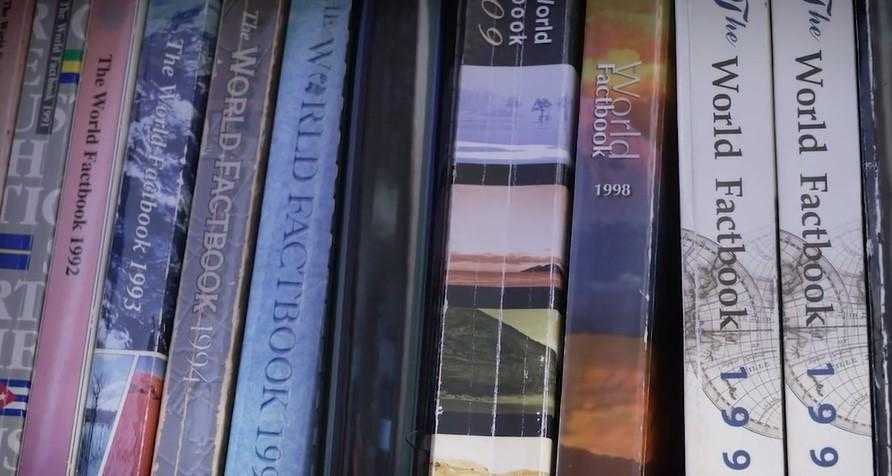
A trusted global reference concludes its decades of data stewardship
For decades, The World Factbook served as a trusted, one-stop reference for validated intelligence on every country and community, a pillar of empirical clarity. Its sunset marks the end of an era for a publication that balanced global scope with calibrated precision. As we close this chapter on authoritative data stewardship, we invite you to explore related coverage like "Tracking the nations with the largest share of historical CO₂ emissions" for deeper context on measurable global trends.
Call for Field Researchers to Join Mumbai Coastal Biodiversity Survey
The Mumbai coast is a living laboratory, and the invitation to survey its biodiversity is exactly the kind of hands-on science that builds real understanding. Documenting species, sharing observations, and learning together across habitats, this is how field knowledge grows. For PhD students and researchers in marine biology, zoology, or fisheries, it's a chance to turn curiosity into calibrated data. The work is collaborative, empirical, and grounded in the kind of peer-to-peer exchange that strengthens any research community.