oceanography
World Data Ocean keeps oceanography in one place: 140 stories so far. The section currently leads with “Ocean Acidification: A Measurable Link to Earth’s Deep Past.”, “Bridging Research and Collaboration: Marine Science Opportunities in Indonesia”, and “Exploring Whale Migration: An Interactive Experience Seeking Scientific Input”. Ocean acidification is not a new chapter in Earth's history, but a recurring one. A Fulbright research grant is a commitment to shared understanding, and for this student, it starts with a practical problem: securing a sponsor. A Global Hub for Ocean Intelligence 4 World Data Ocean is a centralized digital platform where researchers, scientists, and ocean enthusiasts converge to… The list below is every oceanography story on World Data Ocean, newest first.
Ocean Acidification: A Measurable Link to Earth’s Deep Past.
Ocean acidification is not a new chapter in Earth's history, but a recurring one. A new study in *Earth Science Reviews* offers a measured, peer-reviewed look at how past acidification events align with today's calibrated climate indicators. It is a reminder that the ocean keeps a precise, empirical record of planetary change. For those tracking ocean intelligence, this research sharpens the lens on what is measurable.
Bridging Research and Collaboration: Marine Science Opportunities in Indonesia
A Fulbright research grant is a commitment to shared understanding, and for this student, it starts with a practical problem: securing a sponsor. The visa requires a named partner, even when funding is self-arranged. This is a common hurdle, but one that demands creative networking. The request is straightforward, and the solution lies in connection. For those in Indonesian marine science, your networks are the bridge. We recommend reading *Bridging Data Gaps: Integrating Citizen Science for Ocean Intelligence* for related context on collaborative research.
Exploring Whale Migration: An Interactive Experience Seeking Scientific Input
A single interactive experience cannot replicate the full complexity of a whale's journey, but it can build empathy. TOHORĀ, a new creation from developer /u/Tohora721, invites users to confront the real pressures of migration firsthand. The project wisely seeks brutal feedback to refine its simulation. This is a practical exercise in ocean awareness, and a useful one.
Following My Passion: An Oceanography Journey, Despite Doubts
A degree in oceanography is not a detour from stability; it is a direct route to a field where demand for ocean intelligence is rising. This student's choice to pursue the discipline despite family doubts reflects a clear-eyed commitment to a measurable, peer-reviewed career path. The concern about salary is valid, but it is worth noting that oceanographers with calibrated, integrated skills in data systems and climate indicators often find stable roles in research, government, and industry.

Mediterranean Sea: Shifting Ocean Conditions Reshape Velella velella Distribution
Velella velella, the violet sail-by-the-wind sailor, is no stranger to the Mediterranean, but the conditions steering its course are changing. As surface temperatures and wind patterns shift, we are seeing a species whose distribution is a direct, measurable response to the ocean's evolving state. This is not a spectacle, but a signal. Understanding these movements helps us calibrate our own ocean intelligence, much like the data discovery efforts highlighted in our related coverage.
Mapping the Deep: Cook Islands ROV Exploration Set for 2026
In 2026, the Cook Islands will bring its seabed into sharper focus through a dedicated ROV exploration campaign. This is the kind of methodical, on-the-ground ocean intelligence we need more of, moving from satellite-level observation to direct, calibrated observation of the deep. It is a precise step for mapping what remains unseen. For a broader look at how these efforts connect, our piece on mapping American Samoa's seabed offers a useful regional comparison. Understanding drives protection, and this work is a clear example.
Exploring the Cook Islands Depths: A 2026 ROV Mission.
In early 2026, an ROV mission will descend into the waters surrounding the Cook Islands, where the seafloor remains largely uncharted. This is the kind of methodical, empirical work that turns raw data into ocean intelligence. By capturing validated, real-time imagery from the depths, the mission strengthens the integrated data ecosystem that researchers and policymakers rely on. For those tracking how these efforts connect, our piece on NOAA's calibrated ocean intelligence offers useful context. Understanding drives protection, and this expedition brings us closer to both.
Charting a Course: Women's Progress in Indian Marine Science
Women now earn 63.3% of postgraduate and 60.5% of doctoral degrees in Indian oceanography, yet they hold just 21.4% of faculty positions. That gap is not abstract. Ten years of national data reveal a pipeline that welcomes women at entry and thins them out at every step after. The pattern mirrors what researchers document globally, and it points to structural barriers, not capability. Progress at the top of the funnel is real, but it stops short of the lab. That is not parity.
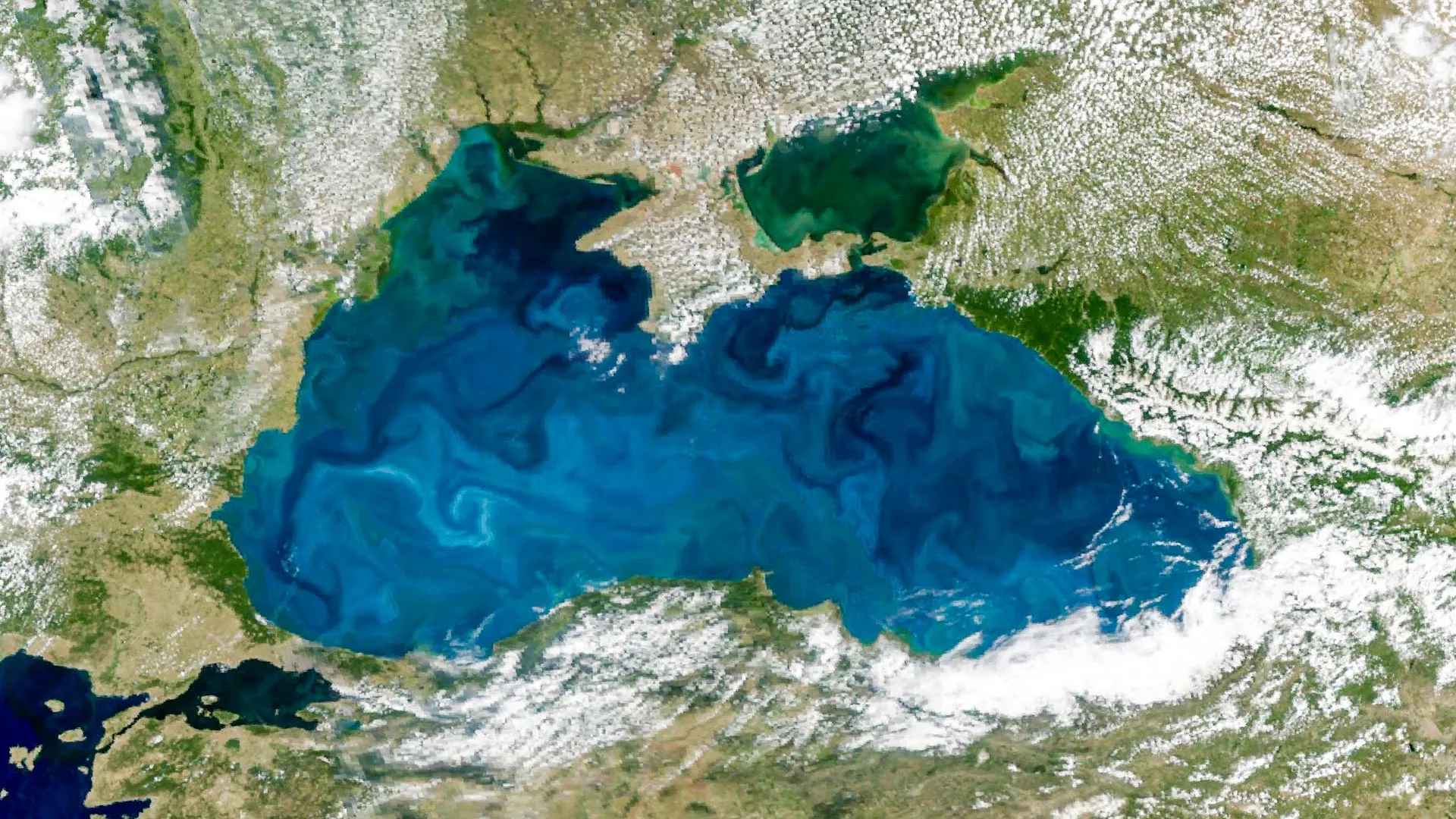
Black Sea Bloom: Satellite Data Reveals Turquoise Waters from Space
From orbit, the Black Sea has turned turquoise. NASA's PACE satellite captured the annual phytoplankton bloom, its reflective coccolithophore shells brightening the water enough to be seen from space. An astronaut on the International Space Station also photographed the bloom threading through the Bosphorus, where swirling currents reveal its reach. It is a striking reminder that ocean intelligence begins with observation, and that such calibrated data is essential for tracking the health of our shared seas.
Florida Gap Year: Charting a Course for Marine Biology Exploration
A gap year after college is a strategic investment, not a pause. For this graduate, the Disney College Program offers a unique base for marine biology exploration. The best courses in Orlando are those that provide practical, transferable skills, such as GIS mapping or data analysis, complementing the SCUBA certification already in motion.
Charting a Course: Top Colleges for Marine Science and Campus Life
Choosing a college means weighing the depth of its marine science program against the energy of its campus life. You want a place where you can study ocean ecosystems and still pack the stadium on a Saturday. That balance is achievable, but it takes a specific kind of institution to pull it off. We've pinpointed several large universities that offer both strong research opportunities and a vibrant social scene.
Real-Time Wave and Boat Motion Estimation with Kalman Filtering
A Kalman filter is a precise tool for a chaotic environment, and that is exactly what this work brings to marine navigation. The open-source `ocean-imu` project, built for the atomS3R, delivers real-time heave and wave-direction estimates by fusing IMU data through an OU-driven quaternion MEKF. It is a practical, peer-reviewed approach to a complex problem. For those interested in the broader context of maritime data systems, our piece on Ukraine's Black Sea shipping initiative offers a relevant policy perspective.
Atlantic Great White Population Significantly Higher Than Previously Estimated
New survey data indicate the Atlantic's great white population is significantly larger than prior estimates, a finding that recalibrates what we thought we knew about this apex predator. The numbers matter, but so does the method: validated, peer-reviewed counting that sharpens our ocean intelligence. This is encouraging for the species, yet it also raises pressing questions about ecosystem balance. For those tracking the broader picture, our coverage of Atlantic Circulation Weakens: Global Climate Reshaping Predicted offers useful context on the shifting forces at play.

Galapagos Seal Identification: Validating Observations with Ocean Intelligence.
A single photograph can spark a genuine question about the creatures sharing our shores. This observer's instinct to verify rather than assume is exactly the kind of caution that strengthens marine knowledge. The Galapagos fur seal is a valid guess, though confirming its distinct features requires a closer look. We appreciate the curiosity and the careful approach to observation.

Unidentified Specimen Found in Cook Islands Sparks Ocean Data Inquiry
A single specimen, unidentified and lifeless, has surfaced in the Cook Islands, prompting a wave of curiosity that is exactly where inquiry should begin. The observer mused it resembled a Spanish Dancer nudibranch, though uncertainty rightly tempers that guess; even the possibility of a rare four-legged sea star nearby adds to the puzzle. Such observations fuel the integrated data ecosystem. For those tracking similar mysteries, our related piece, "Unexpected Chiton Discovery in Puerto Rico Challenges Species Distribution Models," offers parallel context worth exploring.
Simple Solutions, Deep Insights: BrainCoral Advances Marine Science
The most persistent obstacle in marine science isn't the deep, it's the disconnect between data points. BrainCoral, developed during work at Coral Vita, tackles this by stripping complexity back to its core. The team understands that real insight emerges only when a simple solution holds steady across observations. It is a practical reminder that environmental clarity is built, not stumbled upon. For those tracking how we close observation gaps, the approach pairs well with our related coverage on integrating citizen science for ocean intelligence.

Microcosms of the Pacific: Exploring Oregon's Tide Pool Ecosystems.
At Cape Blanco, Oregon, the tide pools reveal a world that feels almost alien up close. This July, photographer /u/JamTrackAdventures captures that otherness, showing how these microcosms shift perspective entirely. Each pool is a calibrated snapshot of life, measurable and immediate. The image reminds us that ocean intelligence starts at the shoreline, where small observations build larger understanding. For those exploring similar pathways, our related article, "Navigating a Marine Studies BA: Pathways to a Marine Biology Career," offers practical direction.
Beyond the Lab: Finding Your Ideal Marine Science College
Choosing a college means weighing the program against the pulse of campus life. You want rigorous marine science, but you also want the roar of a Saturday stadium and a campus that feels alive. That balance is achievable. Large universities with strong research programs and vibrant social scenes do exist. For a student seeking warm weather, school spirit, and a path into marine ecology, the search should focus on institutions where both the lab and the lawn are inviting.
Charting a Course: Advice for New Marine Physics Professionals
A fresh Marine Physics graduate asking for career advice is already demonstrating the kind of empirical curiosity the field rewards. The question is not just about which software to learn, but how to build a career with measurable impact. For those starting out, focus on mastering integrated data ecosystems and calibrated ocean intelligence tools, as these are the backbone of modern research. If you are exploring advanced pathways, our related article on international Master's programs offers valuable context.
Ocean Heat and Oxygen Loss Linked to Ancient Marine Extinctions
Ancient marine extinctions carry a warning that reaches across millions of years. Ocean heat and oxygen loss, the same forces stressing today's seas, align with past die-offs in the fossil record. The study, published in PNAS, offers empirical grounding for what climate indicators already suggest. We treat this as more than a historical footnote, it is a calibrated measure of risk. For deeper context, our related piece on Cascadia's fragmented subduction zone shows how geological processes compound biological vulnerability.