ocean heat content
ocean heat content at World Data Ocean is a file of 3 stories. The newest of them: “Measuring the Ocean's Warming Pulse at 2,000 Meters”, “Tracking Climate Signals in the Deep Ocean Heat Record”, and “North Atlantic Warming Hole: Understanding Ocean Dynamics and Climate Impacts”. Two thousand meters down, the ocean is warming measurably and without pause. The ocean is warming, and the signal is unmistakable. A Global Hub for Ocean Intelligence 4 World Data Ocean is a centralized digital platform where researchers, scientists, and ocean enthusiasts converge to… The list below is every ocean heat content story on World Data Ocean, newest first.
Measuring the Ocean's Warming Pulse at 2,000 Meters
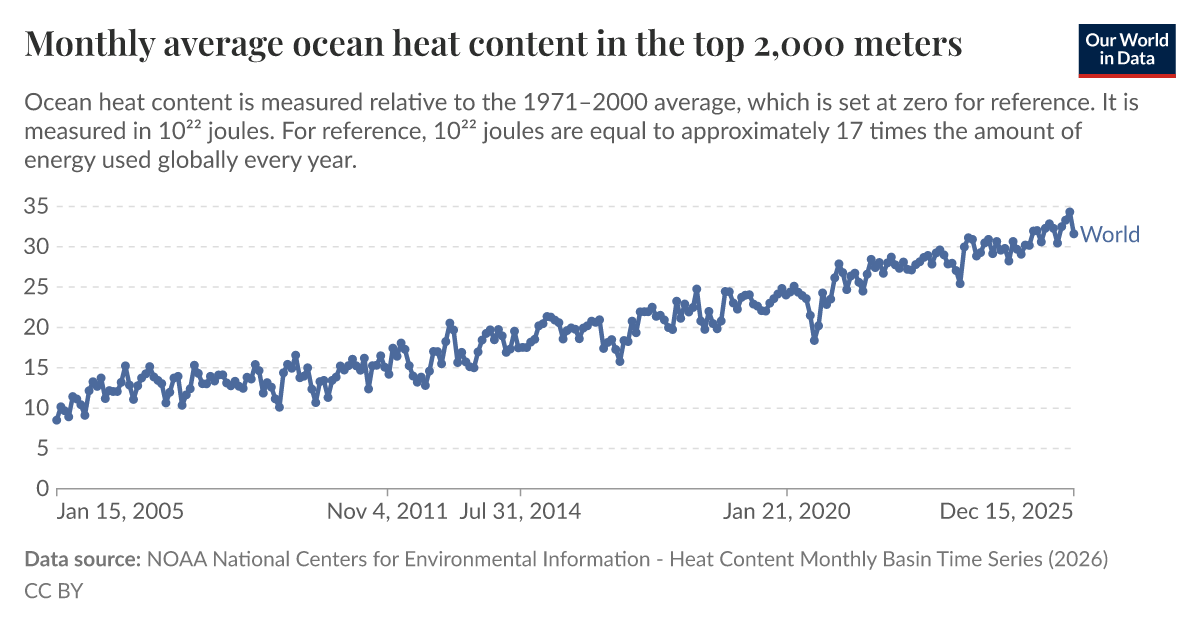
Two thousand meters down, the ocean is warming measurably and without pause. Monthly average heat content in the top 2,000 meters provides one of the most empirically grounded climate indicators available, validated, peer-reviewed, and increasingly urgent. This isn't a distant signal; it is a calibrated pulse we can track in real time. Understanding drives protection. For deeper context on how global experts are building the data framework to monitor these changes, see "Global experts unite to steer Ocean Decade's data and knowledge framework."

Tracking Climate Signals in the Deep Ocean Heat Record
The ocean is warming, and the signal is unmistakable. Monthly average ocean heat content in the top 2,000 meters offers a clear, empirical record of how much energy our planet is absorbing. These measurements are more than data points; they are a validated climate indicator, revealing a steady, measurable trend. Understanding this record is essential, and we connect it to related research like our piece on Agulhas Leakage and intensifying compound ocean extremes, deepening the context for informed action.
North Atlantic Warming Hole: Understanding Ocean Dynamics and Climate Impacts
The North Atlantic warming hole south of Greenland is often flattened into a single alarming headline. This six-minute explainer resists that. It carefully separates sea-surface temperature change from total ocean heat content, and it clarifies how freshening can strengthen stratification near the surface. The video also warns against generalizing modeled subsurface warming near Greenland to the entire subpolar North Atlantic. The cold blob may hint at shifting ocean heat transport, but it is not proof of imminent AMOC collapse. That distinction matters.