ocean data
549 stories filed under ocean data on World Data Ocean. The newest of them: “Consumer Seafood Choices Drive Measurable Ocean Health Improvements.”, “Ocean Data Center Raises Questions of Safety and Global Technological Shift”, and “Mapping Arctic Benthic Life: Geological Complexity Drives Biodiversity”. New data from the Marine Stewardship Council (MSC) validates consumer choices as a significant driver of ocean health. Recent developments highlight the escalating global race for ocean data infrastructure. A Global Hub for Ocean Intelligence 4 World Data Ocean is a centralized digital platform where researchers, scientists, and ocean enthusiasts converge to… The list below is every ocean data story on World Data Ocean, newest first.

Consumer Seafood Choices Drive Measurable Ocean Health Improvements.
New data from the Marine Stewardship Council (MSC) validates consumer choices as a significant driver of ocean health. Recent analysis of consumer behavior demonstrates a measurable correlation between conscious seafood selections and the sustainability of marine ecosystems. This longitudinal study underscores the power of informed purchasing decisions in supporting responsible fisheries. Further exploration of ocean dynamics and interconnected systems, as highlighted in research detailing marine megavertebrate migrations in *Nature*, reinforces the urgency of collaborative ocean stewardship.
Ocean Data Center Raises Questions of Safety and Global Technological Shift
Recent developments highlight the escalating global race for ocean data infrastructure. While debates persist within the U.S. regarding optimal locations for AI data centers, China has reportedly constructed one on the ocean floor. This unprecedented undertaking raises critical questions regarding environmental safety and potential impacts on marine ecosystems. Understanding these implications requires a rigorous, data-driven approach; as detailed in “Ocean Currents” from the National Oceanic and Atmospheric Administration, oceanographic factors play a vital role. Further exploration of ocean dynamics is available on World Data Ocean.

Mapping Arctic Benthic Life: Geological Complexity Drives Biodiversity
DeepInsight Hill, a geologically complex region of Mohn’s Ridge in the Arctic Ocean, presents a remarkably heterogeneous benthic environment. Recent multi-year ROV surveys (2023-2025) utilized the DeepSee object detection model and manual review to map and quantify megafauna from 980 to 2100 m, revealing distinct community structure. Dominant taxa—Rossellidae, Tetractinellida, and Ophiuroidea—demonstrated clear partitioning based on bathymetry and geomorphology. Notably, meter-scale mapping revealed crucial ecological features, including sponge aggregations and potential breeding grounds. This research
Mapping the World’s Oceans: A New Era of Ocean Intelligence.
Terradepth today introduces Absolute Ocean, the world’s first Ocean-Data-as-a-Service platform, providing unprecedented real-time and historical ocean mapping capabilities. This integrated data ecosystem leverages advanced technologies to deliver validated, measurable ocean intelligence for researchers, policymakers, and industry. Absolute Ocean facilitates informed decision-making across sectors, from climate resilience to resource management. Addressing critical data gaps, as highlighted in recent discussions on ocean plastic accumulation (Our World in Data), this platform represents a significant advancement in ocean stewardship and collaborative scientific discovery.
Gulf of Mexico Deep-Sea Fish: Assessing Taxonomic Resolution for Data Analysis
Understanding deep-sea ecosystems requires robust data analysis, yet species-level identification is often limited. This study rigorously assessed the utility of coarser taxonomic resolutions—genus, family, and order—for analyzing deep-pelagic fish assemblages in the Gulf of Mexico’s rich mesopelagic zone. Results indicate genus-level data provides 94% of the discriminatory power of species data, demonstrating its value as a proxy when species resolution is unavailable. These findings inform critical decisions regarding taxonomic sufficiency in deep-sea research, as explored further in our related article, "A taxonomic resolution assessment..."
Kuroshio Extension Eddies: Challenging Assumptions of Balance and Stability
Subsurface mesoscale eddies, typically assumed to maintain geostrophic and hydrostatic balance, frequently exhibit inconsistencies in pressure, vorticity, and stratification anomalies. A new study statistically assesses these deviations within the Kuroshio Extension, revealing that hydrostatic consistency is only ~10–20%, while geostrophic consistency is ~40–60%. Factors like eddy age, size, and deformation significantly impact this balance. These findings highlight the necessity of comprehensive, multi-parameter diagnostics for accurate ocean interior analysis.
Modeling Storm Surge in Venice Lagoon: Assessing Barrier System Performance
The Venice Lagoon faces escalating risks from extreme storm surges, mitigated primarily by the MoSE movable barrier system. This study introduces a novel modeling framework integrating an immersed boundary method within the SHYFEM-MPI ocean circulation model to accurately simulate storm surge dynamics and the impact of these barriers. Validated through testing and applied to the November 2022 event, the framework demonstrates the capability to forecast storm surges from regional scales to the urban environment.
Ocean Plastic Accumulation: Tracking Pollution and Future Impacts.
Globally, an estimated 11 million metric tons of plastic enter the ocean annually, accumulating in distinct regions with profound ecological consequences. Our data visualization explores these accumulation zones, revealing significant concentrations in gyres like the Great Pacific Garbage Patch, as well as coastal areas and deep-sea trenches. This plastic pollution poses a growing threat to marine life and ecosystems, potentially impacting human health through the food chain.
Ocean Data Disclosure: Driving Action for a Healthier Planet.
This World Ocean Day, addressing data gaps is critical to effective ocean stewardship. World Data Ocean champions the move from fragmented information to actionable ocean intelligence, enabling validated, measurable progress. Disclosure of comprehensive ocean data fosters global collaboration and drives informed policy decisions. Our integrated data ecosystem provides real-time climate indicators, essential for understanding and mitigating ocean challenges. For a deeper exploration of unexplained phenomena, see our recent article, "Would MH370 still exist in any recognisable form on the seabed?".
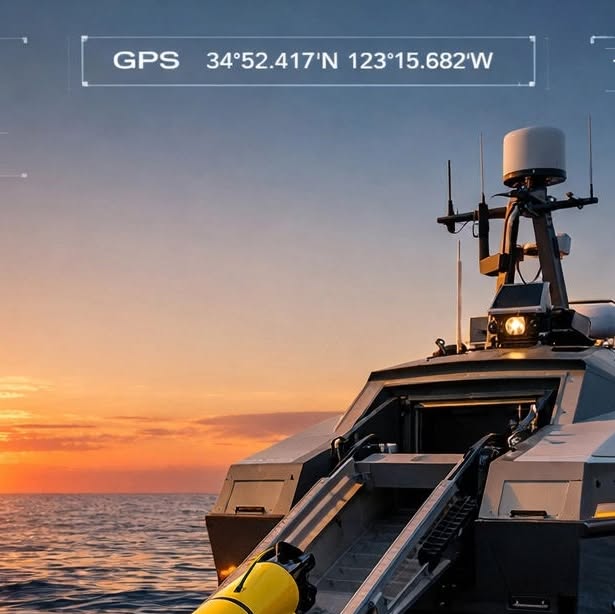
Autonomous Gliders Extend Ocean Monitoring Capabilities from Afar
Imagine a world where we can monitor the deepest corners of the ocean without ever leaving the shore. That world is now a reality: we achieved the first autonomous launch of an underwater glider from an uncrewed surface vessel, creating a validated, real‑time data stream on temperature, salinity and chemistry. This integrated data ecosystem enables longitudinal studies that were once too costly or hazardous, scaling ocean intelligence from surface to seafloor.

Monitoring Kelp Forests: Integrated Data for Ocean Intelligence.
Ever wonder how we map the ocean’s “rainforests”? Kelp forests are the unsung heroes of our coastlines, sequestering carbon, stabilizing shorelines, and sustaining biodiversity. Yet, scaling their monitoring has long stymied scientists and policy makers. At World Data Ocean, we apply AI and deep learning to convert raw imagery into validated, real‑time ocean intelligence. Our high‑resolution dashboards reveal kelp dynamics in ten times greater detail, empowering researchers to make measurable, evidence‑based decisions that strengthen coastal resilience.
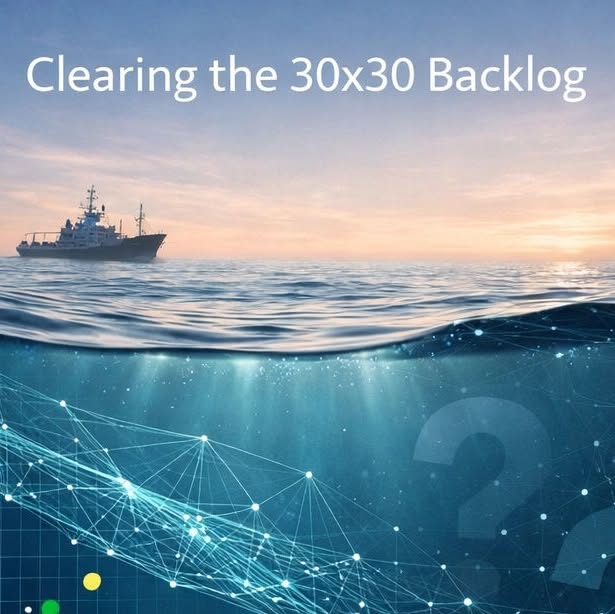
Data-Driven Ocean Protection: Closing the Coverage Gap for 30x30
30x30 aims to protect 30 % of the ocean by 2030, and the ambition is unmistakable. The real bottleneck is coverage: persistent data gaps and labor‑intensive analysis that cannot match the required scale. AI accelerates the workflow by pinpointing strong evidence, flagging missing observations, and delivering measurable, validated datasets for rapid wildlife labeling, imagery and acoustic review, and targeted survey prioritization. When you pursue 30x30, which gap dominates—biodiversity, habitat mapping, or human activity?
Deep Learning Improves Ocean Forecasts, Enhancing South China Sea Management
The South China Sea (SCS) is vital for global geopolitics, economics, and environmental health, necessitating accurate marine variable forecasting for effective management and hazard mitigation. Traditional numerical models, while essential, often face limitations in computational efficiency. Recent advancements in deep learning-based global ocean forecasting systems (GOFS), such as XiHe, show promise in achieving competitive accuracy at reduced costs. To enhance regional forecast fidelity, we introduce the Swin-Transformer Corrector (STC), a lightweight model designed to refine these forecasts by addressing local complexities.
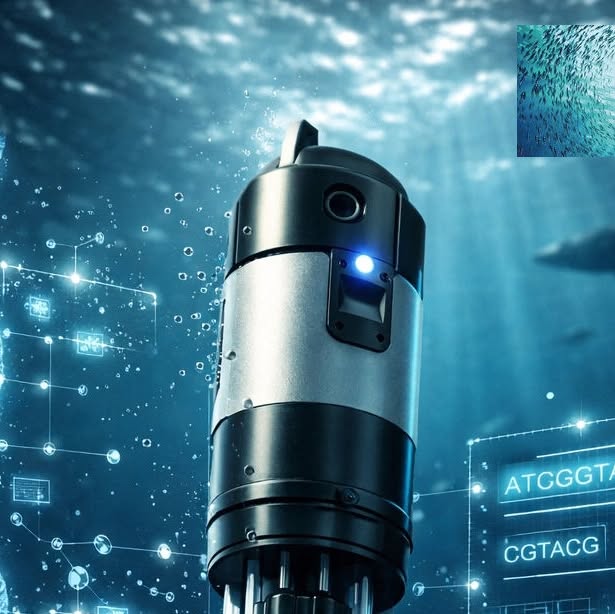
Unlocking Ocean Biodiversity: Environmental DNA and the Future of ESG Reporting
Have you ever wondered how we track marine life without catching every fish? Enter environmental DNA (eDNA), the ocean’s genetic footprint that is transforming our understanding of biodiversity. Once confined to research labs, eDNA is now empowering corporate leaders with validated, empirical data for ESG reporting. This shift enables companies to move beyond mere sustainability claims to measurable impact. At World Data Ocean, we bridge complex science with practical applications, making eDNA the gold standard for transparency in ocean stewardship.

Interdiction in the Pacific: Measurable Impact on Drug Trafficking Routes
The United States has conducted another lethal strike on a vessel suspected of transporting drugs in the eastern Pacific, resulting in the deaths of two individuals. Southern Command reported that intelligence indicated the boat was navigating established drug-trafficking routes. This operation underscores ongoing efforts to combat illegal drug trafficking in international waters. For further insights into maritime activities and their implications, explore our article, "UAE’s ADNOC Sends Another LNG Carrier To India Through Hormuz In ‘Dark Mode’."

Shipping Detention Costs Face Scrutiny: Maersk Fined $1.9 Million
The U.S. Federal Maritime Commission (FMC) has fined shipping giant Maersk $1.9 million for improperly charging customers detention fees linked to container delays. This penalty follows a significant $22.67 million fine imposed on Mediterranean Shipping Company (MSC) earlier this year for similar tariff violations. These actions underscore the FMC's commitment to enforcing fair practices in the shipping industry. For further insights into maritime challenges, explore our coverage on the "IMO Condemns Continued Hijacking Of Tanker Amid Rising Piracy In Western Indian Ocean."

Maritime Interdiction: US Military Action Yields Measurable Results in Pacific.
The United States Southern Command has released a video capturing a military strike on a suspected drug boat in the Eastern Pacific, resulting in one fatality and two survivors. The footage shows the vessel speeding across the water before it ignites in flames. This incident highlights ongoing efforts to combat drug trafficking in international waters. For further insights into maritime challenges, explore our article, "China’s New Nuclear-Powered Carrier Could Challenge US Naval Reach Across Indo-Pacific," which examines evolving naval dynamics in the region.

South Korea Advances Nuclear Submarine Program, Bolstering Maritime Capabilities
South Korea has announced plans to launch its first domestically built nuclear-powered submarine by the mid-2030s, a significant step in enhancing its naval capabilities. Defence Minister Ahn Gyu-back revealed this initiative during a defence strategy meeting led by President Lee Jae Myung, highlighting the nation’s commitment to modernizing its military forces in response to regional security challenges. This development aligns with broader maritime security efforts, such as the recent Indian Navy's deployment of INS Kolkata to deter piracy near the Gulf of Aden.
Measuring the Flow: Quantifying Plastic Waste in Our Oceans
Plastic waste poses a significant threat to our oceans, with millions of tons entering marine environments each year. Understanding the scale of this issue is crucial for effective stewardship and policy-making. Our analysis on "How much plastic waste ends up in the ocean?" provides empirical data and insights into the sources and impacts of plastic pollution. For a deeper dive into marine life and its complexities, explore our article on "Best marine biology books?" to discover essential readings that broaden your understanding of ocean ecosystems.

Autonomous Fleets Usher in a New Era of Ocean Data Collection
The future of marine research is evolving towards a quieter, cleaner, and smarter approach. At World Data Ocean, we are closely monitoring the shift from traditional survey ships to autonomous robotic fleets in real-time. Our Ocean Infinity Operations utilize Uncrewed Surface Vessels (USVs) to revolutionize data collection across vast ocean expanses. This transition not only reduces carbon emissions but also enhances scientific accuracy through integrated AI technology. Explore how innovations like the MOLA AUV are bringing the abyss within reach in our related article.
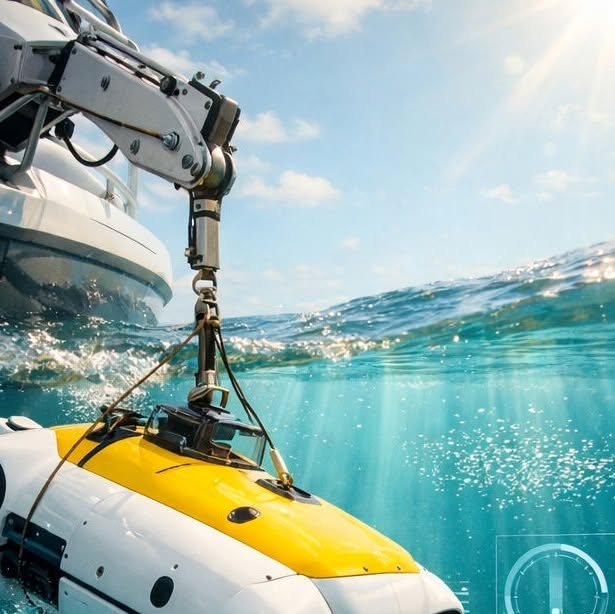
Decentralized Robotics Expand Ocean Exploration and Data Collection.
The abyss isn't as out of reach as it once was. With the emergence of portable robotics like the MOLA AUV, high-tech ocean exploration is becoming accessible to smaller, decentralized teams. This shift is revolutionizing our understanding of the deep sea through an influx of 'bottom-up' data. At World Data Ocean, we are enhancing our platform to process this real-time information, ensuring that every insight, regardless of its origin, is validated and actionable.
Megafauna's Role: Enhancing Seagrass Carbon Storage for Climate Solutions
Coastal seagrass ecosystems, though occupying a small fraction of the ocean, play a vital role in carbon capture and storage, increasingly recognized as blue carbon solutions. This study explores the significant yet often overlooked role of dugongs (Dugong dugon) in enhancing seagrass productivity and sediment carbon storage. By employing a carbon-nutrient cycling model in Bahrain's Halodule seagrass beds, findings reveal that dugongs can amplify seagrass net primary production and carbon balance substantially.
Beluga Migration Patterns Reveal Shifts Tied to Changing Arctic Conditions
Understanding the migration timing and dive behavior of the endangered beluga whale population in Cumberland Sound, Nunavut, is essential for predicting their response to environmental changes. By analyzing satellite telemetry data from two distinct periods (1998–1999 and 2006–2008), this study explores the relationship between dive behavior, migration timing, and seasonal factors. Notably, our findings indicate a shift in foraging patterns from Arctic cod to capelin, likely driven by warmer ocean temperatures.
Ocean Intelligence: Tracking Change Beyond Traditional Data Centers
In the pursuit of understanding ocean dynamics, traditional data centers may become obsolete. Assessing ocean changes without data centers is possible through contemporary technologies and collaborative research. from Frontiers explores innovative methodologies that leverage contemporary technologies for real-time ocean monitoring. By integrating diverse data sources and fostering collaboration, researchers can gain insights into ocean health without the constraints of conventional infrastructure. For a broader context on the evolving landscape of maritime operations, consider reading "New Autonomous Warship Concept Could Transform North Atlantic Naval Patrol Operations." Embrace the future of ocean intelligence.