ocean currents
World Data Ocean keeps ocean currents in one place: 14 stories so far. The section currently leads with “Listening to the Deep: 46 Hours of Acoustic Data from an Offshore Platform”, “Measured sea level rise validated across decades of ocean data”, and “Seafloor sediment confirmed as a vast plastic pollution reservoir”. A 24.41 Hz fundamental tone, measured at 122.29 dB re 1μPa²/Hz, dominates the underwater acoustic signature of a large truss-type offshore aquaculture platform, roughly 16 dB above idle. Measured sea level rise, validated across decades of ocean data, tells a clear story. A Global Hub for Ocean Intelligence 4 World Data Ocean is a centralized digital platform where researchers, scientists, and ocean enthusiasts converge to… The list below is every ocean currents story on World Data Ocean, newest first.

Listening to the Deep: 46 Hours of Acoustic Data from an Offshore Platform
A 24.41 Hz fundamental tone, measured at 122.29 dB re 1μPa²/Hz, dominates the underwater acoustic signature of a large truss-type offshore aquaculture platform, roughly 16 dB above idle. This 46-hour campaign under calm seas confirms that structural vibrations from the propulsion system travel through the rigid pile foundation, not through the water column. Above 2 kHz, platform noise vanishes into the background. Day-night shifts in the sound-speed profile and semi-diurnal tidal modulation further shape this soundscape.

Measured sea level rise validated across decades of ocean data
Measured sea level rise, validated across decades of ocean data, tells a clear story. Seasonal estimates from Church and White (2011) align with the University of Hawaii's Fast Delivery data, both showing change in millimeters against the 1993-2008 average. This is empirical, peer-reviewed evidence of a measurable climate signal. For deeper context, our coverage of 2025 Temperature Anomalies reveals how these climate indicators connect. Understanding drives protection.

Seafloor sediment confirmed as a vast plastic pollution reservoir
Seafloor sediment has been confirmed as a vast plastic pollution reservoir, according to a world-first study by the Commonwealth Scientific and Industrial Research Organisation. This is not a surface problem, plastic is accumulating in the deep, where it becomes part of the geological record. The finding is a measurable, empirical signal of our impact. Understanding where plastic settles, from the seafloor to the Great Pacific Garbage Patch, is foundational to integrated ocean stewardship.

Calibrated search reveals ocean intelligence from seafloor to surface
From seafloor to surface, a calibrated search reveals ocean intelligence that is both validated and measurable, this is what NOAA's new discovery platform delivers. It transforms raw depth data into integrated, real-time insights we can trust. Understanding drives protection, and this tool makes that possible. For deeper context on why such calibrated monitoring matters, read our coverage of the proposed US cuts that risk leaving the world "flying blind."
Mapping Ocean Plastic Accumulation to Future Climate Indicators
Plastic doesn't just float; it accumulates in distinct ocean zones that now serve as measurable climate indicators. Understanding where our debris settles reveals more than pollution patterns, it exposes future warming trajectories. Our World in Data maps this convergence, connecting observable accumulation zones to broader environmental shifts. The findings are empirical, calibrated, and urgent. For deeper context on how integrated data reshapes ocean observation, see our related piece "From orbit to ocean floor: integrated data reshapes our view of the sea."

Decades of Atlantic circulation data reveal measurable climate indicators
Decades of Atlantic circulation data now offer something the field has long needed: measurable, validated climate indicators. This isn't anecdotal observation, it's empirical, longitudinal evidence of change. Understanding drives protection, and this dataset from NOAA gives researchers and policymakers a calibrated baseline to measure what comes next. For deeper context on the ocean's thermohaline structure, our related work on a validated global atlas from WOA18 connects the dots between surface signals and the deep currents that drive them.
Tracing ocean plastic to its land-based sources via empirical data
Every river is a potential pipeline. Our latest analysis, grounded in empirical data, traces ocean plastic back to its land-based origins. The evidence is clear: mismanaged waste from coastal populations is the primary driver. This is not guesswork; it is a measurable, validated flow. Understanding this pathway is the first step toward intervention. For deeper insight into where these plastics ultimately settle, see our related piece, "From surface to seafloor, a calibrated global map of microplastic drift.
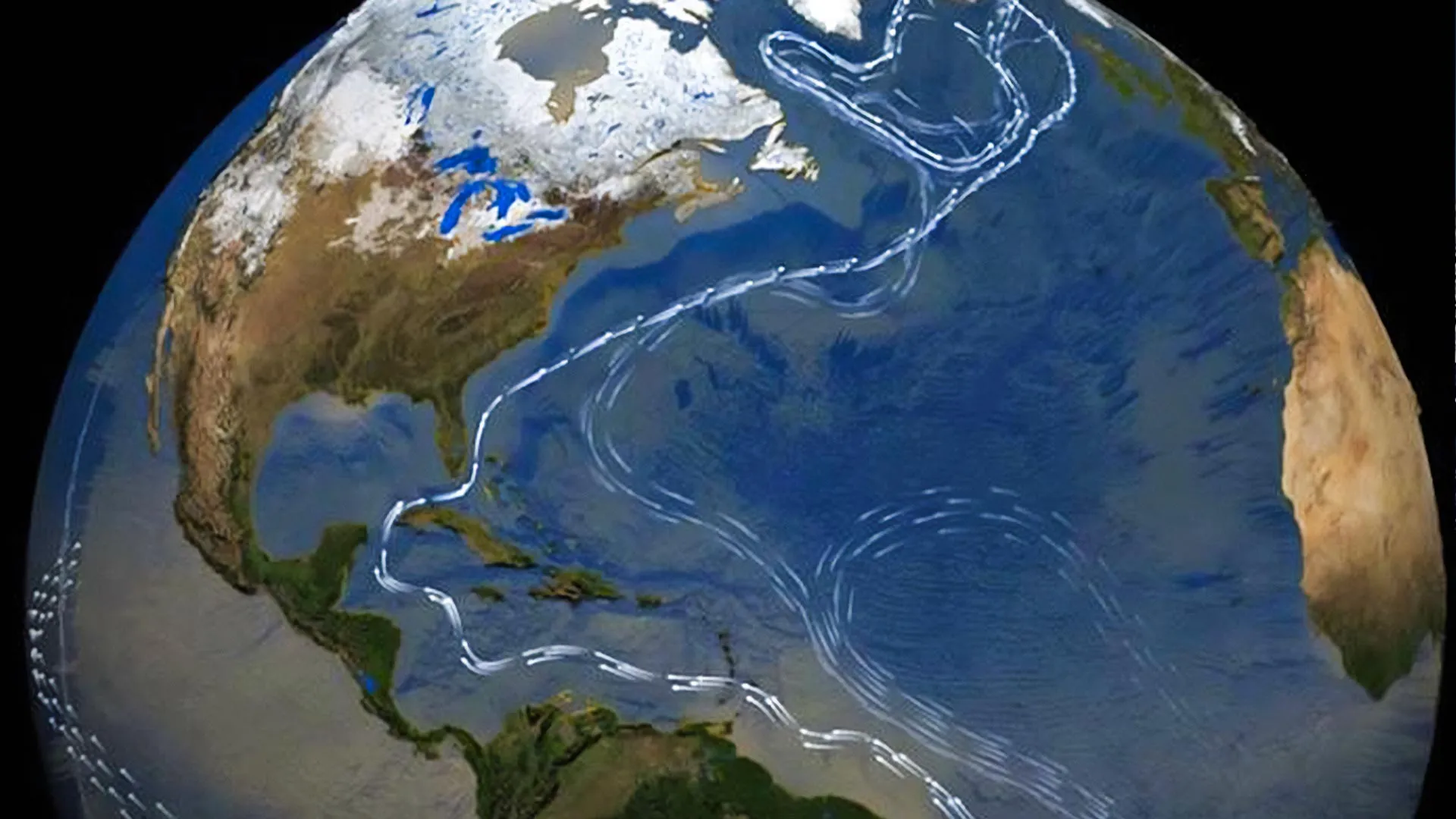
Atlantic Circulation Weakens: Global Climate Reshaping Predicted
For nearly two decades, the Atlantic Meridional Overturning Circulation has been weakening across a broad expanse of ocean, and the evidence is now firmly observational. This isn't a distant model projection; it's a measured slowdown with the potential to redraw weather patterns, storm tracks, and coastal sea levels around the basin. We treat this as a calibrated warning, not speculation. The data demands attention.
Southern Ocean’s Carbon Absorption Capacity Faces Uncertainty Under Climate Scenarios
The Southern Ocean has long acted as Earth's quiet carbon sink, but new research in *Science Advances* suggests its capacity to absorb emissions is not guaranteed under shifting climate scenarios. This uncertainty carries measurable weight for global climate modeling. We cannot assume stability where the system itself is changing. Understanding these dynamics is essential, not optional. For broader context on how ocean systems respond to pressure, our related coverage of Atlantic Circulation Weakens: Global Climate Reshaping Predicted offers a useful parallel.
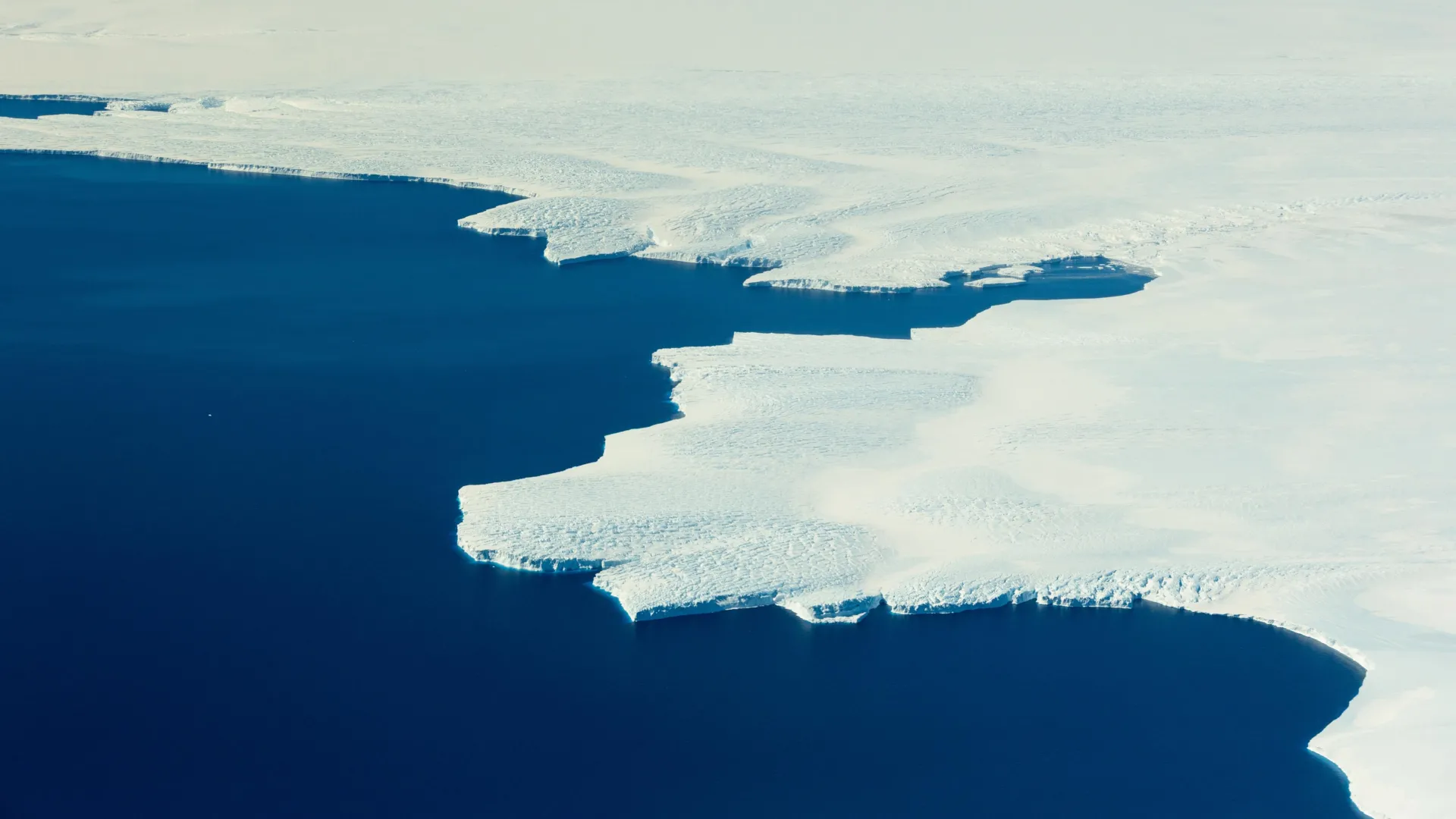
Unexpected Snowfall Drives Record Ice Gain in East Antarctica
Between 2021 and 2023, East Antarctica gained 695 billion tons of ice, a measurable, empirical anomaly driven by tropical ocean warming thousands of miles away. This record snowfall temporarily slowed Antarctica's long-term decline, but it does not reverse the larger trend. Understanding these atmospheric feedback loops is essential for calibrating our climate models. For deeper context on how warming reshapes global systems, see our coverage of "Atlantic Circulation Weakens: Global Climate Reshaping Predicted."

Deep Ocean Warming: Longitudinal Data Reveals a Concerning Trend.
The ocean's abyss was long considered a stable, slow-motion frontier, but new longitudinal data now shows the deepest layers are warming. This is not a distant anomaly; it is a measurable shift in a system we rely on for climate stability. We find this trend deeply concerning, yet it reinforces why sustained observation matters. As we track these changes, we must connect them to broader disruptions, much like our recent analysis of Atlantic Circulation Weakens, to fully grasp the scale of what is unfolding.
Atlantic Current Weakening: Empirical Data Reveals Accelerated Change.
The Atlantic Meridional Overturning Circulation is losing its grip, and the empirical record is unambiguous. New studies confirm this vital current system is weakening faster than projected, edging closer to a threshold that would redraw global climate patterns. This is not speculation; it is calibrated, peer-reviewed observation. We treat the data with the gravity it demands, because the measured shift is a direct signal of our collective impact.

Rapid Warming Threatens Atlantic Circulation’s Stability
The pace of warming may be the deciding factor for the Atlantic Meridional Overturning Circulation. New research indicates that rapid temperature rise, similar to today's trajectory, can push this massive system past a tipping point far earlier than gradual change would allow. The finding reframes our understanding of climate thresholds. For a broader perspective on how we track these shifts, our related piece, "Atlantic Circulation Weakens: Global Climate Reshaping Predicted," offers additional context.

Scaling Ocean Power: China's New Wind Converter Station Signals Progress
A hundred kilometers off Yangjiang's coast, China has switched on what it calls the "Heart of Offshore Wind," a new converter station designed to transmit clean energy from distant turbines to the grid. The move signals measurable progress in scaling ocean power, turning ambitious engineering into practical climate infrastructure. It is a reminder that offshore wind's next chapter depends less on turbine size alone and more on the integrated systems moving that energy ashore.