ocean acidification
ocean acidification at World Data Ocean is a file of 15 stories. The newest of them: “Untested AI Hypotheses on Ocean Acidification Demand Peer Review”, “Coastal benthic ecosystems reveal the cumulative toll of climate and human pressures”, and “Acidification Alters Phytoplankton Chemistry, Shifting Ocean Carbon Cycles”. A user-generated hypothesis that ocean acidification cuts sea-to-air methylamine emissions is now live on Forks.world, and it is asking for peer review before any claims are validated. Coastal benthic ecosystems are telling us something urgent. A Global Hub for Ocean Intelligence 4 World Data Ocean is a centralized digital platform where researchers, scientists, and ocean enthusiasts converge to… The list below is every ocean acidification story on World Data Ocean, newest first.
Untested AI Hypotheses on Ocean Acidification Demand Peer Review
A user-generated hypothesis that ocean acidification cuts sea-to-air methylamine emissions is now live on Forks.world, and it is asking for peer review before any claims are validated. This is precisely the kind of empirical, testable proposition that drives ocean intelligence forward. The link between measurable chemical shifts and atmospheric impact deserves calibrated scrutiny.

Coastal benthic ecosystems reveal the cumulative toll of climate and human pressures
Coastal benthic ecosystems are telling us something urgent. Rising temperatures, acidification, and deoxygenation now converge with eutrophication, pollution, and bottom trawling, reshaping biodiversity from shallow coasts to continental margins. These compounded stressors simplify assemblages, alter trophic pathways, and push ecosystems toward critical thresholds. Yet recent advances, environmental DNA metabarcoding, automated imaging, multi-stressor experiments, are sharpening our ability to detect and understand these changes at scale.
Acidification Alters Phytoplankton Chemistry, Shifting Ocean Carbon Cycles
Rising ocean acidity is quietly rewriting the rules of phytoplankton chemistry, with measurable shifts in cellular composition that ripple through global carbon cycles. This isn't a distant forecast, it is empirical change, now documented in peer-reviewed findings. Understanding these biological recalibrations is essential for calibrating climate models. For a deeper look at how Earth's systems respond to change, see our coverage of "A vanished billion-year cliff may explain a gap in Earth's geologic record."
Monitoring Mediterranean pH Variability Reveals Algal Reef Resilience
From orbit to ocean floor, the Mediterranean's pH story is more complex than a simple decline. Our monitoring at Capo Carbonara reveals algal reefs displaying surprising resilience amid natural pH swings of 0.2 units annually. Coralligenous taxa remained stable through seasonal extremes shaped by Saharan dust and water circulation, yet rising temperatures and acidification threaten this balance. Understanding such local variability is measurable, empirical ocean intelligence, essential for predicting ecosystem futures.
ECCO‑Darwin model delivers first multi‑decadal global ocean CO₂ flux estimates
For the first time, a single model has delivered multi‑decadal global ocean CO₂ flux estimates. The ECCO‑Darwin data‑assimilative system integrates ocean physics with biogeochemistry, producing validated, peer‑observed records of surface ocean pCO2 from seasons to decades. This is measurable progress toward understanding the ocean's role as a carbon sink. Read how AI models and integrated data track shoreline debris at scale for another view of how integrated data ecosystems sharpen our planetary picture.
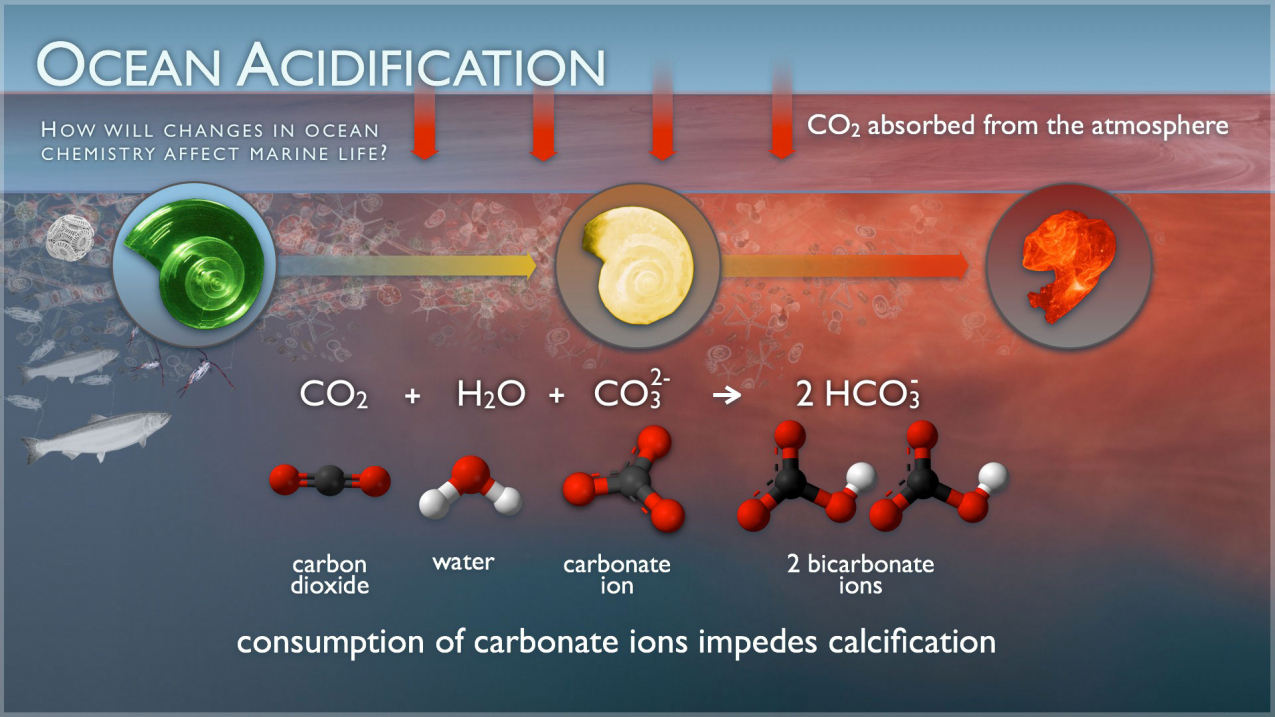
Measuring the Ocean's Changing Chemistry Through Validated Climate Indicators
Ocean acidification is not a future hypothesis, it is a measurable, ongoing shift in seawater chemistry, tracked through validated climate indicators. NOAA's research provides empirical evidence of how rising atmospheric CO₂ alters pH at scale, linking today's observations to Earth's deep past. Understanding drives protection. For deeper context on how warming's metabolic stress outweighs acidification's impact on larval survival, explore our related coverage.
Ocean intelligence measures our progress toward sustainable marine stewardship
Ocean intelligence measures our progress toward sustainable marine stewardship, translating vast datasets into actionable insights for conserving marine resources. This is not abstract science, it is a calibrated, real-time account of human impact on the sea. Understanding drives protection. To see how integrated data reshapes our view from orbit to ocean floor, read "From orbit to ocean floor: integrated data reshapes our view of the sea." The work is empirical, collaborative, and urgent.
Tracking pH in real time to forecast abalone fishery risk
A 15-minute pH monitoring interval in a single Mexican fishing ground reveals what global models alone cannot: the bioeconomic future of pink abalone depends on local data. This study's integration of in situ sensors with Monte Carlo projections under IPCC scenarios is a measured, empirical approach to a pressing risk. By 2100, even moderate emission pathways could cut resource rent by thousands of dollars per boat annually. For deeper context on sustained observation, see our related coverage of the BCSS Ocean Observatory.
Ocean Ecosystems Face Extreme Stress: A Call for Global Action.
The ocean's living systems are under measurable, intensifying stress. This is not a distant forecast, it is an empirical reality demanding coordinated global response. Our new analysis documents the accelerating pressures on marine ecosystems, from warming waters to acidification. We believe the evidence is clear: integrated, real-time ocean intelligence is essential for informed action. For deeper context on how these forces reshape coastlines, see our related study on storm surge costs in coastal China. Understanding drives protection.

Ocean Carbon Data Expands, Driving Climate Insights and Stewardship.
Newly released SOCAT and GLODAP datasets give researchers a sharper read on ocean carbon, and that clarity matters. NOAA's latest update strengthens our ability to track climate indicators with empirical rigor, turning scattered observations into an integrated data ecosystem. This is ocean intelligence in action: measured, validated, and ready to inform stewardship. For those exploring how such calibrated data flows into broader discovery efforts, our related piece on integrated data discovery offers a useful next step. The science is solid, and the timing feels right.
Warming's Metabolic Stress Outweighs Acidification's Impact on Larval Survival
Larval survival in the dog conch falters most under extreme warming, not acidification alone. Our study shows that temperature, pH, and their interaction significantly reduce survival, with thermal stress overriding pH-dependent differences at 34 °C. Growth responds to pH, yet metabolism peaks under heat, revealing a physiological trade-off. These findings underscore that warming may become the dominant constraint on tropical marine larvae, reinforcing why integrated climate indicators, like those tracked in our 2025 Temperature Anomalies, matter for predicting coastal ecosystem vulnerability.
Ocean Acidification Weakens Mussel Attachment, Threatening Coastal Ecosystems
A 50% drop in thread production under projected end-century CO2 levels is a stark measure of physiological strain. The study's strength lies in treating the byssus as an intact system, revealing that attachment energy falls by 42% not because threads weaken, but because the mussel's condition index drops by 19%. This is an energetic trade-off with real consequences for bed stability and coastal resilience.
Ocean Acidification: A Measurable Link to Earth’s Deep Past.
Ocean acidification is not a new chapter in Earth's history, but a recurring one. A new study in *Earth Science Reviews* offers a measured, peer-reviewed look at how past acidification events align with today's calibrated climate indicators. It is a reminder that the ocean keeps a precise, empirical record of planetary change. For those tracking ocean intelligence, this research sharpens the lens on what is measurable.

Ocean Deoxygenation Accelerates, Threatening Life and Climate Stability
Oxygen is vanishing from the ocean, and from lakes, rivers, and coastal waters, at a rate that should sharpen our focus. This deoxygenation does not merely stress marine life; it erodes the natural systems that help stabilize Earth's climate. Scientists link this decline directly to warming, pollution, and ocean acidification, making it a compounding planetary threat. We treat this as a measured alarm: the evidence is empirical, and the need for integrated observation has never been clearer.
Long-Term Ocean Acidification Trends Revealed at Station ALOHA
Forty years of pH data from Station ALOHA now show a clear pattern: the ocean's surface is acidifying, and the trend is not only persistent but intensifying. Using fractional integration methods, this study confirms a statistically significant decline in both raw and logged pH series from 1985 to 2024. The key insight is long memory; shocks to pH have lasting effects. Recursive estimates reveal that both persistence and the negative trend have strengthened over time.