numerical simulations
World Data Ocean keeps numerical simulations in one place: 3 stories so far. The section currently leads with “Validated Data to Calibrate Roll Damping on Large Container Ships”, “Mapping Bottom Friction in Bohai Bay for Improved Ocean Models”, and “Hurricane Irma's Impact: Salinity Shifts in a Florida Estuarine Bay”. Real-world data from a large container ship is now being used to validate how roll damping tanks reduce rolling at sea. Accurate ocean models depend on precise inputs, yet bottom friction coefficients have long resisted uniform representation. A Global Hub for Ocean Intelligence 4 World Data Ocean is a centralized digital platform where researchers, scientists, and ocean enthusiasts converge to… The list below is every numerical simulations story on World Data Ocean, newest first.
Validated Data to Calibrate Roll Damping on Large Container Ships
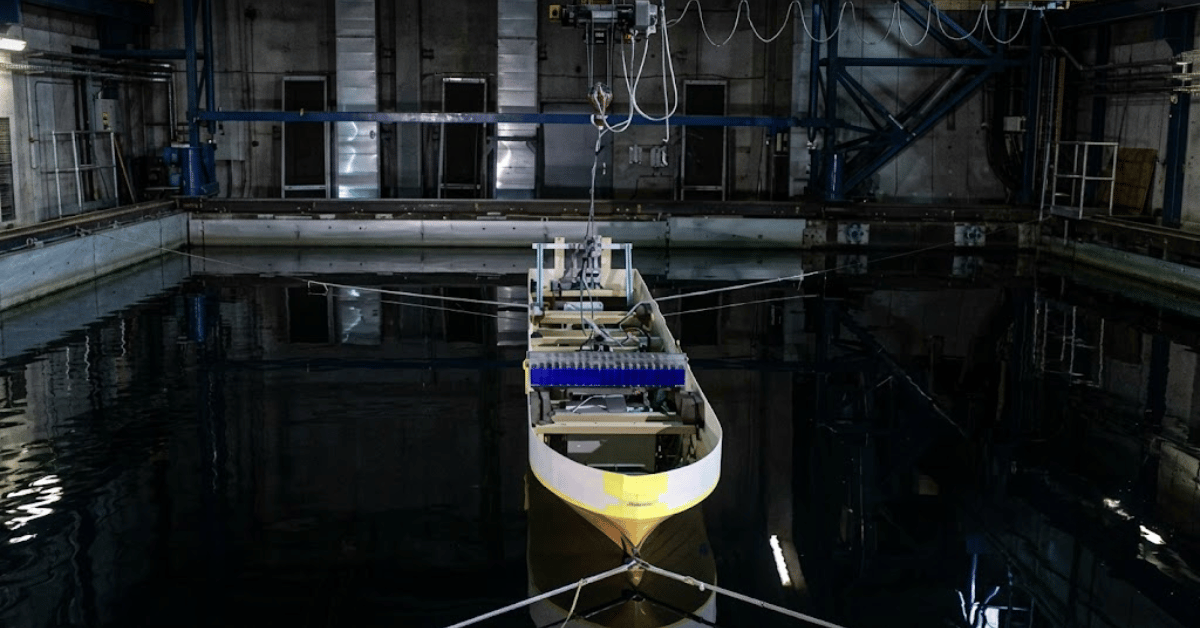
Real-world data from a large container ship is now being used to validate how roll damping tanks reduce rolling at sea. ONE and ClassNK have launched a joint study grounded in empirical, measurable performance. This is the kind of calibrated, peer-reviewed work that turns ocean intelligence into safer, more efficient shipping. For another example of validated marine data driving progress, see our coverage of the hydrogen tanker *Kikou Maru* and its successful sea trials.

Mapping Bottom Friction in Bohai Bay for Improved Ocean Models
Accurate ocean models depend on precise inputs, yet bottom friction coefficients have long resisted uniform representation. In Bohai Bay, our team applied a four-dimensional ensemble variational data assimilation scheme to map these coefficients with empirical rigor. The results are measurable: suspended sediment concentration and form drag explain 76% of spatial variance. This is validation of what integrated data ecosystems can achieve.
Hurricane Irma's Impact: Salinity Shifts in a Florida Estuarine Bay
Hurricane Irma's floodwaters did not simply wash through South Florida; they reshaped Biscayne Bay's salinity with measurable force. Using numerical simulations, we found canal discharge drove salinity shifts up to 20 psu, while rainfall alone contributed just 8 psu. Near shore, canals accounted for 90% of the change; offshore, rainfall dominated. Wind proved decisive, accelerating flushing within days under easterlies. This is empirical ocean intelligence, clarifying how extreme events redistribute freshwater.