North America
World Data Ocean keeps North America in one place: 5 stories so far. The section currently leads with “Optimal LNG Carrier Design: Boosting Capacity, Reducing Costs”, “Yellowstone's Eruption Sequence: Monitoring Volcanic Activity and Potential Impacts”, and “A Decade of Squidpops: Evaluating Predation Insights in Aquatic Ecosystems”. A 200,000m³ LNG carrier can move more gas per voyage without sacrificing access to the terminals that matter most. Yellowstone's next super-eruption would not catch us off guard. A Global Hub for Ocean Intelligence 4 World Data Ocean is a centralized digital platform where researchers, scientists, and ocean enthusiasts converge to… The list below is every North America story on World Data Ocean, newest first.
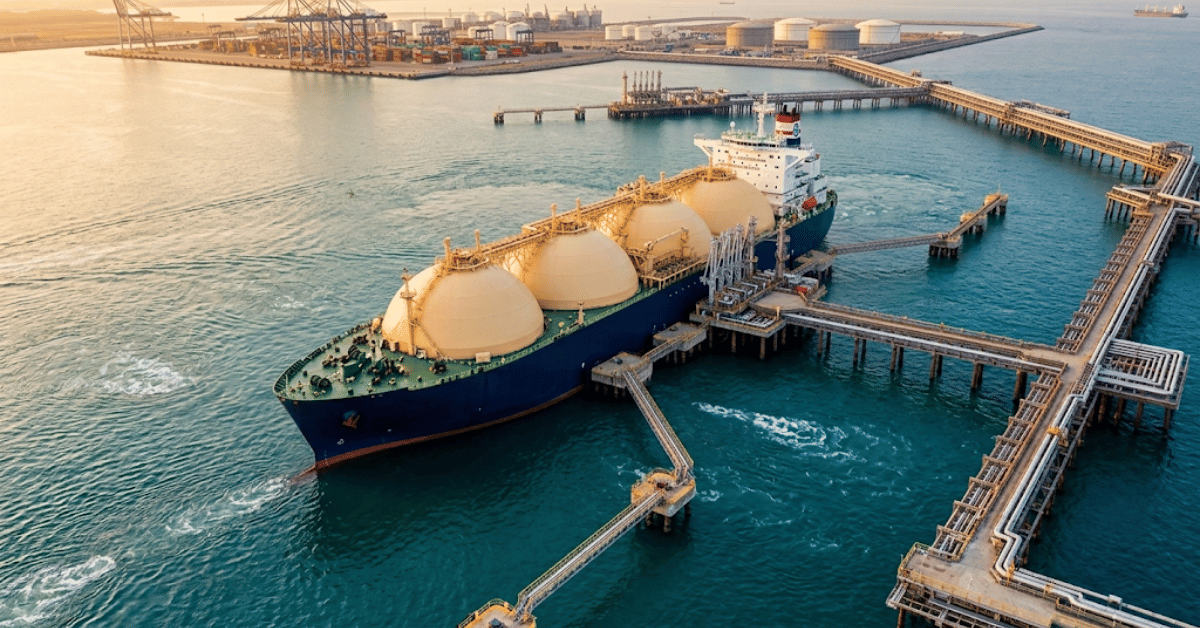
Optimal LNG Carrier Design: Boosting Capacity, Reducing Costs
A 200,000m³ LNG carrier can move more gas per voyage without sacrificing access to the terminals that matter most. LR's analysis shows that this larger capacity directly reduces unit transport costs while staying compatible with the majority of existing infrastructure. That is practical efficiency, not speculative ambition. For readers tracking how maritime logistics adapt under pressure, our piece on Gulf of Oman STS transfers maxing out offers a useful parallel.

Yellowstone's Eruption Sequence: Monitoring Volcanic Activity and Potential Impacts
Yellowstone's next super-eruption would not catch us off guard. Weeks of escalating unrest, swarming earthquakes, rapid ground uplift, shifting geyser patterns, and rising gas emissions, would precede any cataclysm. In a worst-case VEI 8 event, ash would blast tens of kilometers skyward, pyroclastic flows would incinerate the landscape, and much of North America's infrastructure could grind to a halt. It is a sobering forecast, but one grounded in measurable, peer-reviewed monitoring.

A Decade of Squidpops: Evaluating Predation Insights in Aquatic Ecosystems
Ten years of squidpop deployments have mapped a clear pattern: consumption rates rise where shelter exists and large predators are absent. That consistency matters. This review of 48 studies finds the method's strength lies in its simplicity, yet its immobile, non-living bait limits consumer identification. Future work pairing squidpops with underwater video will sharpen the picture. The approach has proven a reliable, low-cost tool for comparing top-down control globally.
Advancing Tuna Fisheries Monitoring Through Electronic Data Ecosystems
Electronic monitoring systems are no longer optional for tuna longline fisheries; they are becoming the backbone of credible, real-time ocean intelligence. This systematic review cuts through the noise, examining how hardware, algorithms, and system architectures are converging to solve persistent gaps in human observer coverage and data timeliness. The comparative analysis across the EU, North America, Pacific Island countries, and China is particularly telling.

Solar-Powered Car Carrier Embarks on Global Shipping Routes
A solar-powered car carrier is set to enter global trade routes, leased to Hyundai Glovis for service connecting Asia, Southeast Asia, North America, and Europe. The move aligns with broader efforts to integrate cleaner propulsion into commercial shipping. For context on how vessel design is evolving alongside fuel efficiency, our piece on optimal LNG carrier design offers useful comparison. This deployment signals measurable progress in applying renewable energy to high-traffic ocean corridors.