microbiome
5 stories filed under microbiome on World Data Ocean. The newest of them: “Mapping food's hidden chemistry to reveal its impact on the microbiome”, “Bacterial Signals in the Baltic Reveal a Hidden Driver of Macroalgal Growth”, and “Cognitive Resilience: Smarter Chickadees Thrive Through Winter and Age.”. Giulia Menichetti is mapping food's hidden chemistry, thousands of molecules that interact with the human microbiome in ways we are only beginning to measure. Thallusin, a bacterial signal essential for normal macroalgal growth, has been directly detected in coastal seawater for the first time. A Global Hub for Ocean Intelligence 4 World Data Ocean is a centralized digital platform where researchers, scientists, and ocean enthusiasts converge to… The list below is every microbiome story on World Data Ocean, newest first.

Mapping food's hidden chemistry to reveal its impact on the microbiome
Giulia Menichetti is mapping food's hidden chemistry, thousands of molecules that interact with the human microbiome in ways we are only beginning to measure. This is not about calories or macronutrients. It is about the empirical, integrated signals that shape health from the inside out. Understanding drives protection. For a deeper look at how chemical sensing governs biological systems, see our coverage of octopus arm chemosensation.

Bacterial Signals in the Baltic Reveal a Hidden Driver of Macroalgal Growth
Thallusin, a bacterial signal essential for normal macroalgal growth, has been directly detected in coastal seawater for the first time. Our study in the Kiel Fjord reveals pronounced seasonal variation in this morphogenetic activity, with summer warmth driving higher signals. By isolating thallusin-producing *Algoriphagus* bacteria, we've identified a hidden microbial driver of ecosystem health. These empirical findings strengthen the case for integrated ocean intelligence. For another perspective on microbial dynamics, see our coverage of nitrogen fixation in Sargassum communities.
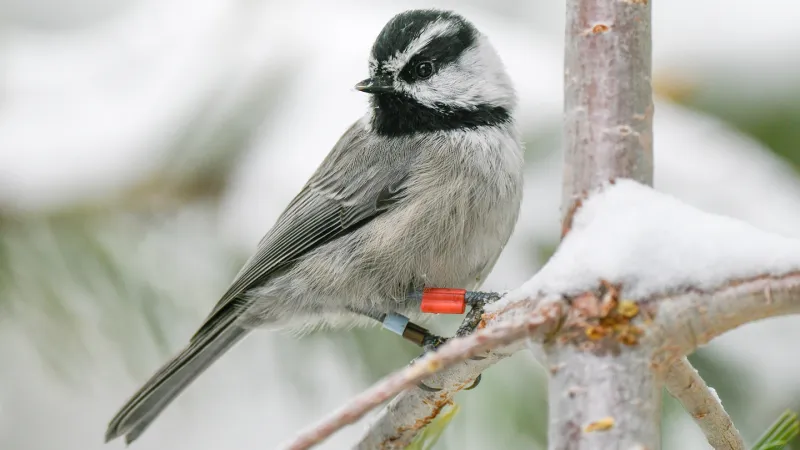
Cognitive Resilience: Smarter Chickadees Thrive Through Winter and Age.
A chickadee's cognitive edge persists into old age, and that resilience translates directly to survival and reproductive success. Wild birds with sharper problem-solving skills maintained their mental acuity through senescence, produced more offspring, and hosted healthier gut microbiomes. This is empirical evidence that intelligence is not merely a youthful advantage but a measurable, lifelong asset. Understanding drives protection. For deeper coverage on environmental intelligence, see our related report on "Cascadia and San Andreas: Evidence Suggests Sequential Earthquake Risk."
Microbiome Manipulation Reveals Coral Health and Resilience Insights.
Coral health is not a fixed state but a dynamic balance, and a new study shows that manipulating the microbiome can tip that balance toward resilience. This research offers a measurable, peer-reviewed path forward for reef conservation, moving beyond observation to intervention. We see this as a vital step in building ocean intelligence, and it pairs well with our coverage in "Magma and microbial activity may rewrite a 2-billion-year-old carbon signal." Understanding these biological levers is how we turn insight into protection.
Arctic Seal Microbiomes: Establishing Baselines for a Changing Ecosystem
Ringed seals carry a steady signal of Arctic change, but until now, their microbial baselines have remained largely uncharted. This study profiles 90 seals across eight Canadian locations, revealing that body site, not geography, drives microbiome structure. Nasal communities stay remarkably stable, while anal assemblages shift with latitude, tracking ecological constraints rather than distance. It is a practical reference point for monitoring, though one that will need ongoing validation as conditions evolve.