marlin
World Data Ocean keeps marlin in one place: 3 stories so far. The section currently leads with “Coast Guard Medevac Responds to Medical Need 86 Miles Off Hawaii”, “Validated by a La Paz captain: a 2026 marlin sighting”, and “Ocean Depth Limits: How Far Can Surface Fish Really Swim?”. Eighty-six miles off Hawaii, the U.S. A La Paz captain's 2026 marlin sighting adds a grounded, human-verified data point to our understanding of pelagic movement. A Global Hub for Ocean Intelligence 4 World Data Ocean is a centralized digital platform where researchers, scientists, and ocean enthusiasts converge to… The list below is every marlin story on World Data Ocean, newest first.
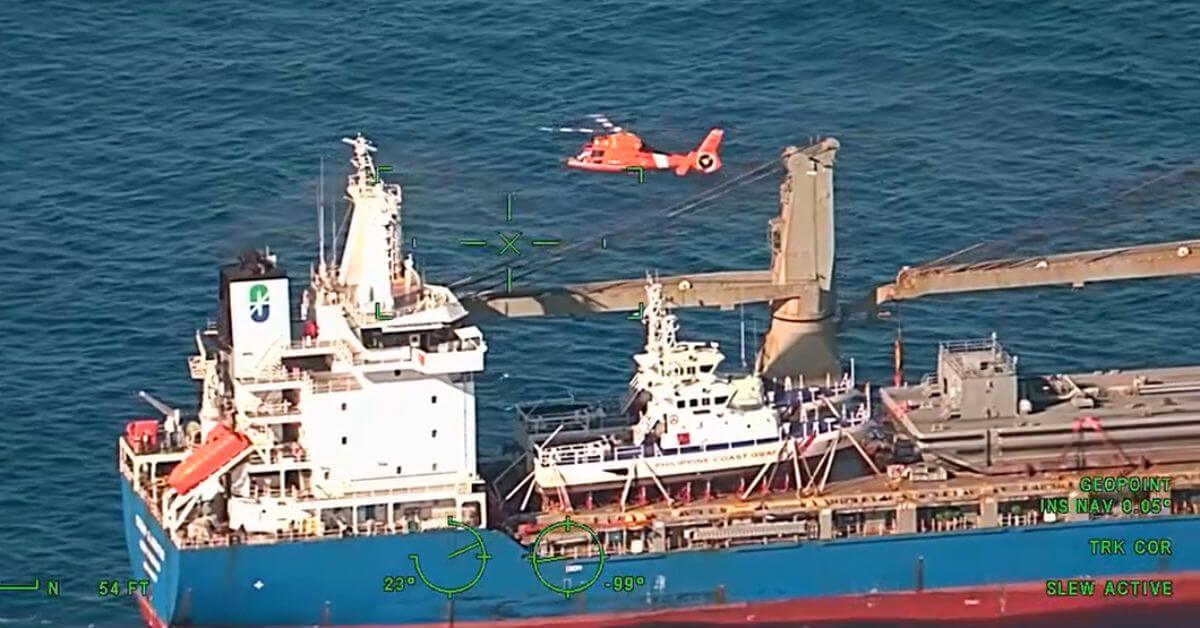
Coast Guard Medevac Responds to Medical Need 86 Miles Off Hawaii
Eighty-six miles off Hawaii, the U.S. Coast Guard evacuated a sick crew member from a U.S.-flagged cargo ship on Wednesday, October 7. This medevac is a reminder that even far from shore, human need demands immediate, coordinated response. Such operations rely on the same integrated data ecosystems that help us track threats like the 350 million tons of annual plastic waste documented in our related coverage, "Tracking 350 million tons of annual plastic waste to its ocean sink."

Validated by a La Paz captain: a 2026 marlin sighting
A La Paz captain's 2026 marlin sighting adds a grounded, human-verified data point to our understanding of pelagic movement. It is a reminder that local knowledge still calibrates the instruments we rely on for ocean intelligence. The report pairs well with broader climate indicators, though we should treat it as one observation, not a trend. For deeper context on how marine life responds to warming, our related piece on marine heatwaves offers a useful framework.
Ocean Depth Limits: How Far Can Surface Fish Really Swim?
A curious question from *Finding Nemo* touches on a real oceanographic principle: depth stratification. Surface-dwelling species like clownfish and blue tangs are adapted to specific pressure zones, and their swim bladders are calibrated for that environment. The anglerfish's domain, by contrast, demands physiological adaptations that these fish simply lack. It is a practical example of how marine life is partitioned by depth, a concept worth exploring further in our piece on integrated subsea cables, which highlights how we map these very ecosystems.