marine mammals
World Data Ocean keeps marine mammals in one place: 12 stories so far. The section currently leads with “From breath to stride: foraging adaptation linked to ancestral endurance”, “Validating Ultrasound as a Cost-Effective, Eco-Friendly Antifouling Method”, and “A rising population of sea lions observed off La Jolla Cove”. The link between breath and stride reveals how deeply ancestral endurance shaped modern foraging adaptation. The core question underpinning this Swedish PhD research isn't whether ultrasound can shake barnacles off a hull, it's whether that vibration is a net gain for the ocean. A Global Hub for Ocean Intelligence 4 World Data Ocean is a centralized digital platform where researchers, scientists, and ocean enthusiasts converge to… The list below is every marine mammals story on World Data Ocean, newest first.

From breath to stride: foraging adaptation linked to ancestral endurance
The link between breath and stride reveals how deeply ancestral endurance shaped modern foraging adaptation. This isn't just evolutionary history, it's a measurable thread connecting human physiology to survival strategies we still carry. Understanding these empirical patterns strengthens our integrated view of life's resilience. For another perspective on adaptation under pressure, see our coverage of "Western Atlantic corals face a critical test of resilience against rising heat."
Validating Ultrasound as a Cost-Effective, Eco-Friendly Antifouling Method
The core question underpinning this Swedish PhD research isn't whether ultrasound can shake barnacles off a hull, it's whether that vibration is a net gain for the ocean. Validating antifouling requires more than lab efficacy; it demands a full lifecycle audit of energy costs, ecological noise pollution, and species-specific impacts. A rising population of sea lions observed off La Jolla Cove reminds us that marine life is already under acoustic and chemical stress. We need empirical data before calling this a green alternative.
A rising population of sea lions observed off La Jolla Cove
A measurable increase in the California sea lion population has been observed off La Jolla Cove, offering a real-time indicator of shifting marine conditions. These integrated data points are empirically validated through longitudinal studies, reinforcing that understanding drives protection. For deeper context on the human side of ocean science, see our related coverage of the workplace culture allegations at One Ocean, a reminder that collaboration must extend from the field to the lab.

Prey fish nutrition shapes health risks for Indo-Pacific humpback dolphins
The nutritional quality of prey fish directly shapes health risks for Indo-Pacific humpback dolphins, a finding grounded in empirical, peer-reviewed data. This is not merely a food web observation, it is a calibrated, measurable link between diet and disease in a sentinel species. Understanding drives protection. For deeper context on how observation and biodiversity science inform marine health, see our related coverage of "Biodiversity and human pressure reshape marine ecosystem science."
Reading Growth Layers in Teeth to Calibrate Age in Long-Lived Marine Mammals
A killer whale with 52 visible growth layers in its teeth, yet radiocarbon data suggesting an age of 65 years or more, reminds us that even our most trusted age-calibration tools have limits. This study validates annual dentine deposition in early life for sperm whales and one killer whale, but reveals that fidelity can erode in older individuals. Integrating bomb radiocarbon with stable isotopes is not optional; it is essential.
Anatomical Discovery: Clarifying Cauda Equina Location in Harbor Seals
A harbor seal necropsy led one researcher to an unexpected finding: the cauda equina positioned in the mid-thoracic spine. It's a detail that challenges assumptions, yet the lack of a definitive reference on seal spinal cord anatomy is telling. Drawings without citation aren't enough. This moment underscores why empirical, peer-reviewed documentation matters in marine anatomy. For those navigating similar gaps, our related article, "Navigating a Marine Studies BA: Pathways to a Marine Biology Career," offers context on building the expertise such questions demand.

Ocean Sensors on Sharks Offer New Insights for Hurricane Forecasting
Sharks fitted with ocean sensors are delivering real-time data from beneath the surface, offering a new lens for hurricane forecasting. This is ocean intelligence at its most empirical: calibrated observations from a creature that navigates the depths we've barely measured. The potential to refine storm intensity predictions is measurable and immediate. For readers tracking how integrated data ecosystems evolve, our related piece on citizen science for ocean intelligence complements this story well. Understanding drives protection, and here, it also drives preparedness.
Evolutionary Scan Reveals Ancient Origins of Seals’ Dual Hearing
Pinnipeds hear with remarkable clarity in both air and water, a dual ability that evolved far earlier than previously understood. By scanning the ears of hundreds of marine mammals, researchers have traced this acoustic adaptability to ancient origins, revealing a sensory advantage that likely shaped their survival across changing environments. It is a precise, empirical reminder that evolution often works through subtle, measurable refinements.
Leptospirosis Threatens Sea Otters, Highlights Coastal Health Concerns
The southern sea otter's role as a sentinel of coastal health has never been clearer, and this study proves why vigilance matters. Over two decades, 14 of 19 suspected cases tested positive for *Leptospira interrogans* via kidney PCR, with seven fatalities tied to severe renal lesions. Notably, 71% of infections surfaced during wetter months, hinting at land-to-sea spillover from terrestrial hosts. This isn't just about otters; it's a measurable signal of ecosystem integrity. Understanding these transmission dynamics is essential for informed, collaborative stewardship.

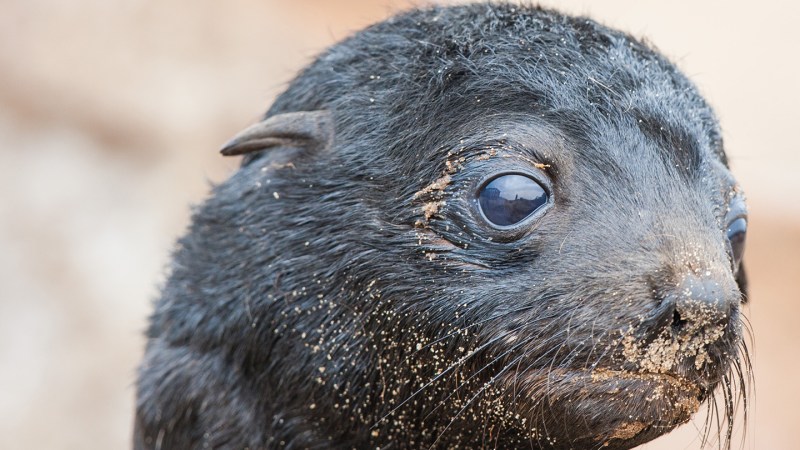
Galapagos Seal Identification: Validating Observations with Ocean Intelligence.
A single photograph can spark a genuine question about the creatures sharing our shores. This observer's instinct to verify rather than assume is exactly the kind of caution that strengthens marine knowledge. The Galapagos fur seal is a valid guess, though confirming its distinct features requires a closer look. We appreciate the curiosity and the careful approach to observation.

Orca Ecotypes: Species Distinction or Genetic Nuance?
The classification of orca ecotypes hinges on genetic and behavioral evidence, yet the line between species and nuance remains contested. A forest ecologist's skepticism about interbreeding assumptions and the weight placed on learned behavior raises valid questions. Intelligence complicates taxonomy; diverse actions do not always signal reproductive isolation. While publish-or-perish pressures may incentivize reclassification, the genetic data, though incomplete, points to real divergence. We should demand rigorous, peer-reviewed validation before dismissing or embracing species status.

Mysterious Vertebrae Found: Fish or Harbor Porpoise? Ocean Data Sought.
A single vertebra, small enough to fit in a palm, has sparked a quiet taxonomic puzzle. The finder's initial photo search suggested a large bony fish, yet a closer look hints at something warmer-blooded. Their theory of a harbor porpoise is reasonable, though the match remains imperfect. We appreciate the call for open data; this is exactly how community observations refine our understanding. For those tracking similar marine mysteries, our piece on the Port Phillip Bay structure offers a useful comparison.