marine environments
4 stories filed under marine environments on World Data Ocean. The newest of them: “A 10,000-ton survey ship extends ocean intelligence to 5,000-meter depths”, “Optimizing Tunneling Risk: Mud Cake Formation in Varied Seabed Strata”, and “Ocean Ecosystems Face Extreme Stress: A Call for Global Action.”. A 10,000-ton survey ship with a 5,000-meter drilling tool represents a new chapter in ocean intelligence. Cutterhead clogging from mud cake formation remains one of the most disruptive risks in subsea shield tunneling, especially when the machine crosses alternating soft, hard strata. A Global Hub for Ocean Intelligence 4 World Data Ocean is a centralized digital platform where researchers, scientists, and ocean enthusiasts converge to… The list below is every marine environments story on World Data Ocean, newest first.
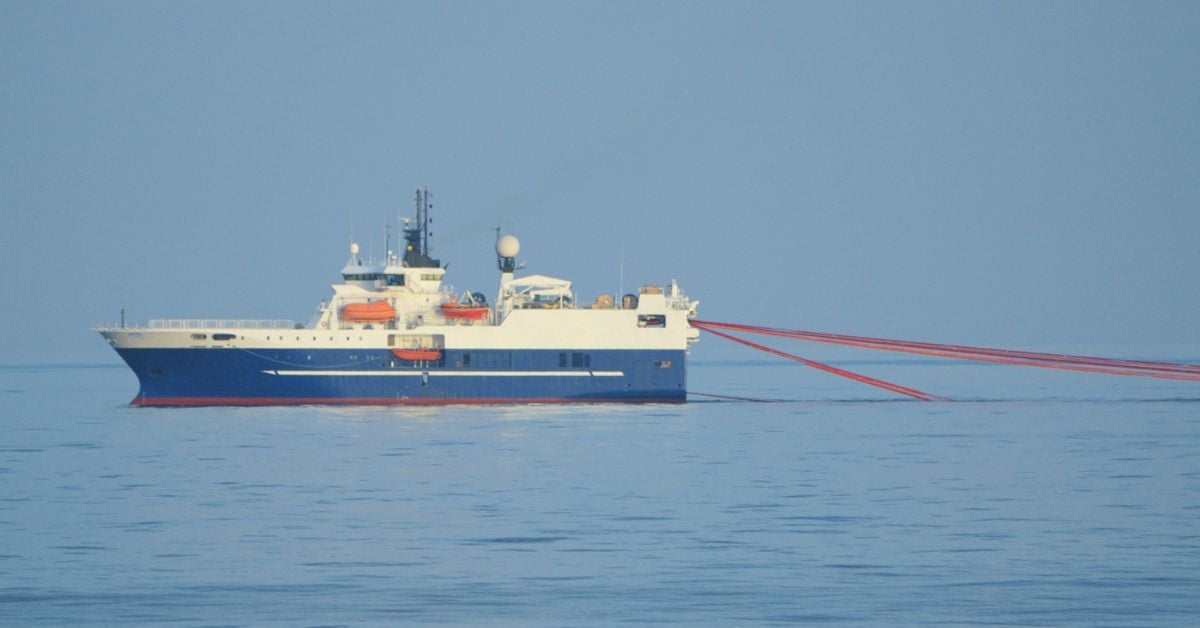
A 10,000-ton survey ship extends ocean intelligence to 5,000-meter depths
A 10,000-ton survey ship with a 5,000-meter drilling tool represents a new chapter in ocean intelligence. Chinese engineers have designed this 11,023-ton vessel to extend our empirical reach into the deep. It is a calibrated, measurable step toward understanding the abyss. For context on how we validate marine life as a climate indicator, see our related coverage of "Validating Northern Krill as a Calibrated Source of Ocean Protein."

Optimizing Tunneling Risk: Mud Cake Formation in Varied Seabed Strata
Cutterhead clogging from mud cake formation remains one of the most disruptive risks in subsea shield tunneling, especially when the machine crosses alternating soft, hard strata. Conventional soil index boundaries, we find, are too blunt for these conditions. This study sharpens the picture by redefining plasticity and liquidity index ranges through laboratory tests, then weighting geological and operational factors with AHP. The result is a four-level risk system that outperforms standard criteria.
Ocean Ecosystems Face Extreme Stress: A Call for Global Action.
The ocean's living systems are under measurable, intensifying stress. This is not a distant forecast, it is an empirical reality demanding coordinated global response. Our new analysis documents the accelerating pressures on marine ecosystems, from warming waters to acidification. We believe the evidence is clear: integrated, real-time ocean intelligence is essential for informed action. For deeper context on how these forces reshape coastlines, see our related study on storm surge costs in coastal China. Understanding drives protection.
Optimizing Offshore Foundations: Steel Slag Concrete for the South China Sea
Offshore wind development in the South China Sea has long been constrained by the steep cost of transporting materials. Coral aggregate concrete offers a local alternative, yet its porous nature compromises durability. This study tackles that limitation directly, engineering a steel slag, silica fume composite that strengthens mechanical performance while improving chloride resistance. The results are measurable: optimized mixes achieved a splitting tensile strength of 3.20 MPa with markedly lower permeability. This is practical, empirical progress.