interoperability
5 stories filed under interoperability on World Data Ocean. The newest of them: “Integrating fragmented bathymetric data through shared standards and FAIR practices”, “Integrated Maritime Data Collection Underway in Philippine Exercise”, and “Facilitating Ocean Data Sharing for the New BBNJ Agreement”. Vertical-datum heterogeneity remains the barrier least tractable to specification alone. The INS Sahyadri and INS Kulish have arrived at Subic Bay, marking the start of integrated maritime data collection during a Philippine exercise. A Global Hub for Ocean Intelligence 4 World Data Ocean is a centralized digital platform where researchers, scientists, and ocean enthusiasts converge to… The list below is every interoperability story on World Data Ocean, newest first.

Integrating fragmented bathymetric data through shared standards and FAIR practices
Vertical-datum heterogeneity remains the barrier least tractable to specification alone. A new review maps hydrographic standards onto the fifteen FAIR sub-principles, revealing that bathymetric data already meet demanding reusability conditions through mandatory depth-and-uncertainty encoding. Yet findability is largely unaddressed: identifiers from IHO S-100 are unique within an exchange set but not globally resolvable. Interoperability works at the encoding level but not semantically. The binding constraint is not missing standards, it is the absence of machine-resolvable linkage between them.
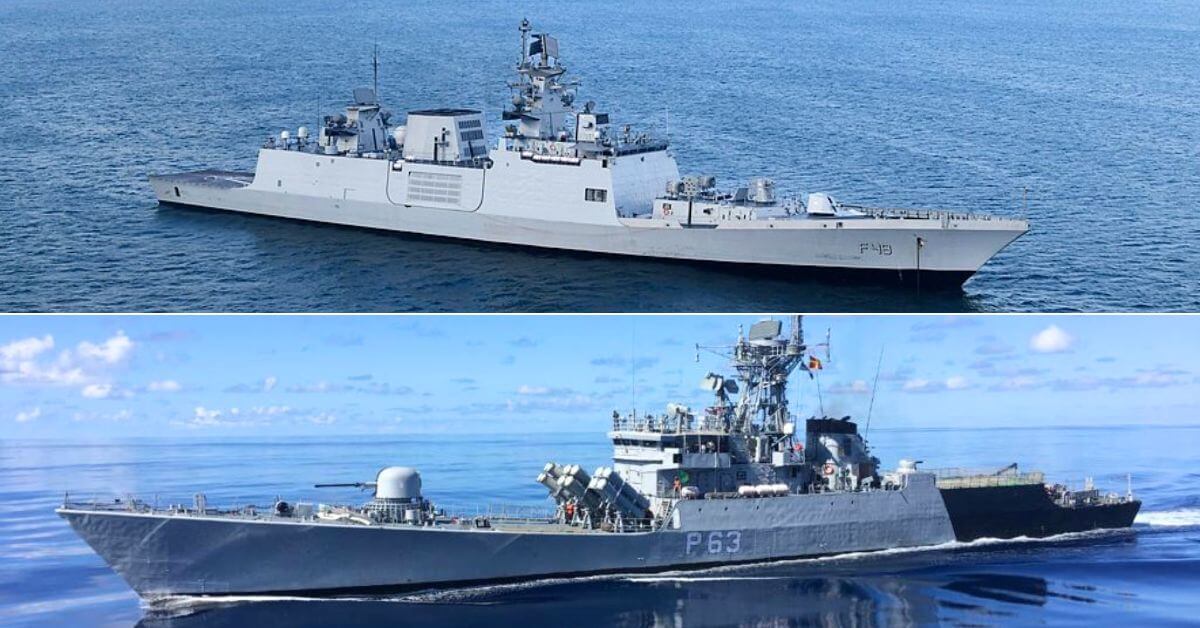
Integrated Maritime Data Collection Underway in Philippine Exercise
The INS Sahyadri and INS Kulish have arrived at Subic Bay, marking the start of integrated maritime data collection during a Philippine exercise. This is a practical demonstration of how naval assets can work together to gather empirical, real-time ocean intelligence. The mission underscores the value of measured, collaborative operations in a region where climate indicators and security concerns increasingly overlap. For broader context on how such efforts align with future fleet ambitions, readers may explore our related coverage on India's expanded naval projections.
Facilitating Ocean Data Sharing for the New BBNJ Agreement
The BBNJ Agreement's Clearing-House Mechanism cannot succeed if its data systems remain fragmented. Effective implementation depends on how MGR-related information moves across jurisdictions, yet interoperability and provenance tracking remain unresolved. The paper rightly pushes for standardized strategies aligned with the Nagoya Protocol, avoiding duplication while ensuring responsible reuse. This is practical, necessary groundwork. For broader context on how data gaps are being addressed elsewhere, our related piece, "Bridging Data Gaps: Integrating Citizen Science for Ocean Intelligence," offers a useful parallel.

Arctic Submarine Collaboration Expands: Germany, Norway, and Canada Unite.
Four days of talks in Kiel brought Germany, Norway, and Canada alongside TKMS, Kongsberg, and Multiconsult, signaling a deliberate step toward shared submarine capability. This is not merely procurement; it is the architecture of deterrence taking shape in Arctic waters. The collaboration reflects a practical recognition that no single nation patrols these expanses alone. For readers tracking Russia's icebreaker ambitions, including its calibrated export revenue scheme, this trilateral move adds a measured counterweight. We will follow how these industrial partnerships translate into operational reality.

Global Maritime Partners Enhance Readiness Through Exercise in Kochi
On Monday, Kochi became the stage for a four-day multinational maritime security training exercise, drawing 254 participants from 26 nations. This is the kind of practical, measurable collaboration that strengthens global readiness. Exercises like this translate shared intent into calibrated procedures, and that matters. The scale of participation signals a serious commitment to collective security. For broader context on the region's operational tempo, our coverage of India's projected naval fleet expansion offers a useful backdrop.