global ocean
9 stories filed under global ocean on World Data Ocean. The newest of them: “The Global Ocean Speaks Through a Shared, Measurable Data Ecosystem”, “A calibrated shipboard dataset now measures the full ocean water cycle”, and “A global framework to measure and map the ocean's integrated data ecosystem”. The World Ocean Database 2023 transforms how we understand our planet's largest life-support system by integrating validated, peer-reviewed data from across the global community. A calibrated shipboard dataset now measures the full ocean water cycle from the deck of a vessel. A Global Hub for Ocean Intelligence 4 World Data Ocean is a centralized digital platform where researchers, scientists, and ocean enthusiasts converge to… The list below is every global ocean story on World Data Ocean, newest first.
The Global Ocean Speaks Through a Shared, Measurable Data Ecosystem
The World Ocean Database 2023 transforms how we understand our planet's largest life-support system by integrating validated, peer-reviewed data from across the global community. It is not merely a repository, it is a shared, measurable ecosystem of ocean intelligence. This foundational resource empowers researchers and policymakers alike to track real-time climate indicators with precision. For deeper context on one critical signal, see our related coverage of "Measuring the Ocean's Warming Pulse at 2,000 Meters." Understanding drives protection.
A calibrated shipboard dataset now measures the full ocean water cycle
A calibrated shipboard dataset now measures the full ocean water cycle from the deck of a vessel. OceanRAIN delivers validated, real-time data on all water-cycle components, giving us an empirical view of precipitation and evaporation at sea. This is ocean intelligence built on measurement, not model. Understanding drives protection. For a deeper look at how marine environments can host next-generation computing infrastructure, see our coverage of submerged servers validating a new frontier for efficient ocean intelligence.

A global framework to measure and map the ocean's integrated data ecosystem
A single, integrated framework can now measure and map the ocean's data ecosystem with the precision it deserves. International Coordination to Map the World Ocean on ArcGIS StoryMaps establishes a global standard for connecting fragmented marine observations into a validated, real-time ocean intelligence system. This isn't about more data, it's about calibrated, actionable knowledge. For a complementary view of connectivity, explore our related piece on the Spilhaus World Ocean Map in a Square.
Calibrating a new global standard for dissolved organic phosphorus
Measuring dissolved organic phosphorus across the global ocean has long been a fragmented effort. The DOPv2021 database changes that. By integrating decades of peer-reviewed data into a single, calibrated standard, this work gives researchers a validated baseline for tracking nutrient cycles and their influence on climate indicators. Understanding drives protection. For a related view of ocean intelligence in action, see how Saildrone captured first-ever video from inside a hurricane, another example of real-time observation expanding what we know.

World Ocean Assessment Highlights Governance Gaps Amidst Ocean Degradation
The Third World Ocean Assessment delivers a clear, measurable verdict: the ocean is in severe decline, yet the institutions meant to govern it remain fragmented. This is not a failure of science but of architecture. The focus on structural, normative, and procedural gaps across UNCLOS, the BBNJ Agreement, and RFMOs is precise and overdue. We see the core argument as compelling: knowledge is not the bottleneck, coordination is.

Ocean Potential Detected on Distant Exoplanet, Data Sparks Debate.
A planet 124 light-years away may hold a global ocean beneath a hydrogen-rich atmosphere, and the data is already sparking debate. Webb has delivered two tentative hints of dimethyl sulfide, a gas tied to marine microbes on Earth, yet independent analyses dispute the find. That tension is the story: not certainty, but calibrated curiosity. We read this as a reminder that ocean intelligence grows through rigorous questioning. For context on how we assess such systems, our World Ocean Assessment coverage offers a grounded counterpoint.

Record Sea Surface Temperatures Signal Urgent Ocean Change.
The daily global average sea surface temperature has now surpassed every record since modern tracking began, exceeding the previous high set in March 2024. This is not a subtle shift; it is a measurable signal that the ocean's heat capacity is responding faster than many models anticipated. We treat these numbers as empirical evidence, not speculation. The urgency is real, and the data demands action.
Ocean Salinity Shifts: A Longitudinal Analysis, 1955–1998
For four decades, the ocean has been quietly rewriting its own chemistry. The 2005 analysis by Boyer, published in *Geophysical Research Letters*, tracks linear salinity shifts from 1955 to 1998, offering empirical evidence of changing evaporation and precipitation patterns. This is not abstract data; it is a measurable climate indicator. Understanding these long-term trends sharpens our view of planetary change.
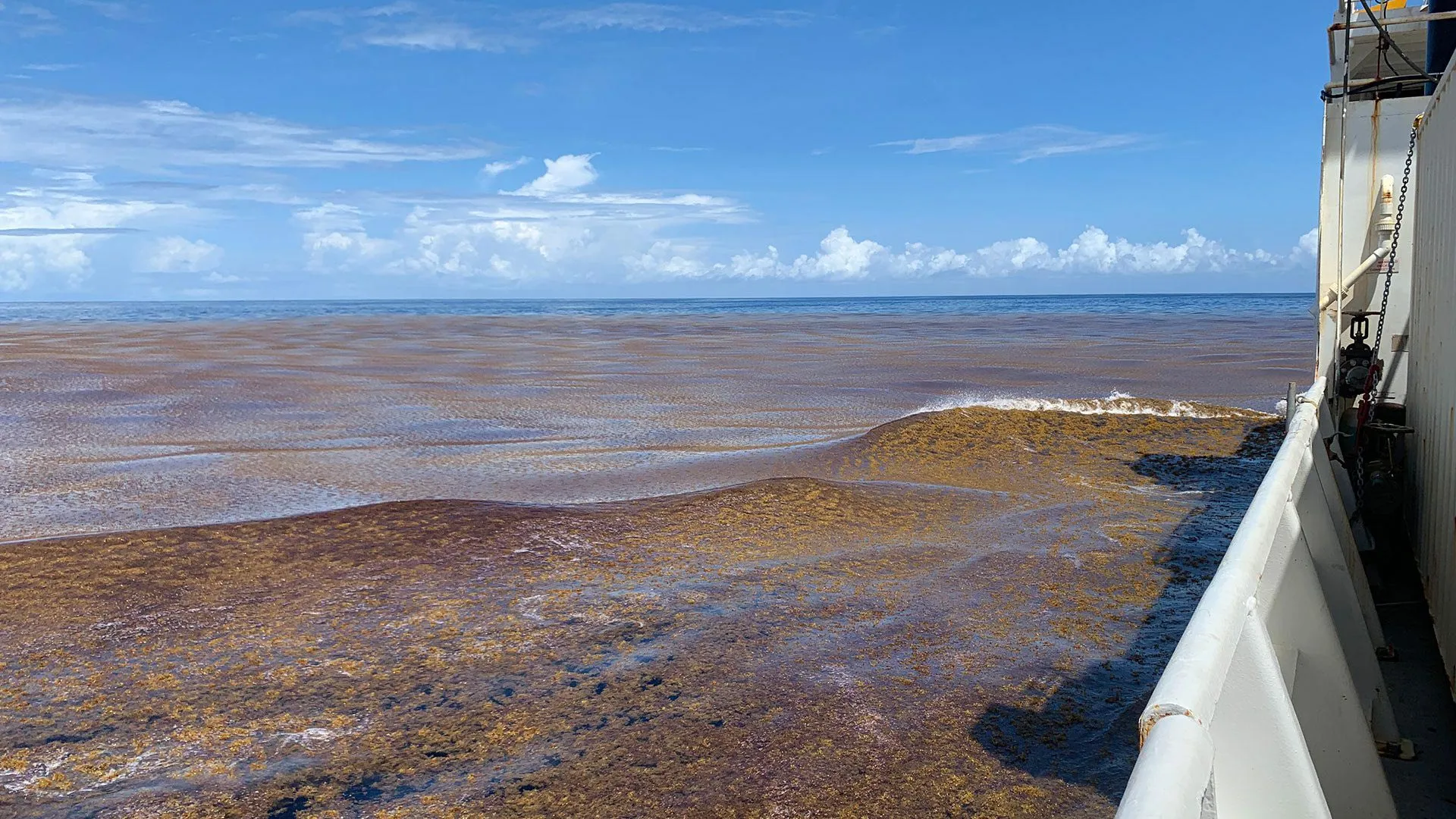
Ocean Algae Blooms Expand Globally, Revealed by AI Analysis
The ocean is changing in ways we can now measure. An AI analysis of 1.2 million satellite images reveals that floating algae blooms are expanding across the global ocean, and the implications are significant. These massive seaweed mats can reshape marine habitats, while their decay brings ecological damage and economic losses to coastlines. This is a clear signal that our ocean intelligence must improve. For a deeper understanding of the systems connecting our seas, see our coverage of the Atlantic Circulation Weakens.