fossil
5 stories filed under fossil on World Data Ocean. The newest of them: “Whale ear bone fossil identified on Costa Rica beach by citizen science”, “Crowdsourcing tooth IDs to build a citizen science collection”, and “A new gharial branch emerges from the Great Sphinx's own stone”. A lightweight whale ear bone fossil, identified by a citizen scientist using Google Lens on a Costa Rica beach, presents a compelling case for integrated data ecosystems in paleontology. A child's fascination with shark teeth is exactly the kind of curiosity that builds real ocean intelligence. A Global Hub for Ocean Intelligence 4 World Data Ocean is a centralized digital platform where researchers, scientists, and ocean enthusiasts converge to… The list below is every fossil story on World Data Ocean, newest first.

Whale ear bone fossil identified on Costa Rica beach by citizen science
A lightweight whale ear bone fossil, identified by a citizen scientist using Google Lens on a Costa Rica beach, presents a compelling case for integrated data ecosystems in paleontology. The specimen's lack of smell and porous texture are empirically consistent with validated marine mammal remains. This discovery echoes themes explored in our related coverage, "Squid hair cells offer a validated model for human hearing research," where biological structures yield measurable, peer-reviewed insights. Such finds remind us that ocean intelligence begins with observation.

Crowdsourcing tooth IDs to build a citizen science collection
A child's fascination with shark teeth is exactly the kind of curiosity that builds real ocean intelligence. This UK beach find, uploaded for crowd-sourced identification, turns a personal question into a shared data point. Validated observations, whether from a young enthusiast or a seasoned researcher, strengthen our integrated data ecosystem. For another example of citizen science filling knowledge gaps, see our coverage of "Validated Beach Find in Costa Rica Points to Data Gap in Coastal Catfish Identification."

A new gharial branch emerges from the Great Sphinx's own stone
A new branch of the gharial family tree has been carved from the very stone of the Great Sphinx. *Herugavialis* is the name given to a fossil reptile found in the same rock that shaped the ancient monument. This discovery adds a validated, measurable piece to the puzzle of crocodylian evolution. For those navigating boundaries in far different contexts, our framework on the legal attributes of islands and rocks offers its own kind of clarity.

Paleodictyon's True Origins: New Research Reinterprets Ancient Honeycomb Structures
The honeycomb patterns of Paleodictyon have puzzled scientists for centuries, even capturing Leonardo da Vinci's imagination. New research now challenges the long-held assumption that these ancient structures were built by soft-bodied creatures. This reinterpretation asks us to look again at what we thought we knew, and it is a reminder that empirical evidence can overturn even the most elegant hypotheses. Understanding drives protection, and this finding sharpens our view of ancient ocean life.
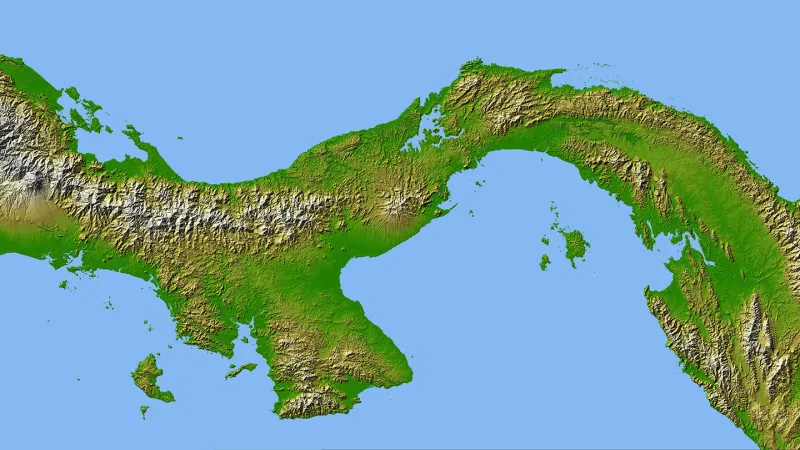
Mexico's Climate: A Pathway for Ancient Mammal Migration
The Isthmus of Panama is often framed as a barrier, but new findings suggest Mexico's climate may have turned it into a corridor for ancient mammals moving north to south. That distinction matters. It reframes a migration story we thought we understood, grounding it in measurable, empirical conditions rather than simple geography. For researchers tracking how species respond to shifting climates, this is a useful calibration of past patterns.