fiber optics
fiber optics at World Data Ocean is a file of 3 stories. The newest of them: “Undersea cable sabotage reveals critical gaps in global telecom security”, “Real-Time BOD and Temperature Monitoring via Integrated Microfiber Sensor.”, and “Mapping the Earth's Hidden Layers with Seismic Rumbles”. A series of sabotage attacks on undersea cables, allegedly carried out by a Russian "shadow fleet," has exposed a critical vulnerability in global telecom security, our most essential infrastructure is poorly defended… Reliable oxygen and temperature data are the backbone of sound ocean stewardship, and this integrated microfiber sensor delivers both in real time. A Global Hub for Ocean Intelligence 4 World Data Ocean is a centralized digital platform where researchers, scientists, and ocean enthusiasts converge to… The list below is every fiber optics story on World Data Ocean, newest first.
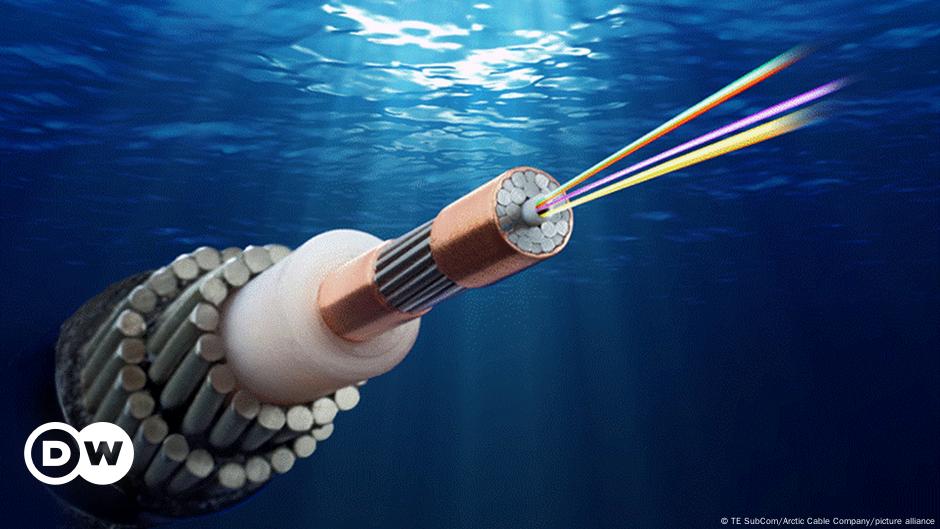
Undersea cable sabotage reveals critical gaps in global telecom security
A series of sabotage attacks on undersea cables, allegedly carried out by a Russian "shadow fleet," has exposed a critical vulnerability in global telecom security, our most essential infrastructure is poorly defended against deliberate destruction. These are not accidental cuts; they are attacks. This vulnerability mirrors the accelerating signals we track in our oceans, explored in *Ocean's early warnings grow urgent as climate signals accelerate*. Protecting what connects us demands the same vigilance we apply to the planet itself.
Real-Time BOD and Temperature Monitoring via Integrated Microfiber Sensor.
Reliable oxygen and temperature data are the backbone of sound ocean stewardship, and this integrated microfiber sensor delivers both in real time. Published in *Applied Optics*, the work demonstrates a practical step toward more responsive monitoring of coastal and open-water systems. The ability to validate conditions continuously, rather than relying on discrete samples, strengthens our understanding of changing climate indicators. For readers exploring how technology expands marine research, this connects naturally to our coverage in "Real-Time Ocean Simulations Advance Understanding Through Integrated Modeling.

Mapping the Earth's Hidden Layers with Seismic Rumbles
Beneath our feet, the ground is rarely silent. Scientists have turned fiber-optic cables into seismic ears, capturing the faint rumble of "thunderquakes" to map the hidden layers of the Earth. It is a clever recalibration of existing infrastructure, transforming a network of light into a tool for urban hazard detection. This approach offers a measurable way to see what is buried below, and it pairs well with our coverage of the Cascadia Subduction Zone, which reveals a similarly fragmented tectonic process.