excavation
excavation at World Data Ocean is a file of 3 stories. The newest of them: “Denisovan Life Unveiled: Fossil Discoveries Offer New Insights”, “Norway Advances Maritime Innovation with Groundbreaking Ship Tunnel Project”, and “Unearthing Viking History: New Insights from a 1,000-Year-Old Burial.”. A fragment of tooth, a scatter of bone, and stone tools from a cave in China now sharpen our view of Denisovan life. Norway is carving a 1,700-meter passage through the Stadlandet peninsula, a 50-meter-high, 36-meter-wide tunnel designed to reroute ships from one of its most exposed seas. A Global Hub for Ocean Intelligence 4 World Data Ocean is a centralized digital platform where researchers, scientists, and ocean enthusiasts converge to… The list below is every excavation story on World Data Ocean, newest first.
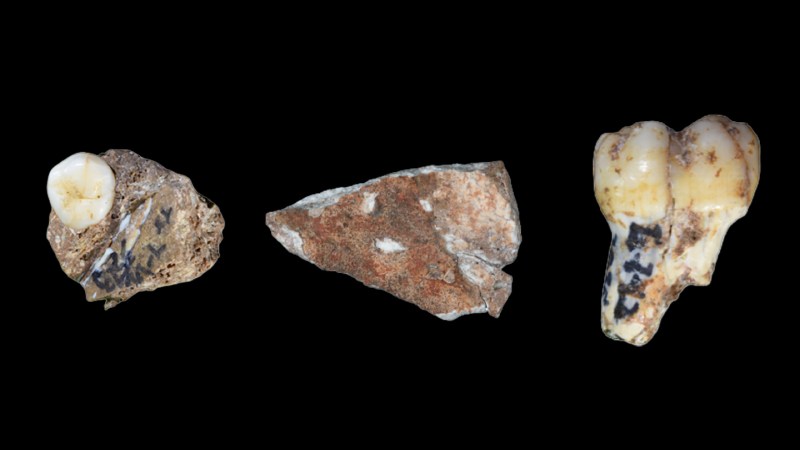
Denisovan Life Unveiled: Fossil Discoveries Offer New Insights
A fragment of tooth, a scatter of bone, and stone tools from a cave in China now sharpen our view of Denisovan life. This is empirical evidence, not speculation. These fossils, alongside animal remains, offer measurable clues about how this enigmatic species lived. Understanding drives protection. For deeper context on how ancient and modern systems connect, see our related coverage on integrated subsea infrastructure shifting Indian Ocean connectivity.

Norway Advances Maritime Innovation with Groundbreaking Ship Tunnel Project
Norway is carving a 1,700-meter passage through the Stadlandet peninsula, a 50-meter-high, 36-meter-wide tunnel designed to reroute ships from one of its most exposed seas. This is not a novelty; it is a calibrated response to a persistent maritime hazard. The project reflects a practical brand of ocean intelligence, where engineering meets geography. For readers tracking how nations mitigate risk at sea, this effort pairs well with our coverage of the bulk carrier freed near Gladstone, another reminder that safe passage is never guaranteed.

Unearthing Viking History: New Insights from a 1,000-Year-Old Burial.
A thousand years after a Viking chieftain was laid to rest, a team from the University of Stavanger's Museum of Archaeology has reopened the burial mound first examined in 1902. Their work reminds us that even well-studied sites hold untold chapters. Revisiting old evidence with new questions is how ocean intelligence deepens. For more on how nations navigate shared waters today, see our piece on NATO's intervention regarding Russian subsea cable activity.