ERA5
ERA5 at World Data Ocean is a file of 5 stories. The newest of them: “Winter 2025/2026 Baltic Sea depression reveals atmospheric forcing on ocean volume”, “2025 joins the warmest years on record as ocean heat persists without pause”, and “2025 Temperature Anomalies Reveal a Measurable Climate Signal”. A basin-wide sea-level depression of approximately −60 cm hit the Baltic Sea in February 2026, driven by persistent high pressure and easterly winds that forced a massive outflow. 2025 has been confirmed as one of the three warmest years on record, a stark validation of a persistent trend. A Global Hub for Ocean Intelligence 4 World Data Ocean is a centralized digital platform where researchers, scientists, and ocean enthusiasts converge to… The list below is every ERA5 story on World Data Ocean, newest first.

Winter 2025/2026 Baltic Sea depression reveals atmospheric forcing on ocean volume
A basin-wide sea-level depression of approximately −60 cm hit the Baltic Sea in February 2026, driven by persistent high pressure and easterly winds that forced a massive outflow. The volume anomaly reached −290 km³ before recovering 76% of that loss by April. This is not merely an oceanographic curiosity; it is a measurable climate indicator. For deeper context on 2025's warming trends, see our related coverage of "2025 joins the warmest years on record as ocean heat persists without pause."

2025 joins the warmest years on record as ocean heat persists without pause
2025 has been confirmed as one of the three warmest years on record, a stark validation of a persistent trend. The World Meteorological Organization reports that ocean heating continues without pause, and the past 11 years now constitute the 11 warmest ever measured. This is not a spike but a calibrated, measurable signal. Understanding drives protection. For deeper context on the ocean's role in this system, explore our related coverage of "From waste to wave: measuring ocean plastic's true share."
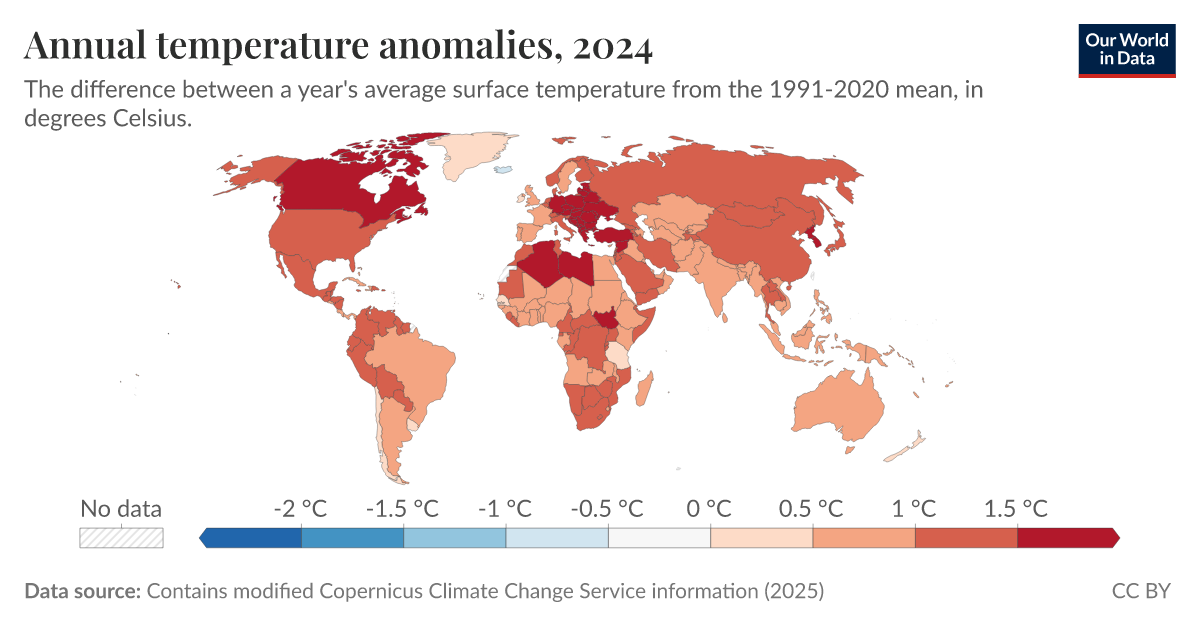
2025 Temperature Anomalies Reveal a Measurable Climate Signal
The 2025 temperature anomalies present a measurable, validated climate signal, not a speculative projection. These annual readings offer empirical evidence of systemic change, reinforcing the urgency of integrated ocean intelligence. Understanding drives protection, and this data sharpens our focus. For deeper context on how warming oceans reshape global systems, see our related coverage on seismic data revealing intensifying wave energy. These findings demand a shared, collaborative response grounded in scientific integrity.

2024 Follows 2023, a Second Record Year of Rising Climate Indicators
2024 has followed 2023 as a second consecutive record-breaking year for climate indicators, a pattern that demands our attention. The data is measurable and validated, confirming the oceans are sending us early warnings that are growing more urgent. Our related coverage on the accelerating ocean signals is a natural next step. This is not an anomaly; it is a trend that empirically links warming seas to rising atmospheric CO₂. Scientific clarity, not alarm, will guide the response.
ENSO Impacts Guangdong's Coastal Wave Exposure: A Longitudinal Assessment
Understanding drives protection. This longitudinal assessment of ENSO's influence on typhoon-generated wave exposure along Guangdong's coast delivers precisely the kind of empirical clarity coastal planners need. By integrating 46 years of ERA5 data with TC records and ONI indices, the study reveals a clear scale-dependent relationship: ENSO conditions meaningfully shape annual patterns of cumulative wave exposure, yet exert limited influence on individual event severity. This distinction is critical, ENSO offers valuable climatic context for seasonal preparedness, not deterministic forecasting.