environmental factors
environmental factors at World Data Ocean is a file of 6 stories. The newest of them: “SMART drumlines: calibrated catch data refine non-lethal shark mitigation”, “Shifting Malaria Risks: Climate Change Reshapes Disease Patterns in Africa”, and “Unexpected Trust: A Curious Encounter with a Lake Dweller in Poland”. Three years of SMART drumline data along the New South Wales coast reveal something essential: non-lethal shark mitigation works, but its effectiveness depends on environmental context. Climate indicators now show a measurable shift in malaria's footprint across Africa. A Global Hub for Ocean Intelligence 4 World Data Ocean is a centralized digital platform where researchers, scientists, and ocean enthusiasts converge to… The list below is every environmental factors story on World Data Ocean, newest first.

SMART drumlines: calibrated catch data refine non-lethal shark mitigation
Three years of SMART drumline data along the New South Wales coast reveal something essential: non-lethal shark mitigation works, but its effectiveness depends on environmental context. Target species, White, Tiger, and Bull sharks, showed a combined catch rate of 0.66 per 1,000 hook-hours, while bycatch was nearly double that. White sharks preferred colder winter waters; Tiger and Bull sharks were more abundant in warm, calm conditions. This calibrated, empirical catch data allows managers to refine deployment timing and location.

Shifting Malaria Risks: Climate Change Reshapes Disease Patterns in Africa
Climate indicators now show a measurable shift in malaria's footprint across Africa. Historic data and validated predictions point to rising case counts in East Africa and southern regions, while the threat may ease in West and Central Africa. This is not alarmism, it is empirical evidence demanding adaptive planning. Understanding drives protection. For deeper context on climate-driven systems change, see our related analysis on "Transformative Coastal Adaptation: Analyzing Systems for Climate Resilience."

Unexpected Trust: A Curious Encounter with a Lake Dweller in Poland
A small fish at Kręcko Lake decided it had found its people. During a festival in Garbicz, Poland, this little lake dweller swam up, lingered, and refused to leave, even when hands were pulled away. Its habit of popping to the surface, as if catching a breath, only added to the charm. While we can't identify the species, its trusting behavior raises a genuine question about wild fish curiosity. It is a reminder that unexpected encounters often hold the most honest data.
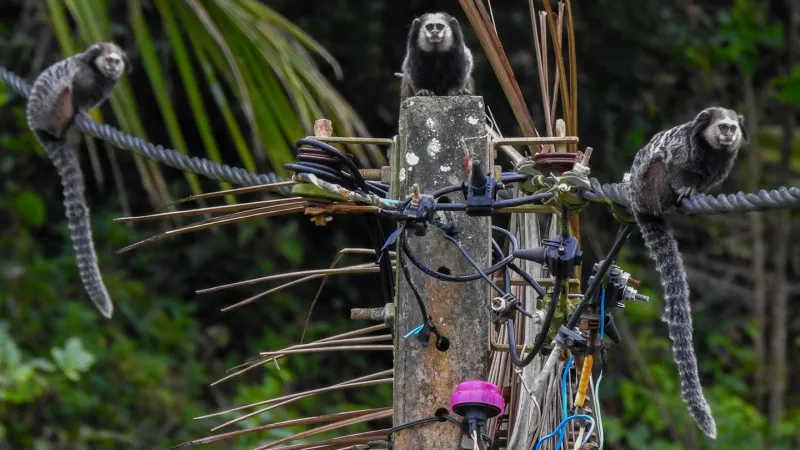
Drought's Reach: Wildlife Migration May Trigger Yellow Fever in Brazil
Drought can move more than dust. In Brazil, animals driven to find water carried the forest into the city, and may have triggered the country's first yellow fever outbreak in decades. That chain, from thirsty wildlife to urban transmission, is a stark measure of how climate stress reshapes disease risk. It is a reminder that ecological disruption rarely stays in the wild. For broader context on climate-driven change, see our piece on Atlantic Circulation Weakens: Global Climate Reshaping Predicted.
Island Fish Diversity Linked to Climate, Environment, and Human Activity
The waters around China's islands hold more than biodiversity; they hold a diagnostic signal. Our study of eight islands reveals that fish assemblage diversity, measured through taxonomic, functional, and phylogenetic lenses, is not randomly distributed. Northern islands lead, while central ones lag. Marine environment factors exert a strong, positive pull (0.675), whereas socioeconomic pressures push back negatively. Climate acts indirectly, but its negative influence is clear. These empirical findings give us a calibrated baseline for conservation, a step toward integrated ocean intelligence.
Ocean Heat and Oxygen Loss Linked to Ancient Marine Extinctions
Ancient marine extinctions carry a warning that reaches across millions of years. Ocean heat and oxygen loss, the same forces stressing today's seas, align with past die-offs in the fossil record. The study, published in PNAS, offers empirical grounding for what climate indicators already suggest. We treat this as more than a historical footnote, it is a calibrated measure of risk. For deeper context, our related piece on Cascadia's fragmented subduction zone shows how geological processes compound biological vulnerability.