environmental change
World Data Ocean keeps environmental change in one place: 10 stories so far. The section currently leads with “Antarctica's sea ice decline signals a measurable shift in polar dynamics”, “Phenological data confirms warming springs drive earlier cherry blossoms in Japan”, and “Ocean Color Shift Reveals Measurable Climate Indicators Worldwide”. Antarctica's sea ice reached its third-lowest winter maximum on record in 2026, extending a measurable decline that follows years of surprising growth. Japan's cherry blossoms are arriving earlier, and the evidence is clear: phenological data confirms that warming spring temperatures are driving this shift. A Global Hub for Ocean Intelligence 4 World Data Ocean is a centralized digital platform where researchers, scientists, and ocean enthusiasts converge to… The list below is every environmental change story on World Data Ocean, newest first.
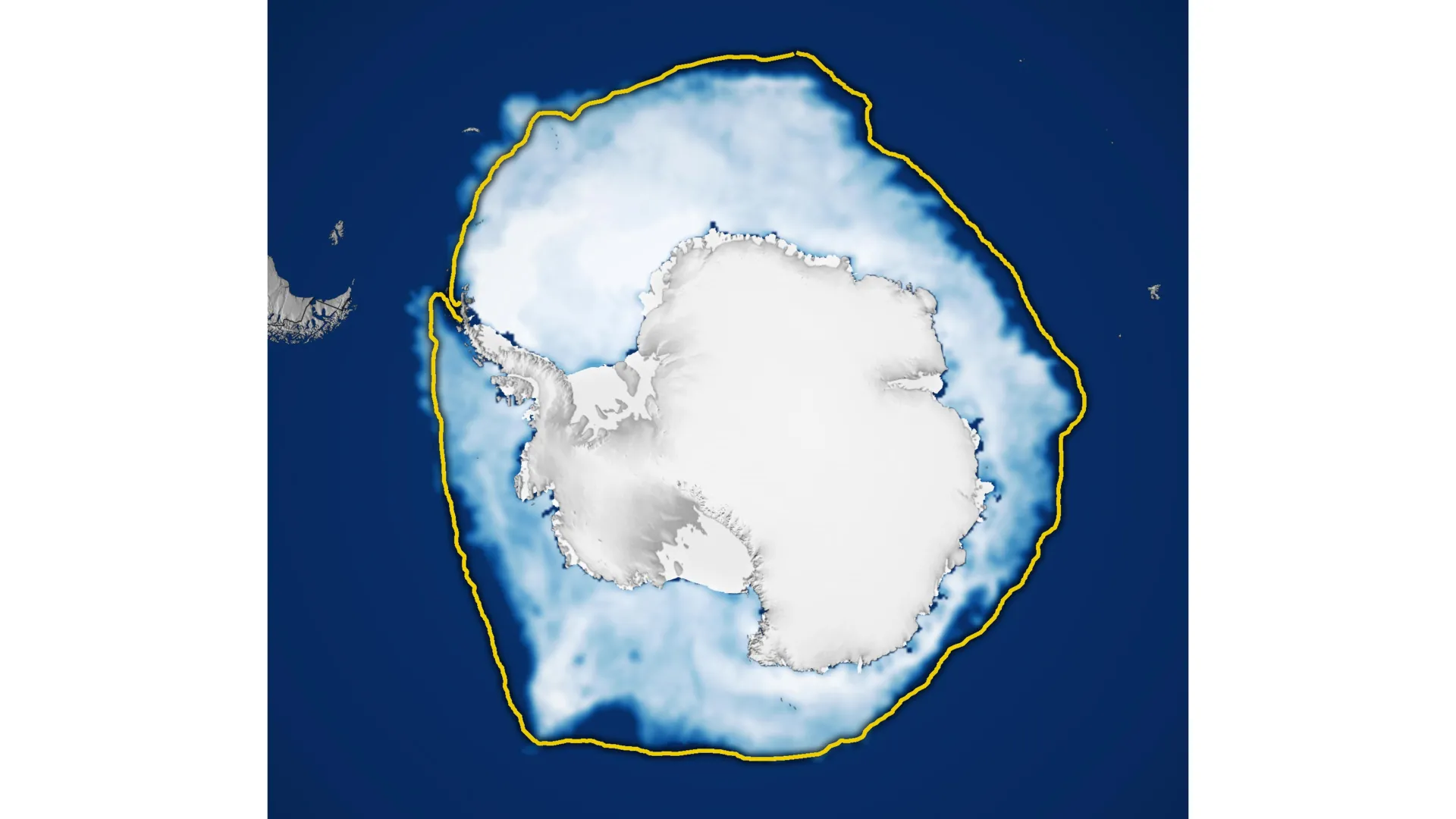
Antarctica's sea ice decline signals a measurable shift in polar dynamics
Antarctica's sea ice reached its third-lowest winter maximum on record in 2026, extending a measurable decline that follows years of surprising growth. This reversal demands rigorous investigation: are we witnessing a fundamental shift in polar dynamics? Understanding drives protection, and empirical data from satellites like Sentinel-3C, which delivered calibrated first views of a changing ocean shortly after launch, will be essential for tracking what comes next.
Phenological data confirms warming springs drive earlier cherry blossoms in Japan
Japan's cherry blossoms are arriving earlier, and the evidence is clear: phenological data confirms that warming spring temperatures are driving this shift. This is not anecdotal, it's a measurable, empirical signal of climate change playing out in real time. Understanding these patterns is essential for predicting broader ecological impacts. For deeper context on how long-term data reveals structural change, see our related article, "A calibrated shift: global employment data confirms the rise of the service sector."
Ocean Color Shift Reveals Measurable Climate Indicators Worldwide
A measurable shift in ocean color, detected across decades of satellite data, now offers a new, empirical window into global climate change. These are not subtle variations; they are validated indicators of biological and chemical transformation at planetary scale. Understanding drives protection. For deeper context, our coverage of "Decades of Atlantic circulation data reveal measurable climate indicators" complements this finding, reinforcing how integrated ocean intelligence reveals the pulse of a changing Earth.

Data-Driven Resilience: Understanding Vulnerability in Colombian Artisanal Fisheries
In artisanal fishing communities along the Colombian Caribbean, vulnerability is not a single number but a layered condition shaped by income, education, and dependence on the sea. The Socioeconomic Vulnerability Index across 12 communities reveals stark spatial differences, with Tasajera and Don Diego facing the highest relative risk. Notably, fishing dependence alone does not explain overall rankings, underscoring the multidimensional nature of hardship. Human capital emerges as a decisive factor, a finding that should guide targeted policy.
Human Impact Reveals Shifting Biogeochemical Patterns in Marine Ecosystems
Measured shifts in marine biogeochemical patterns now point to a clear conclusion: human activity is redefining ocean chemistry at scale. These are not abstract anomalies but calibrated signals, tracked through integrated data ecosystems and peer-reviewed observation. We see this as an opportunity to refine our understanding, not an excuse for alarm. The evidence demands rigorous attention and shared response. For those tracking how marine structures challenge assumptions, our related coverage, including the Port Phillip Bay debate, offers useful context.
Community Insights Shape Ocean Management in Vietnam’s Coastal Zone
Coastal communities in Vietnam's Cù Lao Chàm, Hội An Biosphere Reserve are not passive observers of marine change; they are precise chroniclers of it. Surveying 252 residents, this study reveals that local perceptions of environmental shifts are structured, place-specific, and consistent across past and future outlooks. Notably, residents perceived declines in marine resources and aquaculture, while marine habitats showed signs of improvement.
Red Sea Macroalgae: Essential Ecosystem Builders and Food Web Support
Red Sea macroalgae are far more than background structure; they are the benthic engines driving primary production and food web stability across this extreme basin. Their role as ecosystem engineers, providing shelter and nursery grounds, is as critical as their trophic contributions through herbivory and detrital pathways. What stands out is how these organisms thrive where high temperatures and salinity would challenge most marine life. This review rightly identifies a significant knowledge gap, particularly in long-term monitoring and physiological data.
Climate Change Accelerates Invasive Species Threat to Ocean Ecosystems
Rising ocean temperatures are rewriting the rules of marine life, and not in ways we can afford to ignore. As climate change shifts habitable zones, invasive species are finding new footholds in ecosystems already stressed by warming waters. This is not a distant problem; it is an accelerating, measurable threat to biodiversity and coastal economies alike. The data is clear: we must integrate these patterns into our ocean intelligence now.
Mediterranean Sea: Shifting Ocean Conditions Reshape Velella velella Distribution
Velella velella, the violet sail-by-the-wind sailor, is no stranger to the Mediterranean, but the conditions steering its course are changing. As surface temperatures and wind patterns shift, we are seeing a species whose distribution is a direct, measurable response to the ocean's evolving state. This is not a spectacle, but a signal. Understanding these movements helps us calibrate our own ocean intelligence, much like the data discovery efforts highlighted in our related coverage.
Antarctic Plankton Food Webs: Blooming vs. Non-Blooming Trophic Dynamics
Phytoplankton underpin Antarctic food webs, yet the trophic pathways that sustain them remain unclear. This study of Potter Cove's plankton community compares blooming and non-blooming seasons, drawing on a 30-year time series to model interaction strengths. Bloom conditions supported more trophic species at higher levels, while microzooplankton proved vital for energy transfer when blooms were absent. That distinction matters. It sharpens our ability to predict how climate-driven shifts may ripple through polar ecosystems.