disaster prevention
4 stories filed under disaster prevention on World Data Ocean. The newest of them: “Calibrating port resilience against measurable cyclone-driven economic loss”, “Storm Surge Costs in Coastal China Reveal Complex Economic Impacts”, and “Optimizing Wave Models with Genetic Algorithms for Typhoon Forecasting”. Shanghai Port emerges as the most vulnerable among five key Chinese ports when resilience is calibrated against measurable cyclone-driven economic loss. Storm surge losses in China's coastal provinces are not linear, and new panel data from 2011 to 2023 confirms it. A Global Hub for Ocean Intelligence 4 World Data Ocean is a centralized digital platform where researchers, scientists, and ocean enthusiasts converge to… The list below is every disaster prevention story on World Data Ocean, newest first.

Calibrating port resilience against measurable cyclone-driven economic loss
Shanghai Port emerges as the most vulnerable among five key Chinese ports when resilience is calibrated against measurable cyclone-driven economic loss. This is no surprise for a mega-hub whose efficiency and network importance may mask fragility. The study's integrated index, built from expert surveys, AHP, and TOPSIS, reveals that high importance does not guarantee lower losses. Cargo-handling fees bear the heaviest seasonal damage. Better berth planning and staff training offer clear, empirical paths to protection. Understanding drives protection.
Storm Surge Costs in Coastal China Reveal Complex Economic Impacts
Storm surge losses in China's coastal provinces are not linear, and new panel data from 2011 to 2023 confirms it. The study finds that while hazard intensity and economic exposure drive direct damages, adaptive capacity consistently cushions the blow, yet only up to a point. Once storm intensity crosses a threshold, the amplifying effect sharpens. Notably, no single factor explains low losses; instead, distinct combinations, such as the Defense Strategy-Driven or Comprehensive Resilience-Driven pathways, emerge. This complexity matters.
Optimizing Wave Models with Genetic Algorithms for Typhoon Forecasting
Typhoon-driven waves resist easy prediction, and the SWAN model knows it. Under extreme conditions, its default parameters overestimate reality, a gap this study confronts directly. By applying a genetic algorithm to optimize key physical settings, the researchers achieved measurable gains in significant wave height accuracy for two South China Sea events, though mean wave period lagged, a limitation tied to spectral complexity. The balanced parameter scheme outperformed alternatives on the engineering-critical metric.
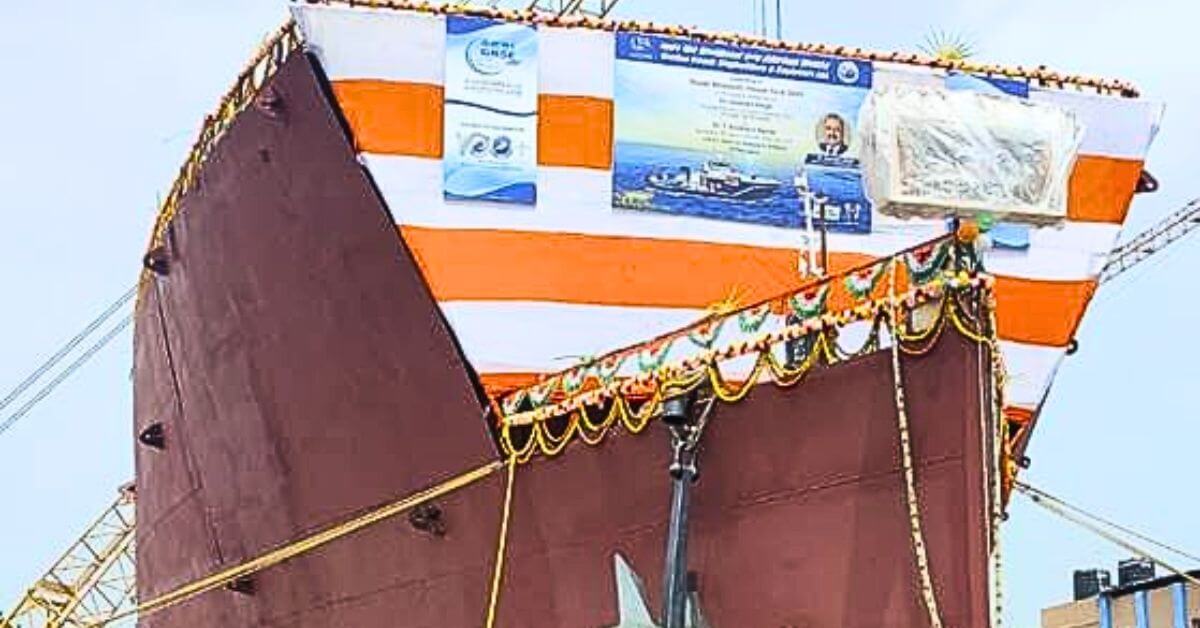
Advancing Ocean Intelligence: Indian Navy Launches ORV Sagar Manthan
The Indian Navy's launch of ORV *Sagar Manthan* at Rishi Bankim Shipyard marks a calibrated step forward for ocean intelligence. This state-of-the-art research vessel will strengthen our capacity for empirical, real-time observation of climate indicators. Understanding drives protection, and this vessel delivers the integrated data ecosystem we need. For another perspective on how subsea infrastructure supports such missions, see our article on integrated subsea cables enhancing data transmission across the Indian Ocean.