depth
8 stories filed under depth on World Data Ocean. The newest of them: “From orbit to ocean floor: big data maps the seafloor with precision”, “Ocean Depth Limits: How Far Can Surface Fish Really Swim?”, and “Exploring the Mariana Trench: A Hypothetical Descent and Timeline”. A University of Sydney-led team has integrated satellite altimetry with shipboard sonar data to produce a calibrated, high-resolution map of the global seafloor. A curious question from *Finding Nemo* touches on a real oceanographic principle: depth stratification. A Global Hub for Ocean Intelligence 4 World Data Ocean is a centralized digital platform where researchers, scientists, and ocean enthusiasts converge to… The list below is every depth story on World Data Ocean, newest first.
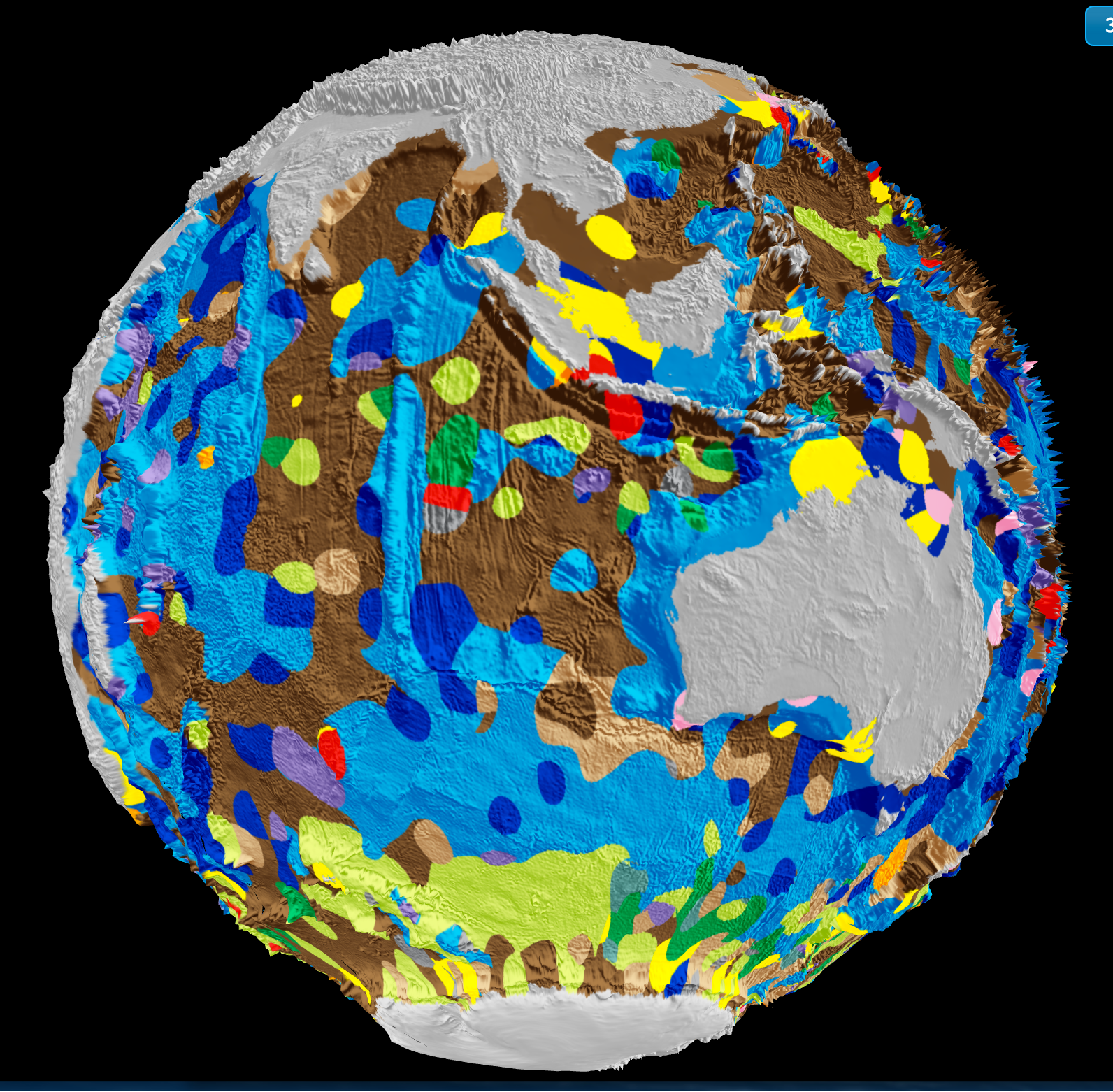
From orbit to ocean floor: big data maps the seafloor with precision
A University of Sydney-led team has integrated satellite altimetry with shipboard sonar data to produce a calibrated, high-resolution map of the global seafloor. This isn't just a sharper image, it's a validated baseline for measuring change. Understanding drives protection. When we can track sediment transport, tectonic activity, and benthic habitat shifts with empirical precision, ocean stewardship becomes measurable. For deeper context on how ocean intelligence reveals system-wide change, see our coverage of the century-long current slowdown.
Ocean Depth Limits: How Far Can Surface Fish Really Swim?
A curious question from *Finding Nemo* touches on a real oceanographic principle: depth stratification. Surface-dwelling species like clownfish and blue tangs are adapted to specific pressure zones, and their swim bladders are calibrated for that environment. The anglerfish's domain, by contrast, demands physiological adaptations that these fish simply lack. It is a practical example of how marine life is partitioned by depth, a concept worth exploring further in our piece on integrated subsea cables, which highlights how we map these very ecosystems.
Exploring the Mariana Trench: A Hypothetical Descent and Timeline
The Mariana Trench descent is a study in patience as much as depth. A hypothetical plunge from the surface to the Challenger Deep would take roughly two and a half hours, assuming a steady drop. That timeline matters because it frames the real challenge: not just reaching the bottom, but doing so with instruments calibrated to survive the pressure. We find this a useful thought experiment for testing our integrated data ecosystems.

Ocean Sensors on Sharks Offer New Insights for Hurricane Forecasting
Sharks fitted with ocean sensors are delivering real-time data from beneath the surface, offering a new lens for hurricane forecasting. This is ocean intelligence at its most empirical: calibrated observations from a creature that navigates the depths we've barely measured. The potential to refine storm intensity predictions is measurable and immediate. For readers tracking how integrated data ecosystems evolve, our related piece on citizen science for ocean intelligence complements this story well. Understanding drives protection, and here, it also drives preparedness.

Exploring the Cook Islands Depths: A 2026 ROV Expedition.
In 2026, a new ROV expedition will descend into the waters surrounding the Cook Islands, aiming to transform our understanding of a region whose depths remain largely unmeasured. This is not a hunt for spectacle; it is a methodical effort to gather empirical data where none currently exists. The mission's value will be defined by its calibrated instruments and the peer-reviewed findings they produce.

Dynamic Biofouling: DNA Analysis Reveals Patterns Across Ocean Conditions
Season explained the largest share of variation in biofouling communities, but substrate and depth still left their mark. That is the takeaway from a new study that deployed two synthetic materials at three depths across summer and winter, analyzing 432 samples with DNA metabarcoding. Winter assemblages, dense and persistent, were dominated by Hydrozoa; summer communities, rapid but removable, favored Oligohymenophorea and Malacostraca. This kind of empirical, replicated work sharpens our understanding of fouling pressure.
Building a BRUV: Practical Advice for Underwater Video Deployments
Building a BRUV for Lake Erie means engineering for freshwater realities, not just deep-sea assumptions. The 210-foot depth requirement is a solid, measurable target, and the choice between PVC and metal extrusions will hinge on how you balance portability against current stability. Your instinct on diffuse green lighting shows practical thinking about fish behavior, though field testing will be the real validator.

Tiny Puget Sound Brittle Star: An Unexpected Anatomical Feature.
A tiny brittle star, smaller than a lentil and pulled from 25 feet of water in Puget Sound, presents a question we find genuinely compelling: does it have an opening all the way through? The specimen's identity remains unknown, yet its potential anatomy is a reminder that even the smallest marine life can challenge our assumptions. Observations like this one echo the unexpected finds we explore in "Unexpected Chiton Discovery in Puerto Rico Challenges Species Distribution Models," reinforcing that patient observation fuels ocean intelligence.