Defence Ministry
11 stories filed under Defence Ministry on World Data Ocean. The newest of them: “Strikes on Ukrainian ports disrupt data infrastructure and maritime logistics”, “Revised Bid Signals Shifting Currents in Global Maritime Valuation”, and “Turkish Navy marks 488th Preveva anniversary with homegrown frigate TCG Istanbul”. Strikes on Ukrainian ports are now disrupting more than grain shipments. Hapag-Lloyd's decision to revise its $4.2 billion bid for Zim Integrated Shipping Services signals a recalibration of how the market values maritime assets. A Global Hub for Ocean Intelligence 4 World Data Ocean is a centralized digital platform where researchers, scientists, and ocean enthusiasts converge to… The list below is every Defence Ministry story on World Data Ocean, newest first.
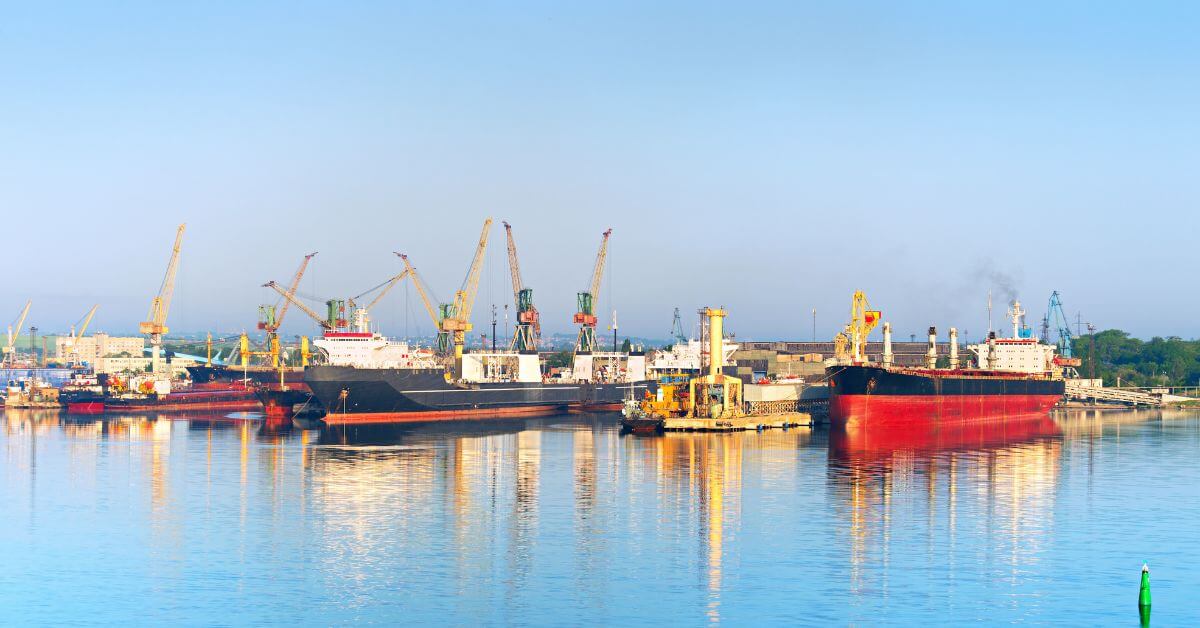
Strikes on Ukrainian ports disrupt data infrastructure and maritime logistics
Strikes on Ukrainian ports are now disrupting more than grain shipments. Russia stated it targeted data centres, port facilities, and ships it claims supported the Ukrainian military. Targeting data infrastructure introduces a new dimension to maritime conflict, where the line between military and civilian logistics blurs. These attacks threaten the integrated data ecosystems that modern ports rely on. For context on the broader cost of conflict, see our related coverage in "Tracking the nations with the largest share of historical CO₂ emissions."
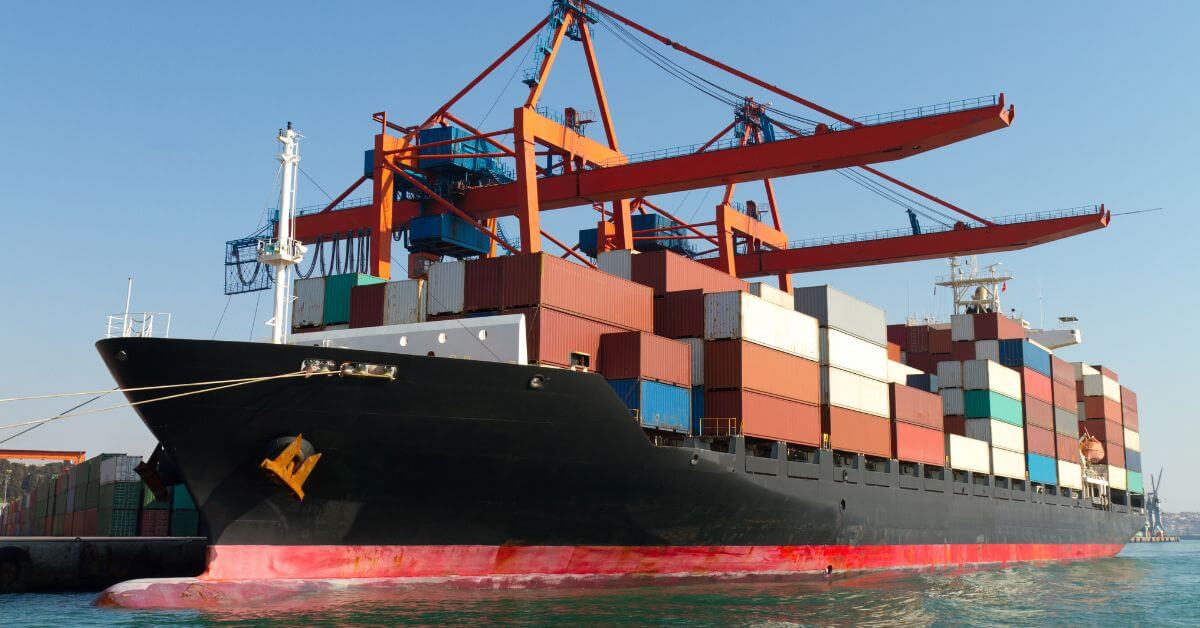
Revised Bid Signals Shifting Currents in Global Maritime Valuation
Hapag-Lloyd's decision to revise its $4.2 billion bid for Zim Integrated Shipping Services signals a recalibration of how the market values maritime assets. This is not a retreat, it is a measured response to shifting currents in global trade and geopolitics. As ocean intelligence becomes more empirical and real-time, such moves validate the need for integrated data ecosystems. For deeper context on naval strategy, see our coverage of the British government's £6 billion investment in submarine-support dry docks. Understanding drives protection.
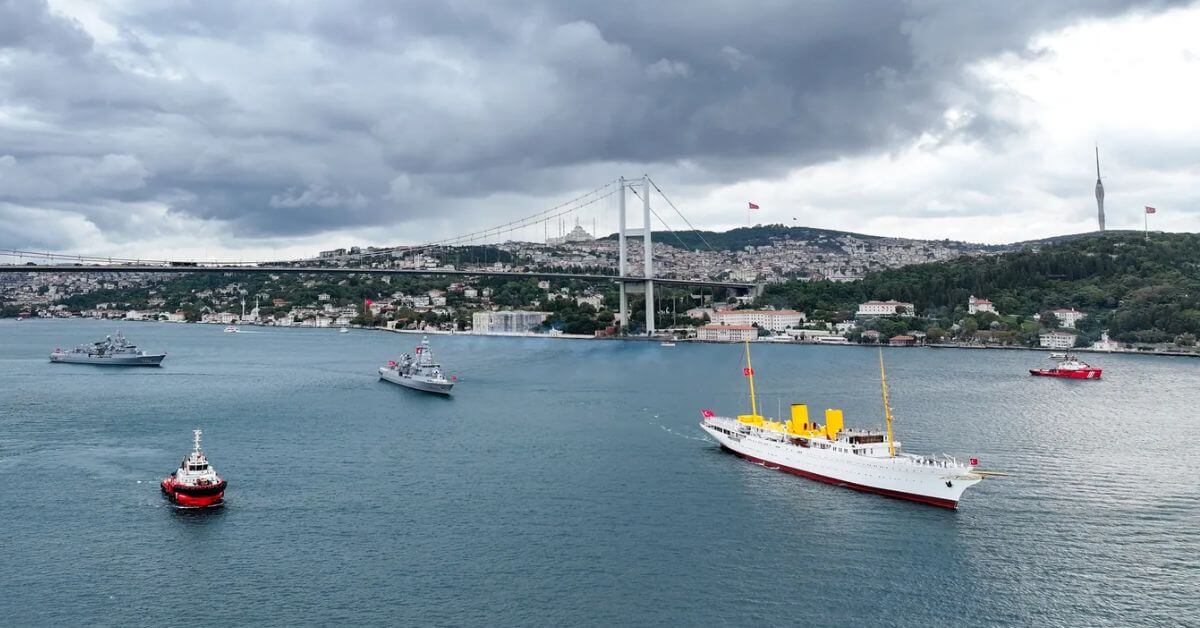
Turkish Navy marks 488th Preveva anniversary with homegrown frigate TCG Istanbul
The Turkish Navy's 488th Preveza anniversary parade featured TCG Istanbul, Türkiye's first domestically designed and built frigate. This is measurable progress in national naval capability. Validated, homegrown engineering now sails alongside tradition. For deeper coverage on integrated maritime power, see our related article on Pakistan's "Validated long-range strike capability demonstrated in Arabian Sea test." Understanding drives protection, from shipyard to sea.

Naval Drills Near Taiwan Prompt Condemnation from Taipei
Taipei has condemned China's plan to stage naval drills with an Indonesian warship off the island's east coast, a move that sharpens an already tense maritime posture. The exercises signal Beijing's willingness to project force in contested waters, and that warrants a measured, empirical response from regional partners. For readers tracking how such maneuvers intersect with broader logistics, our related piece on Gulf of Oman STS transfers offers useful context on parallel pressures.

Navy Drone Data Transmission Raises Cybersecurity Concerns, Ministry Confirms
A routine cyber vulnerability check on navy drones took an unexpected turn when the cameras onboard transmitted a squark to a Chinese IP address, the Ministry confirmed. The detail is precise, measurable, and worth pausing on. We do not speculate on intent, but the incident underscores why calibrated, peer-reviewed security protocols are not optional. For broader context on shifting maritime data infrastructure, see our coverage of "Integrated Subsea Infrastructure Shifts to Enhance Indian Ocean Connectivity.

Maritime Conflict Impacts Shipping Lanes, Raising Regional Tensions
Russia's Defence Ministry confirmed the two cargo vessels were targeted for their alleged use in Ukrainian military interests. This is a deliberate escalation that compresses the space for safe transit. When state actors weaponise commercial shipping, the calculus for insurers, flag states, and port authorities shifts overnight. We have not seen the full cost yet. For broader context, our related piece, "Russia Calibrates Export Revenue for Northern Sea Route Icebreaker Fleet," shows how Moscow is simultaneously militarising its maritime posture elsewhere. That is not coincidence.

Sanctions Enforced: Italian Navy Intercepts Tanker in Mediterranean Operation
The Italian Navy's interception of the sanctioned tanker *Toa Payoh* west of Pantelleria is a decisive enforcement of EU measures, and it sends a clear signal about maritime accountability. This operation demonstrates that sanctions are not abstract policy; they are backed by tangible, calibrated action in strategic waters. The Mediterranean remains a focal point for geopolitical tension, and this interdiction underscores the necessity of persistent naval vigilance.

Black Sea Maritime Traffic Targeted in Coordinated Russian Strikes
Russia's overnight strike on Black Sea maritime traffic was a coordinated display of reach, with missiles launched from land, sea, and air alongside strike drones. The Defence Ministry's account confirms a deliberate escalation aimed at ports and vessels, a pattern that demands measured scrutiny. This is not hyperbole; it is the reality of contested waters. For broader context on how Moscow sustains such operations, our related piece on Russia's Northern Sea Route icebreaker funding offers a telling glimpse into its strategic priorities.

Oman Proposes Transit Fees for Strait of Hormuz, Awaits Response.
Oman's proposal to levy transit fees on Strait of Hormuz traffic introduces a pragmatic, if contentious, lever into one of the world's most vital shipping lanes. The move underscores how maritime chokepoints are becoming instruments of economic statecraft. Iran's simultaneous denial of talks with Washington, paired with its conditional pledge to hold fire, keeps the region's temperature measured but uncertain. Measured dialogue, not alarm, is the path forward.

Kuwaiti Warship Struck: Four Personnel Injured in Iranian Attack
A Kuwaiti naval vessel was struck by an Iranian missile and drone barrage, leaving four armed forces personnel injured, according to Kuwait's Military. The attack underscores the fragile security calculus of a region already straining under disrupted shipping lanes. Such strikes are not isolated incidents; they are symptoms of a broader volatility that demands calibrated, data-driven responses. As diplomatic efforts like the phased negotiations over the Strait of Hormuz gain traction, the need for validated ocean intelligence has never been more immediate.

Regional Tensions Rise as Iran and UAE Trade Accusations of Attacks
Iran's response to the UAE's accusation arrived within hours, a pointed rebuttal to claims that Tehran launched cruise missiles at two national tankers. The exchange sharpens a familiar volatility, and the speed of the denial suggests more than diplomatic reflex. It signals how fragile maritime trust has become. For those tracking the region's pressure points, this is not an isolated flare-up. Our related coverage on Gulf of Oman STS transfers maxing out shows the commercial stakes already running high.