deep ocean
4 stories filed under deep ocean on World Data Ocean. The newest of them: “Deploying deep-sea cameras to capture bioluminescent signals in the abyss”, “Measuring the Ocean's Warming Pulse at 2,000 Meters”, and “Accelerating Ocean Model Development: Leveraging AI for Research and Thesis Work”. Bioluminescent flashes in the abyss are among the ocean's most elusive signals, yet capturing them need not require a research vessel's full schedule. Two thousand meters down, the ocean is warming measurably and without pause. A Global Hub for Ocean Intelligence 4 World Data Ocean is a centralized digital platform where researchers, scientists, and ocean enthusiasts converge to… The list below is every deep ocean story on World Data Ocean, newest first.
Deploying deep-sea cameras to capture bioluminescent signals in the abyss
Bioluminescent flashes in the abyss are among the ocean's most elusive signals, yet capturing them need not require a research vessel's full schedule. Deploying deep-sea cameras to record those sporadic glimmers, much like neutrino detectors resting in mine shafts, offers a low-cost, passive window into a world we rarely see. Leave the gear to brew while oceanographers tend to other duties; the resulting footage, though punctuated by darkness, promises genuine insight.
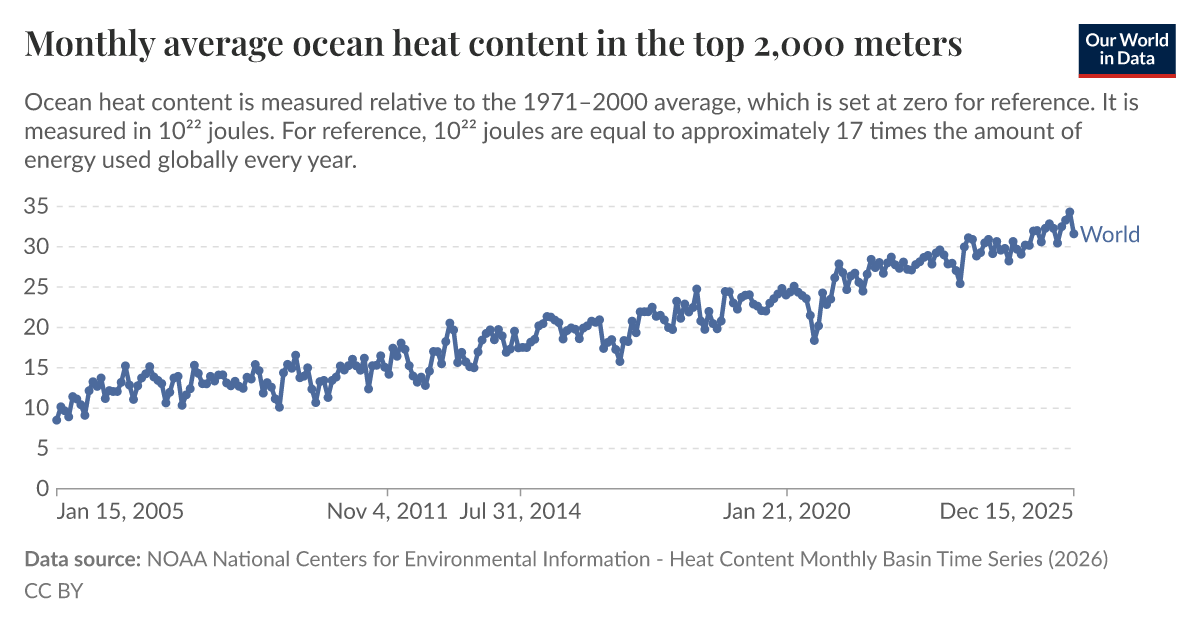
Measuring the Ocean's Warming Pulse at 2,000 Meters
Two thousand meters down, the ocean is warming measurably and without pause. Monthly average heat content in the top 2,000 meters provides one of the most empirically grounded climate indicators available, validated, peer-reviewed, and increasingly urgent. This isn't a distant signal; it is a calibrated pulse we can track in real time. Understanding drives protection. For deeper context on how global experts are building the data framework to monitor these changes, see "Global experts unite to steer Ocean Decade's data and knowledge framework."
Accelerating Ocean Model Development: Leveraging AI for Research and Thesis Work
A master's thesis in deep-ocean biogeochemical modeling is an ambitious goal, and the timeline demands precision. The first two months are best spent not on code, but on building a foundation. Calibrated learning matters more than speed. Prioritize the Regional Ocean Modeling System's core dynamics and data assimilation techniques. For a model of this scope, peer-reviewed literature on parameterizations is your starting point.

Deep Ocean Warming: Longitudinal Data Reveals a Concerning Trend.
The ocean's abyss was long considered a stable, slow-motion frontier, but new longitudinal data now shows the deepest layers are warming. This is not a distant anomaly; it is a measurable shift in a system we rely on for climate stability. We find this trend deeply concerning, yet it reinforces why sustained observation matters. As we track these changes, we must connect them to broader disruptions, much like our recent analysis of Atlantic Circulation Weakens, to fully grasp the scale of what is unfolding.