critical minerals
World Data Ocean keeps critical minerals in one place: 5 stories so far. The section currently leads with “Tracing cobalt from Congo's mines to China's refineries maps the supply chain”, “Shipboard protest follows Pacific mineral survey amid seabed mining debate”, and “Deep-Sea Mud Yields Significant Rare Earths: A New Resource for Japan”. Cobalt's journey from the mines of the Democratic Republic of Congo to China's refineries is a supply chain that demands transparency. A government-owned research vessel returns from a Pacific mineral survey to find Greenpeace activists waiting on its deck. A Global Hub for Ocean Intelligence 4 World Data Ocean is a centralized digital platform where researchers, scientists, and ocean enthusiasts converge to… The list below is every critical minerals story on World Data Ocean, newest first.
Tracing cobalt from Congo's mines to China's refineries maps the supply chain
Cobalt's journey from the mines of the Democratic Republic of Congo to China's refineries is a supply chain that demands transparency. Most of the world's cobalt is mined in the DRC, but nearly all refining happens in China. This geographic decoupling creates measurable risks, and opportunities, for traceability. Understanding these flows is essential for building a truly integrated data ecosystem around critical minerals. For deeper context on how global shifts reshape our climate indicators, see our related piece on Africa's projected population doubling by 2070.
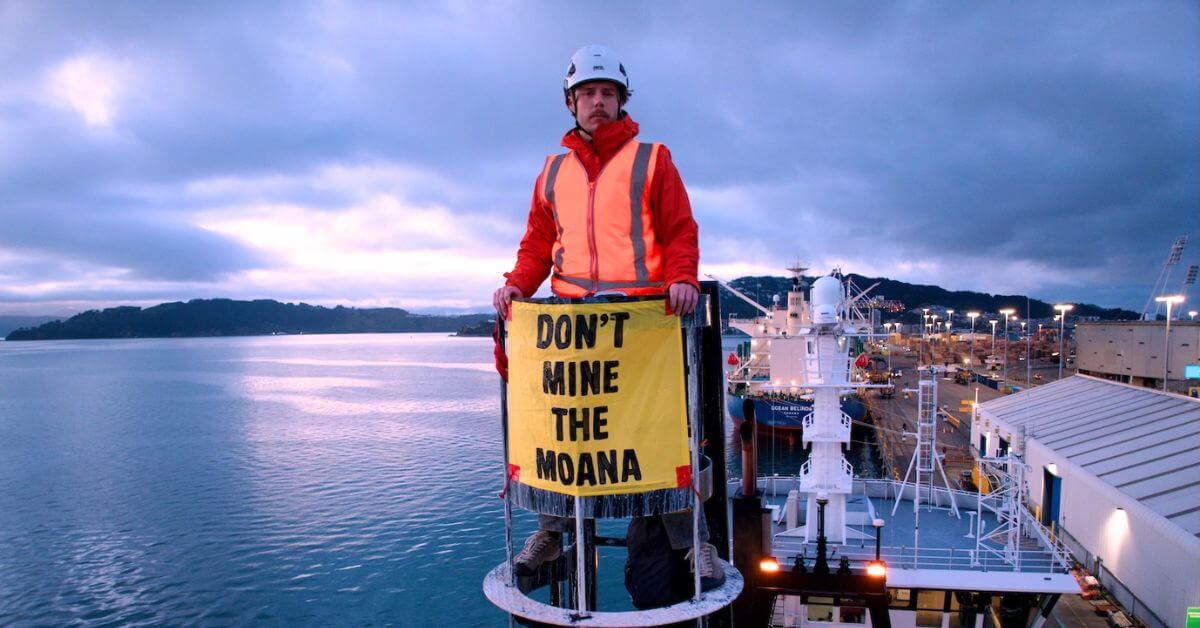
Shipboard protest follows Pacific mineral survey amid seabed mining debate
A government-owned research vessel returns from a Pacific mineral survey to find Greenpeace activists waiting on its deck. The protest sharpens a global debate: who owns the seabed, and at what cost to the ocean? Validated science must underpin these decisions, not corporate urgency or alarmist rhetoric. For deeper context on maritime tensions and resource disputes, see our coverage of the Mediterranean oil spill modeling upgrades. Understanding drives protection, and the Pacific's future depends on the integrity of the data we collect now.

Deep-Sea Mud Yields Significant Rare Earths: A New Resource for Japan
Six kilometers beneath the Pacific, Japan has achieved what no expedition has before: continuous retrieval of rare-earth-bearing mud from the deep seabed. This isn't just a technical milestone; it's a measured step toward diversifying critical mineral supply chains. The find underscores how ocean intelligence, from sediment cores to climate indicators, yields tangible resources. As with subsea cables or citizen science, the payoff lies in integrated observation. For Japan, this mud is less a prize than a prompt: the deep ocean rewards those who look systematically.

Autonomous Robotics to Bolster U.S. Mineral Supply Chain from the Ocean
The ocean floor holds minerals the U.S. supply chain cannot afford to ignore, and a new hub is stepping in to secure them. Autonomous robotics will take on the extraction work, reducing our reliance on foreign-controlled sources with measurable precision. It is a practical move, driven by the same logic that guides our broader push for ocean intelligence. For those tracking how this fits with defense priorities, our article on Navy Accelerates Autonomous Systems Integration offers useful context on the operational side.

Balancing Resources and Pacific Concerns: Critical Minerals Leasing Advances
Acting MMA Director Matt Giacona's warning lands with the weight it deserves: critical minerals are no longer a niche resource but a strategic lever in a competitive global arena. This move to advance leasing balances resource security with Pacific concerns, a calibration we find both pragmatic and overdue. The pressure is measurable, and the response must be equally precise. For readers tracking how resource flows reshape regions, our piece on the Gulf of Oman STS transfers maxing out offers a useful parallel. Understanding drives protection.