connectivity
connectivity at World Data Ocean is a file of 11 stories. The newest of them: “Integrated Subsea Infrastructure Shifts to Enhance Indian Ocean Connectivity”, “Integrated Subsea Cables Enhance Data Transmission Across the Indian Ocean”, and “Tracking Shark Movements Reveals Insights for Marine Sanctuary Protection”. The Indian Ocean is becoming the new backbone of global data flow, with integrated subsea infrastructure now shifting away from China's route. The Indian Ocean is becoming the new backbone of global connectivity, with integrated subsea cables now being laid to enhance data transmission across its waters. A Global Hub for Ocean Intelligence 4 World Data Ocean is a centralized digital platform where researchers, scientists, and ocean enthusiasts converge to… The list below is every connectivity story on World Data Ocean, newest first.

Integrated Subsea Infrastructure Shifts to Enhance Indian Ocean Connectivity
The Indian Ocean is becoming the new backbone of global data flow, with integrated subsea infrastructure now shifting away from China's route. This move directly benefits India, positioning it as a key hub in a network that carries 99% of the world's data. The strategic realignment is measurable and immediate. For those tracking the region's growing commercial pulse, our related piece on Gulf of Oman STS Transfers Max Out Amid Rising Saudi Oil Exports offers further context on how this ocean's corridors are tightening.
Integrated Subsea Cables Enhance Data Transmission Across the Indian Ocean
The Indian Ocean is becoming the new backbone of global connectivity, with integrated subsea cables now being laid to enhance data transmission across its waters. This route directly benefits India, positioning it as a pivotal hub in a network that carries 99% of the world's data. The shift is pragmatic, moving away from traditional paths to strengthen resilience and speed.

Tracking Shark Movements Reveals Insights for Marine Sanctuary Protection
Silky sharks favor natural banks in winter and spring, then shift to artificial reefs in summer. Sandbar sharks, by contrast, remain year-round across both habitats, with nearly half detected beyond sanctuary boundaries. These empirical, real-time data reveal that Flower Garden Banks cannot function as an isolated refuge. Protection must account for the integrated ecosystem these sharks actually use. For deeper context on how subsea infrastructure connects marine regions, see our related coverage of *Integrated Subsea Infrastructure Shifts to Enhance Indian Ocean Connectivity*.
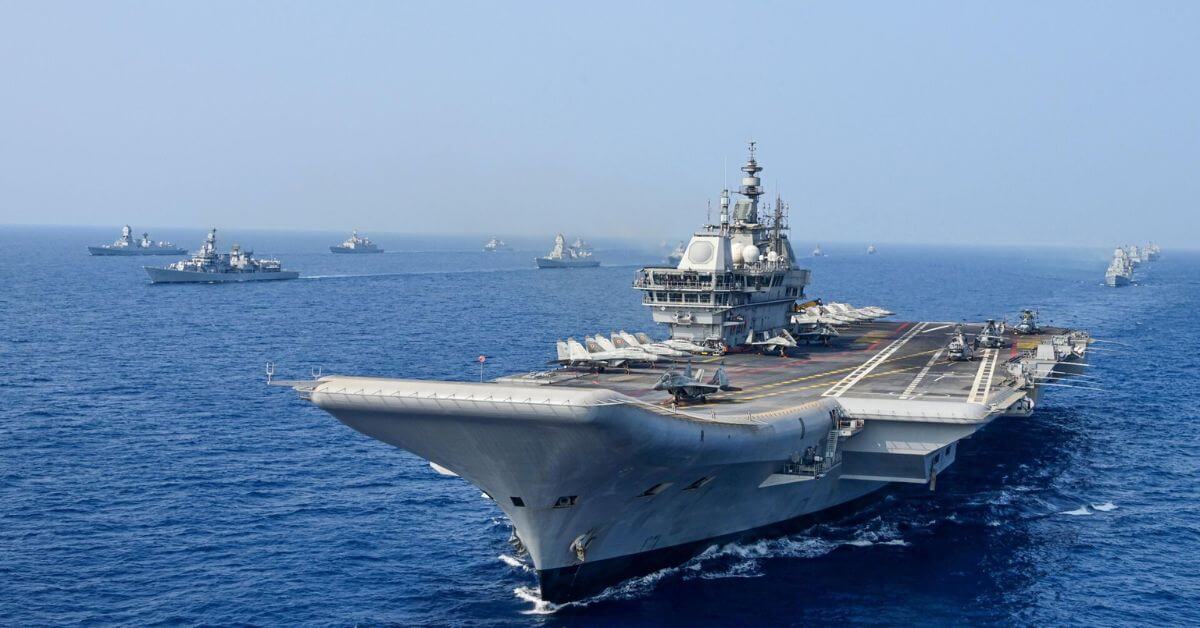
Enhanced Maritime Connectivity: Indian Navy Pursues Indigenous SATCOM Solutions
Secure links at sea are not a luxury; they are a strategic requirement. The Indian Navy's pursuit of indigenous SATCOM solutions for its warships signals a clear commitment to operational self-reliance. Operating thousands of kilometres from shore demands more than reach; it demands encrypted, reliable data flow. This move strengthens the integrated data ecosystem that modern naval power depends on.
Warming Waters Disrupt Caribbean King Crab Larvae Behavior
Caribbean king crab larvae swim less and die more at 32°C, a near threefold jump in mortality over the control group. The shift is quiet but consequential: first-stage larvae reverse their vertical swimming, sinking faster rather than rising. That behavioral flip threatens dispersal and larval supply for outplanted populations. For restoration programs, this is a warning that stocking reefs with *Maguimithrax spinosissimus* assumes a resilience the larvae may not have.
Quantifying Offshore Ecosystems: A Framework for Rigs-to-Reefs Decisions
Decommissioning decisions for offshore oil and gas infrastructure have long been constrained by fragmented monitoring that rarely measures ecosystem function or connectivity. This paper confronts that gap directly. The Multiple Lines of Evidence framework offers a practical path forward, integrating video, environmental DNA, trophic analyses, and biophysical modelling into a harmonised assessment tool. It connects key ecological questions with measurable indicators, enabling transparent, context-specific decisions. This is a significant step toward balancing habitat retention debates with empirical evidence.

Bridging Antarctica: New Fiber Link Promises Real-Time Ocean Data Access
A feasibility study from Chile's Subtel confirms that a fiber-optic link to Antarctica is technically possible, a step toward real-time ocean data from the most remote waters on Earth. This is the kind of measurable, integrated infrastructure that turns raw observation into actionable climate indicators. For researchers tracking polar change, the promise is not just connectivity, but continuity. For deeper context on how subsea systems expand observation, see our coverage of integrated cables across the Indian Ocean.
Fjord Jellyfish Reveal Unexpected Population Structure Despite Wide Dispersal
In a Norwegian fjord, jellyfish are rewriting the rules of marine connectivity. Genetic analysis of *Aurelia aurita* reveals that benthic polyps act as a persistent reservoir of diversity, while their pelagic medusae are transient, environmentally filtered subsets. Drift simulations predicted homogenized mixing, yet field data shows heterogeneous genetic structure. Dispersal potential alone cannot explain this. Life-stage complexity and local demographics matter. For a related look at how subsea infrastructure shapes connectivity, see our coverage of "Integrated Subsea Infrastructure Shifts to Enhance Indian Ocean Connectivity."

Seafarer Wellbeing Declines: Workload and Shore Leave Impact Happiness.
The Seafarers Happiness Index fell to 6.87 in Q2 2026, a measurable decline driven by mounting workloads, shrinking shore leave, and eroding purchasing power. These are not abstract pressures; they are the quiet costs of sustained maritime demand. When crew wellbeing slips, operational resilience follows. For context on the pressures reshaping crew schedules, our coverage of Gulf of Oman STS Transfers Max Out Amid Rising Saudi Oil Exports shows how intensifying trade flows strain the very systems crews depend on.

Women's Participation in India's Maritime Workforce Soars.
The maritime workforce is changing, and India is leading that charge. Union Minister Sonowal highlighted that initiatives like "Sagar Mein Samman" are driving a measurable rise in women's participation across the sector. This is not symbolic progress; it is practical, structural advancement. When policy targets inclusion directly, the industry strengthens. For those tracking this momentum, our related coverage on the new Seafarers' Welfare Centre at Mormugao Port shows how infrastructure and opportunity are being built in tandem.

Integrated Maritime Collaboration: India and Panama Enhance Global Logistics.
India and Panama have agreed to deepen maritime collaboration, a move that strengthens global logistics networks. The bilateral talks between India's Minister of Ports and Panama's Minister of Foreign Affairs signal a pragmatic step toward integrating supply chains across two strategic ocean regions. This partnership matters because logistics resilience depends on such alliances. For readers tracking port infrastructure progress, our earlier coverage of India's ₹13 crore seafarer welfare hub at Mormugao Port offers useful context on regional investments.