coastal waters
coastal waters at World Data Ocean is a file of 12 stories. The newest of them: “INS Mangrol joins India's shallow-water fleet with 80% indigenous design”, “Machine learning sharpens two decades of East China Sea carbon flux insight”, and “Long-Term Shifts in Plankton Communities Signal Warming’s Impact on Oslofjord”. INS Mangrol enters service as a warship built for the shallows, 80 percent indigenous design, purpose-calibrated for waters where larger vessels cannot operate. Two decades of satellite data now reveal a sharper truth about the East China Sea: machine learning has cut prediction errors in turbid waters by 81 percent, and the region's carbon budget is not what conventional… A Global Hub for Ocean Intelligence 4 World Data Ocean is a centralized digital platform where researchers, scientists, and ocean enthusiasts converge to… The list below is every coastal waters story on World Data Ocean, newest first.
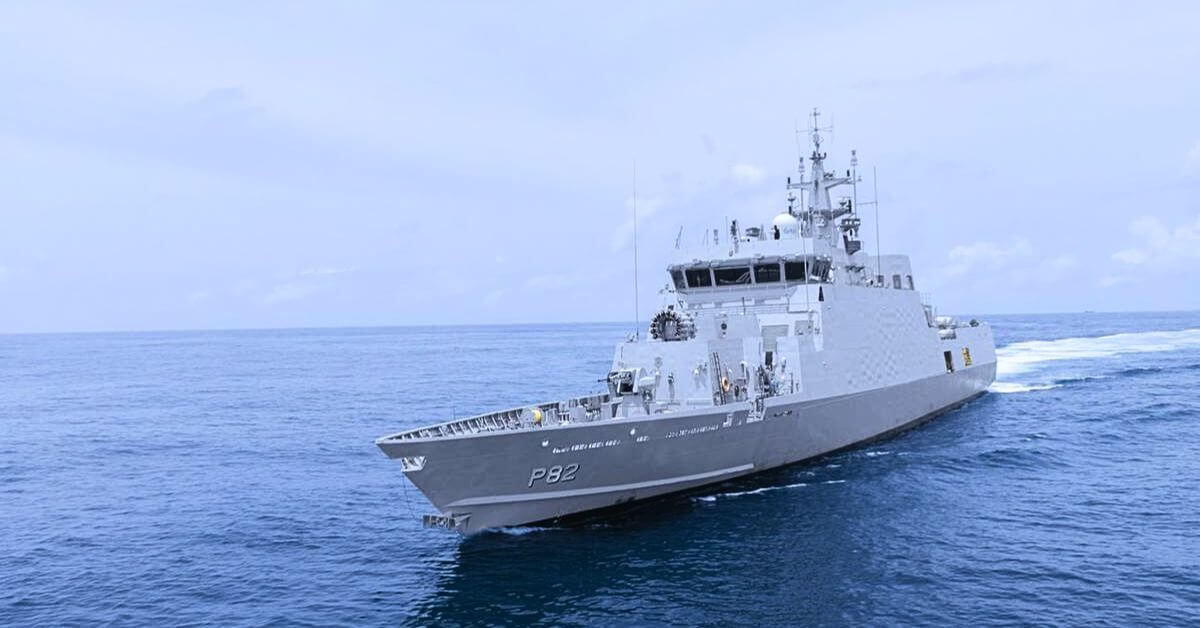
INS Mangrol joins India's shallow-water fleet with 80% indigenous design
INS Mangrol enters service as a warship built for the shallows, 80 percent indigenous design, purpose-calibrated for waters where larger vessels cannot operate. This is not merely a vessel addition; it is a measurable step toward self-reliant coastal defence. India's naval strategy increasingly demands integrated, real-time capabilities in near-shore environments. For deeper context on India's expanding maritime reach, read our coverage of the new support ship Surya.

Machine learning sharpens two decades of East China Sea carbon flux insight
Two decades of satellite data now reveal a sharper truth about the East China Sea: machine learning has cut prediction errors in turbid waters by 81 percent, and the region's carbon budget is not what conventional models claimed. By classifying optical regimes and applying a CatBoost model, this study shows turbid waters act as a weak source, not a sink, overestimating uptake by nearly half. That correction matters. Understanding drives protection, and here, precision changes the map.
Long-Term Shifts in Plankton Communities Signal Warming’s Impact on Oslofjord
The Oslofjord's plankton community is rewriting the expected script of climate change. Comparing 2009-2011 to 2023-2024, we found a 5.6-fold drop in the dinoflagellate-to-diatom ratio, driven largely by a decline in the heterotrophic genus *Gyrodinium*. This challenges the assumption that warming consistently favors heterotrophic taxa in temperate waters. The data is empirical, measured, and clear. For broader context on shifting marine baselines, our coverage of Mediterranean Phytoplankton Diversity Shifts Observed Over 25 Years offers a valuable comparison.
Coastal Waters: Assessing Copernicus Data for Water Quality and Temperature
Coastal waters defy easy answers. The Copernicus program offers a wealth of satellite-derived data on temperature and water quality, yet these products lean on empirical algorithms that stumble where rivers meet the sea. Here, in the Northern Adriatic, chlorophyll-a shares the optical stage with suspended matter and dissolved organics, complicating every retrieval. Our assessment, grounded in multi-year in-situ measurements, reveals sea surface temperature products perform admirably, with errors near three percent. Chlorophyll-a improves after bias correction, though turbidity remains stubbornly unreliable.
Persistent Low Oxygen Found in Northeast Pacific Fjord Waters
A persistent low-oxygen layer has been identified in the mid-water column of a remote northeast Pacific fjord, notably one without an entrance sill. This feature is sustained by weak reoxygenation processes tied to the region's morphology, and it expands seaward during summer and autumn. The layer also harbors CO2 conditions adverse to local calcifiers, marking it as a multi-stressor habitat. Seasonal shifts overlap sensitive species' ranges, highlighting risks from climate variability.

Indigenous Design Bolsters Indian Navy’s Anti-Submarine Warfare Capabilities
INS Mangrol, with over 80 percent indigenous content, signals a practical stride in India's naval self-reliance. Designed and built by Cochin Shipyard, this anti-submarine warfare vessel proves that domestic capability can meet complex operational demands. We see this as measured progress, not hype. It aligns with the broader push for an expanded fleet, a topic we explore in "India Projects Expanded Naval Fleet to Navigate Evolving Maritime Landscape." Strengthening local design now builds a more resilient maritime future.
Distinct Water Patterns: Exploring Possible Langmuir Circulation in Coastal Waters
A long, slick-like patch of water appearing in the same coastal spot, regardless of the hour, is a compelling puzzle. The observer's instinct to look beyond a simple surface explanation is correct. Langmuir circulation, where wind-driven currents form parallel counter-rotating cells, is a strong candidate, yet the consistency of the location suggests a fixed seabed feature might be steering the flow. It is a neat piece of field observation.
Climate and Human Impacts Threaten Marine Life in China’s Coastal Waters
China's coastal waters are not simply warming; they are being reshaped by a convergence of climate and human pressures that demands integrated responses. Our ensemble modeling, validated with high predictive performance, reveals a stark reality: anthropogenic stressors like fishing pressure and coastal pollution can shrink suitable habitat by 40 percent, sometimes reversing climate-driven gains entirely. The Pearl River Estuary and Yangtze River Delta emerge as critical junctures where refugia overlap with intense activity. This is measurable, peer-reviewed evidence for a difficult truth.
Free-Falling Crushers Generate Significant Underwater Noise, Impacting Marine Life.
A 35-ton steel crusher, dropped to break reefs, generates underwater noise reaching 174.3 dB at 60 meters. That is not a negligible pulse. Our new study, drawn from 64 impacts off Zhangzhou, China, reveals significant event-to-event variability in impulsiveness and received levels, even under stable conditions. This challenges the assumption that non-explosive methods are acoustically harmless. We cannot treat free-falling crushing as silent simply because it avoids detonation. These findings provide baseline data for marine noise assessments.
Mediterranean Sea: Shifting Ocean Conditions Reshape Velella velella Distribution
Velella velella, the violet sail-by-the-wind sailor, is no stranger to the Mediterranean, but the conditions steering its course are changing. As surface temperatures and wind patterns shift, we are seeing a species whose distribution is a direct, measurable response to the ocean's evolving state. This is not a spectacle, but a signal. Understanding these movements helps us calibrate our own ocean intelligence, much like the data discovery efforts highlighted in our related coverage.
Ocean Deoxygenation Accelerates, Threatening Life and Climate Stability
Oxygen is vanishing from the ocean, and from lakes, rivers, and coastal waters, at a rate that should sharpen our focus. This deoxygenation does not merely stress marine life; it erodes the natural systems that help stabilize Earth's climate. Scientists link this decline directly to warming, pollution, and ocean acidification, making it a compounding planetary threat. We treat this as a measured alarm: the evidence is empirical, and the need for integrated observation has never been clearer.
Atlantic Great White Population Significantly Higher Than Previously Estimated
New survey data indicate the Atlantic's great white population is significantly larger than prior estimates, a finding that recalibrates what we thought we knew about this apex predator. The numbers matter, but so does the method: validated, peer-reviewed counting that sharpens our ocean intelligence. This is encouraging for the species, yet it also raises pressing questions about ecosystem balance. For those tracking the broader picture, our coverage of Atlantic Circulation Weakens: Global Climate Reshaping Predicted offers useful context on the shifting forces at play.