Bohai Sea
World Data Ocean keeps Bohai Sea in one place: 8 stories so far. The section currently leads with “A century of heavy metals in Laizhou Bay: pollution trends and ecological risk”, “Validating temporal spectral models for sediment carbon in the Yellow and Bohai Seas”, and “New uncrewed semi-submersible warship integrates missile payload with autonomous operations”. A century of heavy metals in Laizhou Bay reveals a clear story: pollution escalated in lockstep with regional industrialization. Validating spectral models across time has been a persistent challenge in fixed-point monitoring, and this study confronts it directly. A Global Hub for Ocean Intelligence 4 World Data Ocean is a centralized digital platform where researchers, scientists, and ocean enthusiasts converge to… The list below is every Bohai Sea story on World Data Ocean, newest first.

A century of heavy metals in Laizhou Bay: pollution trends and ecological risk
A century of heavy metals in Laizhou Bay reveals a clear story: pollution escalated in lockstep with regional industrialization. Using a sediment core and multiple analytical methods, the study maps three distinct stages, from a low-risk natural baseline before 1960 to today's high-pollution phase, where Hg and Cd demand priority attention. Background value choice proves critical; the Bohai sediment baseline underestimates risk.
Validating temporal spectral models for sediment carbon in the Yellow and Bohai Seas
Validating spectral models across time has been a persistent challenge in fixed-point monitoring, and this study confronts it directly. By comparing 2020 and 2023 sediment samples from the Yellow and Bohai Seas, researchers demonstrated that while direct application of established models faltered, correction algorithms like piecewise direct standardization dramatically improved accuracy. This empirical work strengthens the case for high-frequency, continuous time-series analysis, a crucial step toward reliable ocean intelligence.
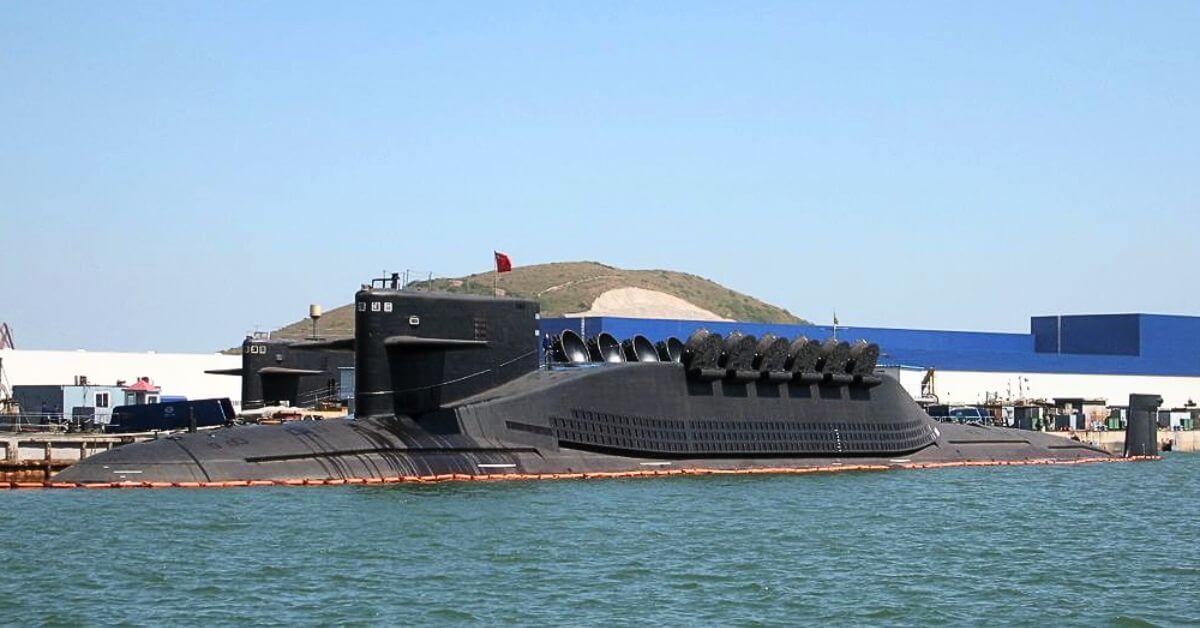
New uncrewed semi-submersible warship integrates missile payload with autonomous operations
A semi-submersible warship that can carry multiple missiles and operate without a crew is a measured step toward autonomous naval power. China's new uncrewed vessel integrates a missile payload with independent operations, a calibrated fusion of offensive capability and machine-driven control. This is not speculative; it is a validated, real-time evolution in maritime strategy. For deeper context on how global defense and data collaboration intersect, see our coverage of Japan's recent long-range missile testing survey in India.
Refining tidal models through calibrated bottom friction coefficients
Bottom friction coefficients are not merely calibration knobs, they are physical parameters that can reshape how we interpret tidal dynamics. By embedding perturbations through a Dirac delta function into a shallow-water model, this study reveals rotating Poincaré waves at odd multiples of the base tidal frequency. The analytical solutions show that sensitivity is highest in shallow, strong-current regions, including tidal entrance and exit zones.
AI and oceanography converge to predict coastal cesium levels
The fastest cesium decay is in the Bohai Sea; the slowest is in the South China Sea. A hybrid TRR, LSTM, TRR framework now reconstructs and predicts 137Cs activity in China's coastal waters, integrating a bound-constrained exponential baseline with an LSTM residual network. This is measurable progress: long-term projections carry 90% ensemble intervals, not point estimates. For deeper context on coastal modeling, see our related work on refining tidal models through calibrated bottom friction coefficients.
Long-Term Monitoring Reveals Carbon Cycle Dynamics in Bohai Sea
A year of continuous, high-frequency observation in the central Bohai Sea has revealed a carbon cycle governed by a precise seasonal and event-driven balance. The study's moored buoy data, spanning September 2020 to December 2021, isolated the interplay between biological drawdown and thermal forcing, with winter storms triggering a distinct two-phase pCO2 response. This is the kind of mechanistic clarity that shipboard surveys simply cannot provide.
Assessing Acetes chinensis Fishery: Vital Data for Sustainable Harvests
The Bohai Sea alone supplies nearly 40% of China's *Acetes chinensis* catch. That concentration makes this keystone species both economically vital and ecologically sensitive. Our length-based stock assessments confirm the population remains healthy, with spawning potential holding steady around 0.4 through 2024. Yet regional size variations demand localized management. This is empirical, actionable data, not alarmism. Understanding drives protection. For broader context on the Bohai Sea's changing dynamics, see our related coverage on carbon cycle monitoring in that same basin.

China Expands Subsea Capabilities with Advanced Robotic Vessel.
A new advance in subsea engineering is now operational, as China expands its offshore capabilities with a robotic vessel designed for complex underwater tasks. The platform's deployment of underwater robots strengthens precision in subsea engineering and offshore operations, a practical step toward more resilient marine infrastructure. This is measured progress, not spectacle. For broader context on how such technologies intersect with marine science, our related coverage, including "Digital Twin Reveals Vulnerable Atoll, Enabling Ocean Monitoring," offers complementary insight into the systems we rely on.